
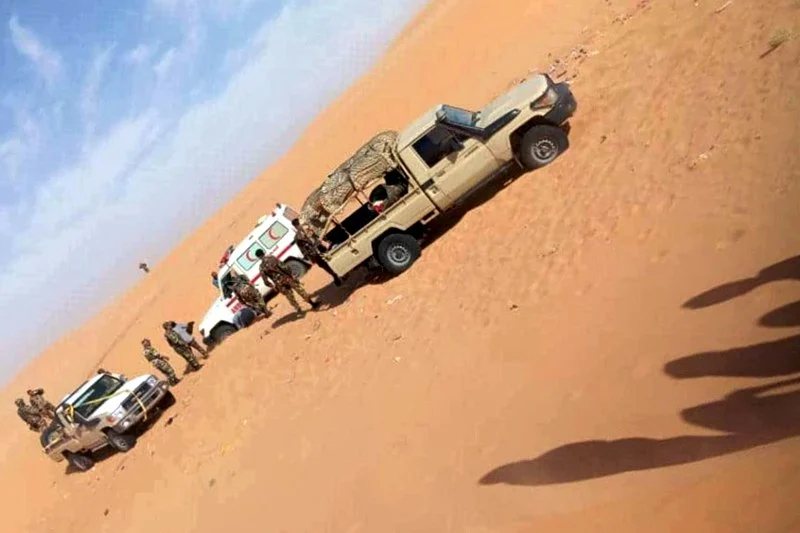
Violent unrest has erupted in the Tindouf camps following the killing of an unarmed civilian by Algerian forces near the Al Arkoub area, according to multiple reports and footage circulating on social media.
The deadly incident has triggered widespread protests against the Algerian army and the Polisario Front, with demonstrators openly calling to return to Morocco.
The protests, which flared on Wednesday, reflect mounting frustration among Sahrawis trapped in what analysts describe as harsh and repressive conditions under Algeria’s control. Videos from the camps show crowds chanting against the Polisario and Algerian authorities, with some protesters threatening to leave for Morocco.
The latest unrest highlights what experts describe as a worsening humanitarian and political crisis in the Tindouf camps, where thousands have lived in limbo for decades.
The region has also seen a decline in international aid and growing allegations of mismanagement and diversion of humanitarian resources by the Polisario leadership.
“A Loss of Trust in the Separatist Cause”
Observers see the escalation as a turning point in public sentiment within the camps. According to Abdelaali Benlyas, professor of political science at Mohammed V University in Rabat, the protests indicate a growing loss of trust in the separatist project and a rising belief that the future lies with Morocco.
“Calls to return to Morocco are not surprising,” said Benlyas. “Unlike in the camps, Sahrawis in Morocco enjoy political, economic, and social rights, as well as freedom of expression.”
Benlyas argued that the Polisario acts as a political front, while it is Algeria that controls the camps militarily, suppressing dissent and obstructing the population’s desire for change.
“Algeria’s use of repression shows its failure to push its separatist agenda and its refusal to allow the Sahrawis to choose their future,” he said, referencing emerging anti-separatist groups like the “Line of the Martyr”, which openly supports Morocco’s autonomy initiative.
A “Political Dead-End” for Algeria and the Polisario
Mohamed Chakir, political and security analyst, said the violent crackdown on protesters is proof that Algeria and the Polisario have reached a political impasse, with growing diplomatic isolation and internal dissent weakening their position.
“Algerian forces see any protest as a threat to their control,” Chakir told Hespress AR, citing the “Black Decade” repression tactics now being echoed in the Tindouf camps.
He stressed that many residents now see returning to Morocco as a serious and viable option, particularly as cities like Laayoune and Dakhla continue to thrive under Moroccan investment and development.
“If the borders were open, most residents would leave the camps immediately,” he said, pointing to Morocco’s consistent calls for a population census and its warnings about ongoing human rights abuses in the camps.
Calls for International Intervention
The deadly unrest has intensified calls for international action to protect the Sahrawi population in the camps. Analysts argue that the absence of international oversight has emboldened Algerian forces and allowed the Polisario leadership to rule without accountability.
Chakir concluded that the recent developments offer clear evidence of the failure of Algeria’s separatist policy and the urgent need for a political solution, with Morocco’s autonomy plan emerging as the most viable path forward.
The violence in Tindouf has further exposed deep cracks in the separatist narrative and signals a growing movement within the camps that seeks reintegration with Morocco and an end to decades of marginalization.





add your comment
Terms of publication : Not to offend the writer, people, sacred things, or attack religions or the divine self, and refrain from racist incitement and insults.