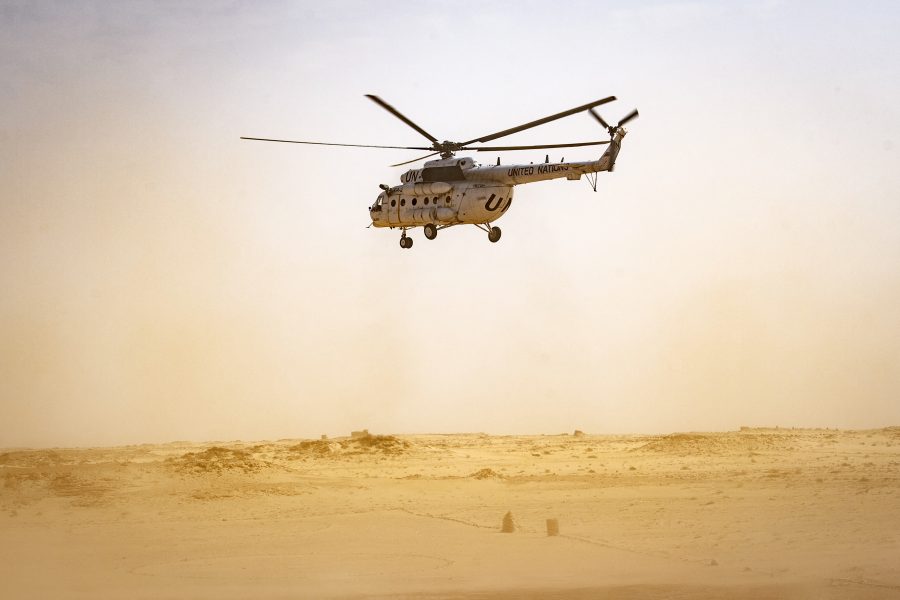
A recent report by the German Institute for International and Security Affairs (SWP) sheds light on the intensifying geopolitical competition between Morocco and Algeria over influence in Mauritania, a country now positioned at the heart of North Africa’s evolving regional dynamics.
Authored by researchers Wolfram Lacher and Isabelle Werenfels, the report, titled “Mauritania’s Balancing Act Amid Moroccan-Algerian Rivalry,” underscores the growing economic and diplomatic contest between Rabat and Algiers across the Sahel and West Africa, particularly as both countries vie for Mauritania’s strategic alignment.
The authors recall that Mauritania recognized the self-proclaimed Sahrawi Arab Democratic Republic in 1984 but has since maintained what successive Mauritanian presidents term a policy of “positive neutrality.” However, recent geopolitical developments — including Morocco’s growing diplomatic clout following normalization with Israel and recognition from powers like the U.S. and France over its autonomy plan in the Sahara — have heightened the stakes.
The report highlights Morocco’s unveiling of the Atlantic Initiative in November 2023, aimed at facilitating landlocked West African nations’ access to Atlantic trade routes via the southern Moroccan port of Dakhla. The SWP sees this initiative as part of Morocco’s broader bid to solidify its influence in the region and indirectly reinforce its claims over its Sahara.
In parallel, Rabat’s proposed Nigeria-Morocco gas pipeline project — a transcontinental endeavor rivaling Algeria’s alternative route — adds further complexity. The report notes that Mauritania may be reluctant to participate in the Atlantic Initiative, citing concerns over Dakhla potentially eclipsing Nouakchott’s own port ambitions and diverging national interests.
Despite these tensions, the authors acknowledge that Morocco maintains deeper and more diverse ties with Mauritania compared to Algeria. Moroccan private sector investments, spiritual ties through Sufi networks, and the training of West African Islamic scholars in Moroccan institutions all contribute to this dynamic. Additionally, affluent Mauritanians reportedly favor Morocco over Algeria for education and healthcare.
Yet, the SWP cautions that Nouakchott remains steadfast in its balancing act, wary of jeopardizing its delicate neutrality. The report notes that while Morocco and Algeria both seek to sway Mauritania, the latter’s government has consistently refrained from overt endorsements, offering polite silence even in the face of Moroccan announcements about bilateral cooperation.
Concluding, the SWP asserts that while both Rabat and Algiers aim to shape perceptions of Mauritania’s leanings, Morocco’s outreach appears more advanced and visible — albeit without shifting the Mauritanian government’s official stance of nonalignment.




add your comment
Terms of publication : Not to offend the writer, people, sacred things, or attack religions or the divine self, and refrain from racist incitement and insults.