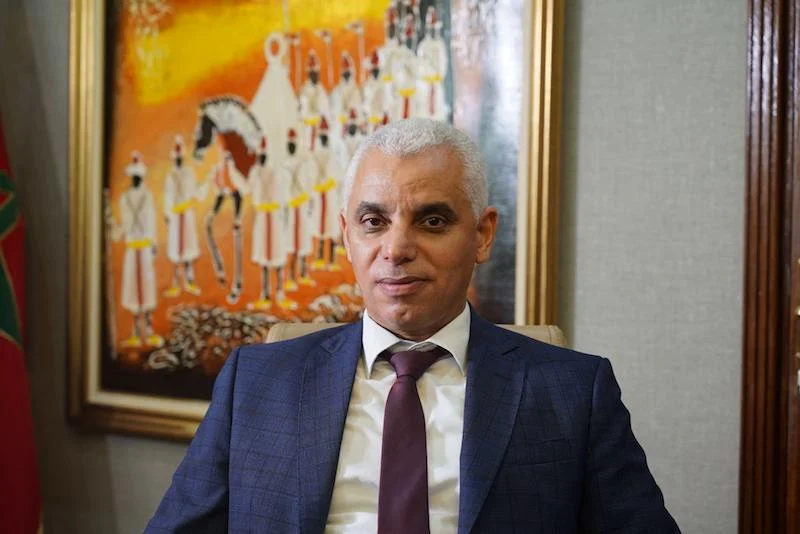
Former Moroccan Minister of Health Khalid Aït Taleb has called for greater unity among African nations to build a collective health sovereignty capable of confronting future health and epidemic crises.
Speaking at the Third African Days for Investment and Employment, held Tuesday at the Faculty of Legal, Economic, and Social Sciences in Rabat, Aït Taleb highlighted Africa’s promising health momentum but warned that fragmented efforts across regions continue to hinder the development of a cohesive and efficient continental health system.
He cited the African Centers for Disease Control and Prevention (Africa CDC) as one of the few institutions working to overcome these divisions, particularly in the wake of the COVID-19 pandemic, which exposed Africa’s marginalization from global priority lists.
“The pandemic revealed the vulnerability of health systems—not only in Africa but even in highly developed countries,” Aït Taleb noted. He credited Morocco’s early and effective response to COVID-19 to the proactive leadership of King Mohammed VI, which included creating a high-level crisis committee, launching a national solidarity fund, and establishing an economic vigilance task force.
Aït Taleb emphasized the importance of investing in health infrastructure, expanding treatment capacities, building strategic reserves of medicine and medical equipment, and developing real-time disease surveillance systems to support informed decision-making.
He also argued that health sovereignty must be approached as a continental, not solely national, project. Citing Japan’s initial inability to secure enough vaccine syringes due to global supply chain dominance by China, he warned against overreliance on external suppliers.
Africa, he said, has vast human and natural resources. “The best investment isn’t just in equipment but in prevention,” he said, stressing that every dirham spent on preventive healthcare could save at least ten in treatment costs later.
The former minister revealed that Africa sees a new epidemic each week, such as Ebola, dengue, or chikungunya, providing the continent with valuable crisis management experience. However, he warned that the continent’s biggest challenge remains the lack of investment in its health workforce.
“Our health professionals are not receiving the recognition or motivation they deserve,” he said, adding that this limits the sector’s appeal and its ability to retain talent.
Under royal directives, Morocco is undergoing sweeping reforms of its health system, with a focus on empowering healthcare workers, modernizing infrastructure, adopting new governance models, and adapting to global changes, especially the rise of AI and predictive medicine.
“Medicine is no longer just about treatment,” he said, “it’s about prediction and prevention through genomic, proteomic, and metabolomic analysis,” a direction that demands substantial investment in research and innovation.
Despite Africa’s abundant raw materials and human capital, Aït Taleb criticized the continent’s underinvestment in scientific research, calling it the missing link preventing true health independence.
He urged African countries to ramp up local vaccine production, noting that eight nations on the continent already possess manufacturing capacity, but need greater coordination to meet regional needs without relying heavily on external sources.
He concluded by calling for the forum to result in concrete policy proposals to be presented to decision-makers across the continent, advocating for a strong, equitable, and resilient African health system. “Our hopes lie in the youth of this continent and its strategic potential,” he said. “Let us remain optimistic and continue the collective effort.”





add your comment
Terms of publication : Not to offend the writer, people, sacred things, or attack religions or the divine self, and refrain from racist incitement and insults.