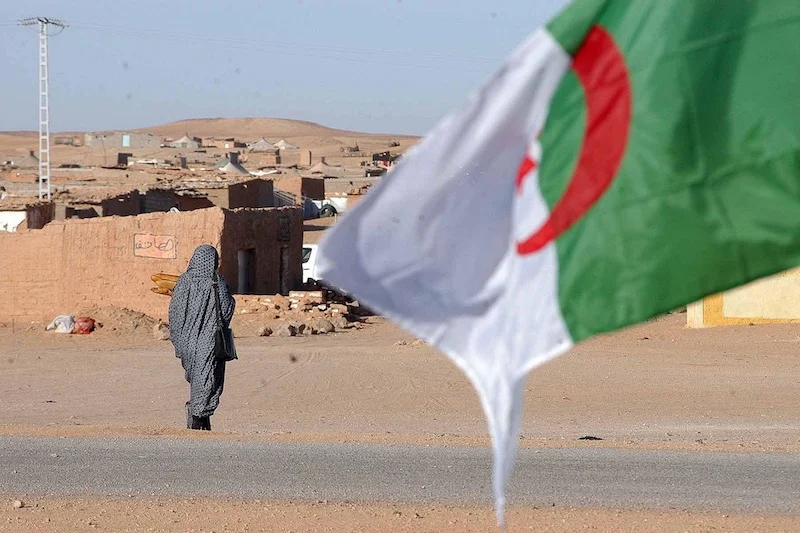
Algeria is facing increasing diplomatic challenges in maintaining its support for the Polisario Front amid growing international momentum behind Morocco’s autonomy plan for the disputed Sahara region.
Recent policy shifts by major players such as France and Spain, both of which now support Morocco’s territorial claims, have marked a significant setback for Algeria’s long-standing regional strategy.
In a symbolic move, Algeria reinstated its ambassador to Madrid in late 2023, ending a months-long diplomatic standoff sparked by Spain’s recognition of Moroccan sovereignty over the Sahara. Similarly, Algiers appears to be softening its tone with France after months of tension following French President Emmanuel Macron’s apparent endorsement of Rabat’s position.
Observers interpret these developments as signs of Algeria’s declining capacity to influence the Sahara discourse, especially as more than 50 countries — many in Africa and Latin America — have withdrawn their recognition of the self-proclaimed Sahrawi Arab Democratic Republic (SADR). Simultaneously, 19 European states have voiced support for Morocco’s autonomy plan.
Dr. Abdefattah El Fathi, Director of the Sahara and Africa Center for Strategic Studies, said Algeria’s failure to alter the positions of Spain and France reveals the limitations of its diplomatic leverage. “Despite severing trade ties and recalling ambassadors, Algiers was ultimately forced to accept these new realities,” El Fathi told Hespress AR. “This reflects a broader erosion of its ability to impose its geopolitical vision.”
According to El Fathi, the Polisario Front’s diplomatic isolation is likely to deepen as more nations shift their stance, potentially accelerating efforts to expel the group from the African Union — a body Morocco has steadily strengthened its presence in since rejoining in 2017.
Dr. Abderrahmane Benlyass, a political science professor at Mohammed V University in Rabat, also described Algeria’s diplomatic efforts as largely unsuccessful, particularly in its bid to maintain sway over key North African allies. “This is not just a tactical loss,” he said. “It’s indicative of deeper geopolitical transformations in which national interests — particularly economic and security — increasingly dictate foreign policy.”
Benlyass noted that Algeria’s attempts to pressure Spain by curbing gas exports and to punish France via diplomatic withdrawals failed to reverse either country’s stance. “Instead, these moves exposed the fragility of Algeria’s diplomatic playbook and further legitimized Morocco’s autonomy initiative as the only realistic solution,” he said.
He also warned that Algeria’s diminishing international standing could undermine the credibility of its calls for a referendum on self-determination — a narrative increasingly sidelined in favor of pragmatic, interest-based partnerships.
Looking ahead, both experts agree that Morocco must remain diplomatically agile to capitalize on these shifts. The success of strategic initiatives like the Atlantic cooperation framework and the Nigeria-Morocco-Europe gas pipeline will be vital in securing lasting regional alliances and cementing the kingdom’s diplomatic gains.
“Morocco’s ability to convert diplomatic wins into long-term economic and political partnerships — especially in West Africa and the Sahel — will determine whether the current momentum can be sustained,” said Benlyass. He emphasized the importance of a proactive diplomatic presence to counter Algerian efforts at international forums aimed at undermining Morocco’s territorial integrity.
As international recognition of Morocco’s plan grows, Algeria appears increasingly isolated — raising questions not only about the future of the Polisario Front but also about the broader realignment of regional power in North Africa.



add your comment
Terms of publication : Not to offend the writer, people, sacred things, or attack religions or the divine self, and refrain from racist incitement and insults.