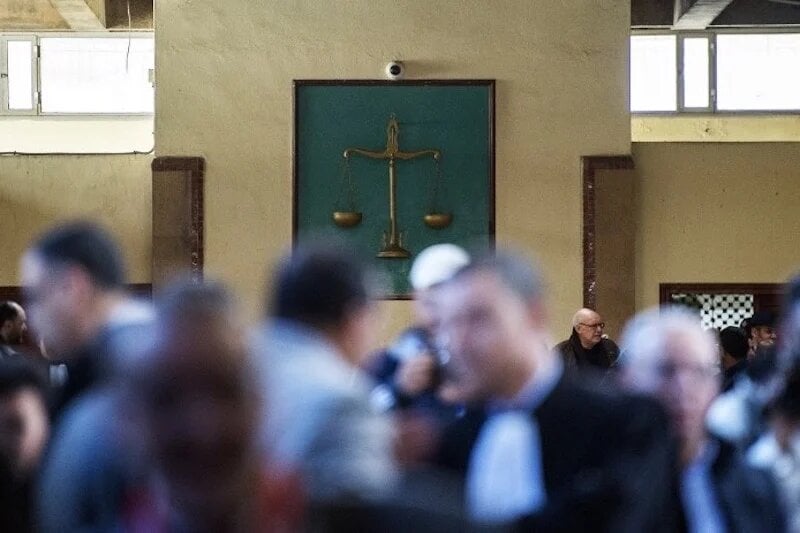
The case, which has drawn significant public attention, centers on an incident that took place at a private party hosted by the defendant in his luxury villa in Ain Diab. The French lawyer reportedly told the judge that she lost consciousness around 2:30 a.m. and did not regain awareness until nearly 12:50 p.m. the following day.
However, she claimed to have no memory of the events of that night, including being in a room with the primary suspect.
Conflicting Testimonies and a Change in Narrative
Despite her initial claims, the lawyer admitted that upon waking, she did not observe any immediate signs of sexual assault. However, she later reported feeling pain in her pelvic area after undergoing medical examinations around 5:30 p.m. The contradiction between her initial allegations and her statements during the confrontation raised questions about the case’s credibility.
During the session, the lawyer acknowledged that there had been mutual attraction between herself and the accused, contradicting her original assertion of non-consensual relations. The defendant, in turn, stated that their encounter was consensual and free of any coercion, comparing it to a marital relationship.
He also presented text messages she had sent him around 7 a.m., in which she allegedly asked for protection from her former fiancé, claiming he had threatened her.
Eyewitness Accounts Support the Defense
Testimonies from witnesses aligned with the defendant’s version of events. The primary suspect reported hearing glass shattering and, upon investigation, found his friend, Saad S., restraining the lawyer’s ex-fiancé in a state of hysteria.
The confrontation reportedly stemmed from a dispute between the ex-fiancé and another friend, Mohamed L., after the woman was seen sitting on the latter’s lap.
Witnesses also attested that the defendant’s friends had prevented the ex-fiancé from attacking her, casting doubt on the allegations of conspiracy or coercion.
Claims of Manipulation and Misleading Medical Reports
The lawyer also revealed to the judge that she may have been misled by her ex-fiancé and his father regarding the circumstances of her alleged drugging. She admitted that she could not confirm who had placed the suspected sedative in her drink.
Additionally, she suggested that a medical report, allegedly presented as evidence of rape, was flawed.
She further stated that her ex-fiancé had later claimed to have been physically assaulted, showing her bruises on his chest, but she was unable to confirm the presence of any injuries when confronted with photographic evidence during the legal proceedings.
Legal and Public Implications
With the lawyer formally retracting her accusations and denying the charges against the four detained defendants, the case has taken a significant shift. Legal experts suggest that this development not only raises concerns about the credibility of the initial claims but also puts the presumption of innocence under scrutiny in Moroccan criminal law.
Authorities are now likely to reassess the case, particularly in light of allegations that the complainant may have been influenced into filing the charges. The unfolding legal drama underscores the complexities of high-profile cases and the challenges of ensuring justice in matters involving conflicting testimonies and public pressure.





add your comment
Terms of publication : Not to offend the writer, people, sacred things, or attack religions or the divine self, and refrain from racist incitement and insults.