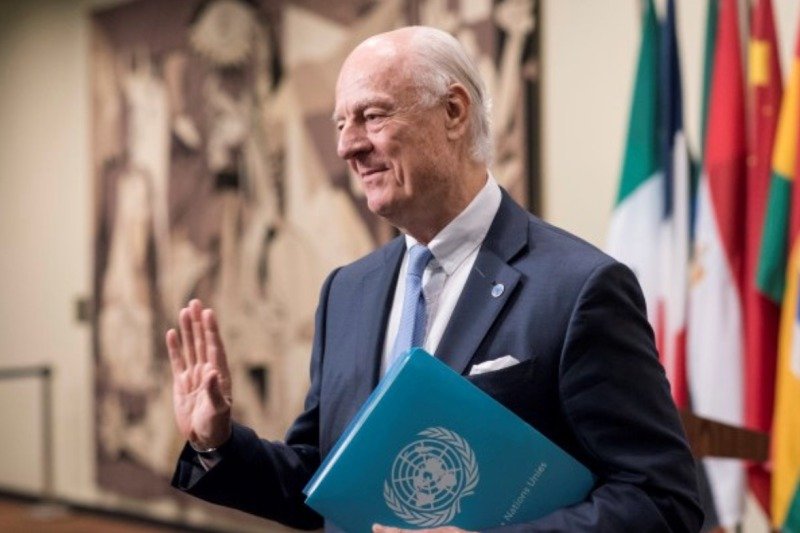
A proposal to partition Morocco’s Sahara region, reportedly suggested by UN envoy Staffan de Mistura in October 2024, continues to surface intermittently, raising questions about its motivations and potential ties to the Algerian government. Despite de Mistura’s official denial of any direct involvement in the dispute, speculation persists.
The proposal, firmly rejected by both Morocco and the Polisario Front, has been met with silence from Algeria, reviving discussions reminiscent of a similar plan introduced by former UN envoy James Baker in 2002. At the time, UN reports indicated Algeria’s support for the idea.
Adding to the controversy, Algerian politician Rachid Nekkaz, recently detained in Morocco, stirred further debate by calling for “the partition of the Sahara between Morocco and Algeria,” claiming that sovereignty over the region should be “shared” between the two nations.
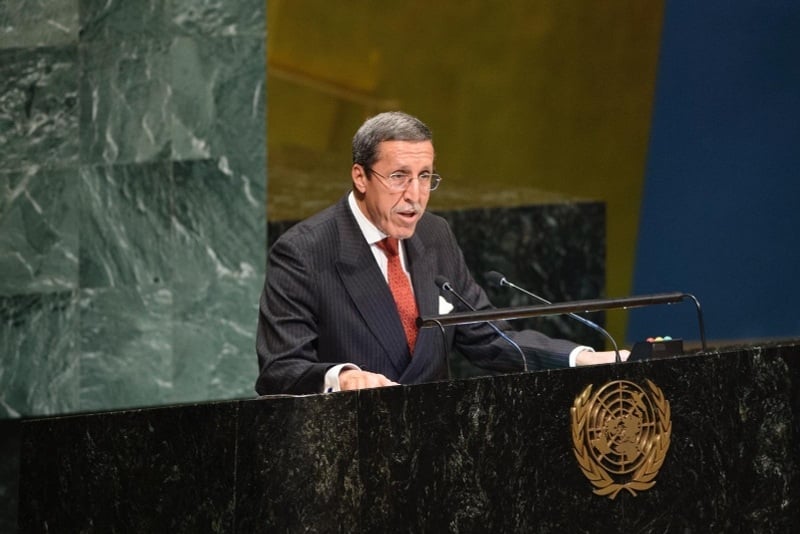
These remarks, made in Marrakech, reignited discussions about Algeria’s role in the Sahara dispute. Morocco’s ambassador to the United Nations, Omar Hilale, labeled de Mistura’s proposal a “purely Algerian initiative,” arguing that Algeria seeks access to the Atlantic Ocean through such a plan.
Observers point to a possible coordinated strategy by Algeria, reinforcing suspicions that the partition proposal aligns with a broader, unofficial Algerian agenda to counter Morocco’s autonomy plan. The autonomy initiative has gained significant international support as a viable solution to the decades-old dispute.
Political and security analyst Mohamed Chiker suggested that Nekkaz’s remarks were “not spontaneous but rather part of an Algerian agenda aimed at creating a media stir that could be politically leveraged.” He noted that Nekkaz’s decision to travel from Paris to Marrakech, a globally recognized tourist destination, to make his provocative claims about Morocco’s presence in its southern territories was likely an attempt to provoke a reaction from Moroccan authorities.
Chiker argued that such a reaction could have been exploited by Algeria, particularly with the UN Security Council’s April 2025 session approaching, where de Mistura is expected to deliver his latest briefing. However, he commended Moroccan authorities for their measured response, denying Algeria the opportunity to manipulate the situation and revive partition discussions, a long-standing ambition dating back to the presidency of Abdelaziz Bouteflika.
Abdelaali Benlyaz, a political science professor at Mohammed V University in Rabat, agreed that statements from figures like Nekkaz, a former Algerian presidential candidate, “are unlikely to be coincidental or disconnected from a larger political context.”
Benlyaz noted that such rhetoric reflects Algeria’s entrenched political and diplomatic stance against Morocco. He further linked Nekkaz’s remarks to the broader historical trend of Algerian attempts to influence UN envoys, from James Baker to de Mistura, in favor of partition.
As Morocco’s autonomy proposal gains momentum on the international stage, Benlyaz suggested that Algeria is seeking to resuscitate partition as a counter-strategy. He emphasized that, facing growing diplomatic isolation, Algeria now appears to rely on indirect messaging, rather than formal engagement in UN-led negotiations, to push its agenda.
Ultimately, analysts argue that Algeria’s approach aims to reinsert itself into the Sahara debate through unofficial channels, rather than through direct participation in UN-backed roundtable discussions to resolve the long-standing regional dispute.



add your comment
Terms of publication : Not to offend the writer, people, sacred things, or attack religions or the divine self, and refrain from racist incitement and insults.