
A group of Moroccan earthquake victims returned to the Parliament in Rabat to demand long-overdue reconstruction aid, more than a year and a half after the devastating September 8, 2023, earthquake.
The protesters, responding to a call from the National Coordination of Al Haouz Earthquake Victims, decried delays and alleged irregularities in the distribution of financial assistance. Their demands include ensuring compensation for all affected families, investigating cases of mismanagement, extending aid payments, and accelerating reconstruction efforts.
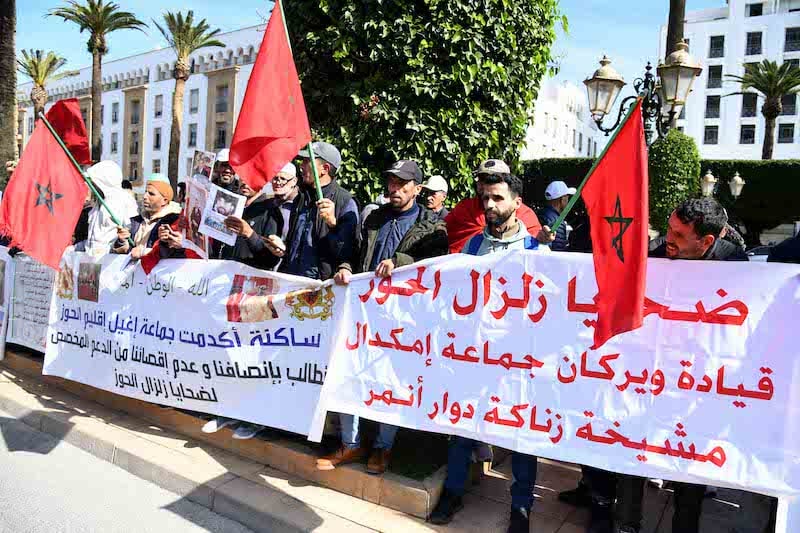
Chanting slogans like “Where are the victims? Where are the officials?” and “Enough injustice,” the demonstrators also renewed calls for the release of their movement’s leader, activist Saïd Ait Mehdi.
According to Muntasser Itri, a member of the coordination group, this marked the sixth protest in Rabat, aimed at urging the government to fully implement King Mohammed VI’s directive on reconstruction aid.
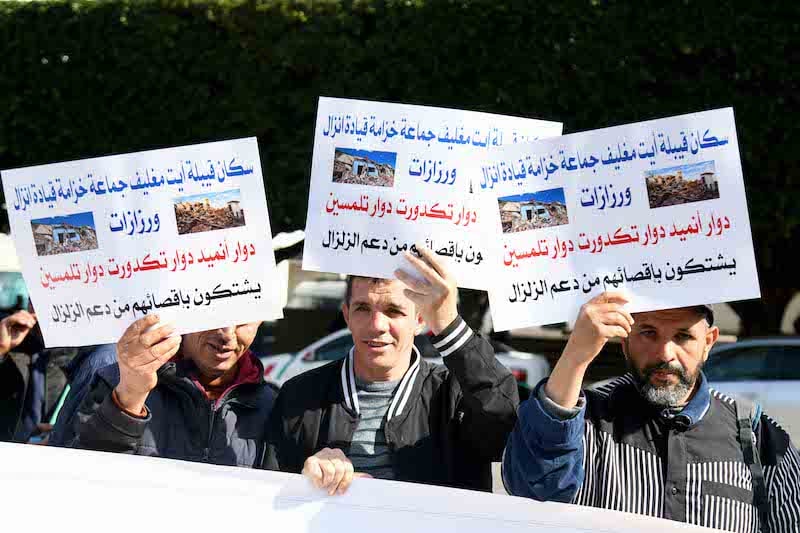
“Despite a year and six months passing since the disaster, thousands of families are still deprived of the aid they were promised, forcing them to endure inhumane living conditions in plastic tents,” he told Hespress AR during the demonstration.
Itri also noted that the protest had been postponed from its original date, January 27, as a goodwill gesture to allow authorities time to act. However, he expressed disappointment over the lack of response from local and regional officials.
One of the main grievances revolves around financial constraints that many families face. Under the reconstruction aid program, recipients must invest 40,000 dirhams to lay the foundation of their homes before receiving further installments. Many low-income families simply cannot afford this upfront cost, resulting in stalled reconstruction efforts. Some families whose homes were completely destroyed received only 80,000 dirhams in total, which they say is insufficient.
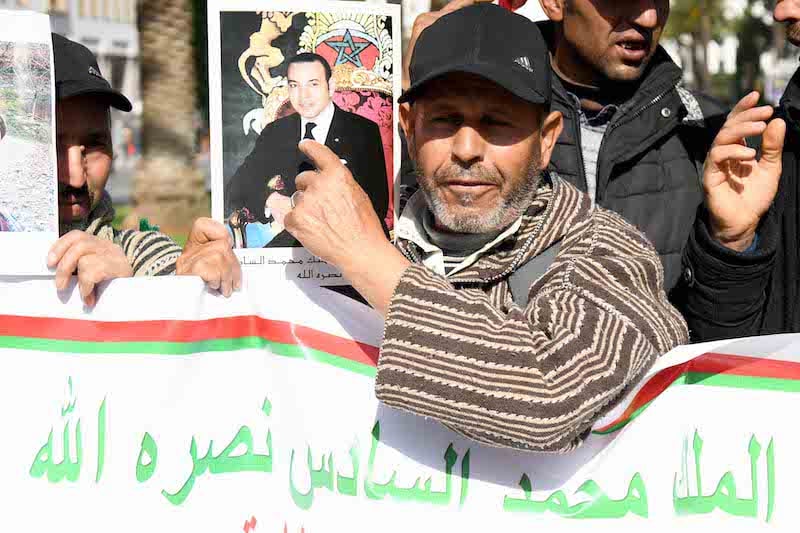
Khalid Ajdaâ, a protester from Tinsghart village in the Asni commune of Al Haouz province, criticized the aid distribution process, alleging that many genuine victims were excluded while others with abandoned or animal shelter properties wrongfully benefited.
He accused a local authority representative of overseeing these discrepancies, leaving many affected families frustrated after numerous complaints to government offices went unanswered.
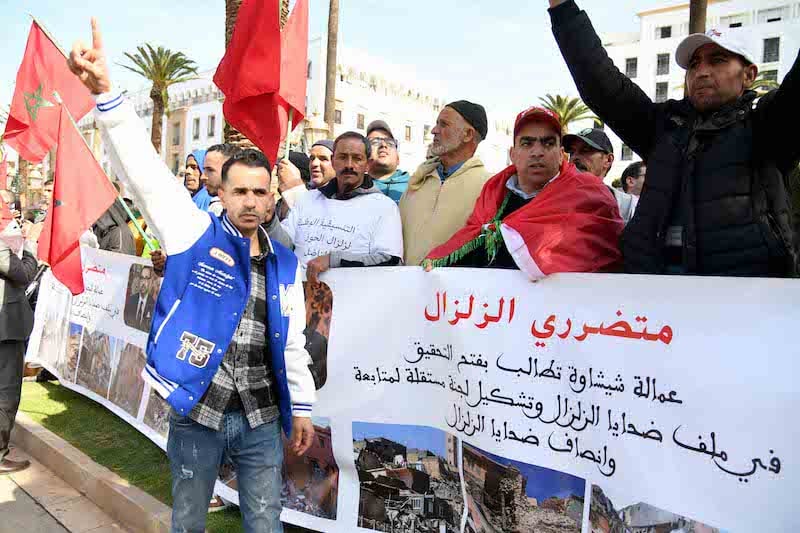
Similarly, Aziz Tihat from Amentir village in Telouet, Ouarzazate province, voiced his disappointment, stating that earthquake-related hardships persist. “For months, our village’s 12 excluded families, along with others from nearby areas, submitted petitions to local and provincial authorities, only to receive empty promises,” he said.
Tihat emphasized that repeated assurances of technical teams re-evaluating excluded victims never materialized, fueling growing distrust in the process. He called for the intervention of King Mohammed VI to ensure that all affected families receive adequate housing to replace what they lost.
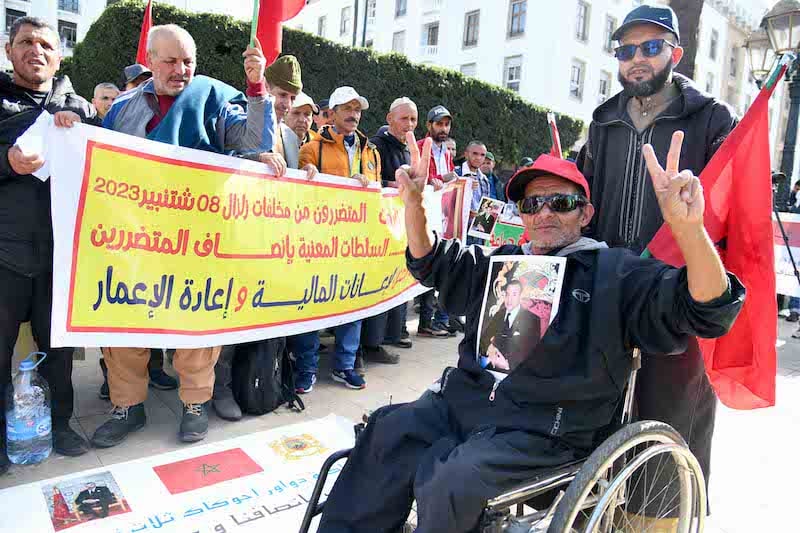
Many protestors lamented that financial and logistical difficulties prevented a significant number of earthquake victims from joining the demonstration, highlighting the widespread nature of their grievances.





add your comment
Terms of publication : Not to offend the writer, people, sacred things, or attack religions or the divine self, and refrain from racist incitement and insults.