
The Sahel-Saharan region is one of greatest interest in the agenda of the new US administration because it is linked to international terrorism, a main concern of the United States.
As is well known, this region has turned into a hotbed for extremist terrorist groups, arms and drug trafficking, organized crime, and a haven for fugitives from international justice.
The success of the cooperation between Moroccan and Spanish security services in recent days in dismantling a terrorist cell affiliated with ISIS in the Sahel confirms the nature of the danger posed y this region, which is consistent with the reports and rich conclusions of many think tanks in the United States in this regard.
Morocco has sounded the alarm about what is happening in the Sahel-Saharan arc on more than one occasion, in line with the African choice within the framework of South-South cooperation, its conviction that stability, security, respect for human rights and democracy are essential factors for development, progress and prosperity, and its active and effective involvement in the international strategy to fight terrorism and dry up its sources.
For this purpose, the Kingdom of Morocco launched the Atlantic Initiative to enable the landlocked Sahelian countries (Burkina Faso, Niger, Mali and Chad) to have access to the Atlantic Ocean through its developing infrastructure, with the aim of creating an economic and commercial zone between the countries of the region and the rest of the world, thus contributing to the development of the economies of the Sahelian countries, improving the standard of living and ensuring stability.
The positive response to Morocco’s Atlantic initiative by some Western powers, particularly the United States and France, explains the importance of the initiative and the horizon it opens for all within the framework of the win-win logic that Morocco has adopted as the title of its international relations, through the following six elements:
- Morocco will become a real gateway to African markets.
- This initiative will contribute to limiting the influence of Russia and China and their desire to penetrate further into the region, something that worries the United States and France, whose influence in some African countries has declined.
- African markets are tantalizing some Gulf Arab states (such as the United Arab Emirates and Saudi Arabia) to exit the Middle East region, which is mired in instability.
- The initiative will play a role in providing the groundwork and securing the utilization of vital resources to the economies of some Western countries.
- Rapid international changes have proven the limitations of the security approach, which has only produced social tensions, economic crises, and military coups, as opposed to an approach based on development, strengthening economic partnerships, and seeking investment opportunities
- This initiative will contribute to alleviating the flow of migrants dreaming of the paradise of Europe, especially since Morocco, due to its geographical location, is no longer a mere transit point, but a country of residence for migrants coming from sub-Saharan countries.
However, we believe that these gains cannot be fruitful and realize their major bets in the absence of a final solution to the regional dispute over the Sahara. President Donald Trump laid the first stone in 2020 when he recognized the Kingdom’s sovereignty over its southern provinces, thanks to the relentless efforts of the royal diplomacy, followed by France by confirming that there is no future for the Sahara outside Moroccan sovereignty.
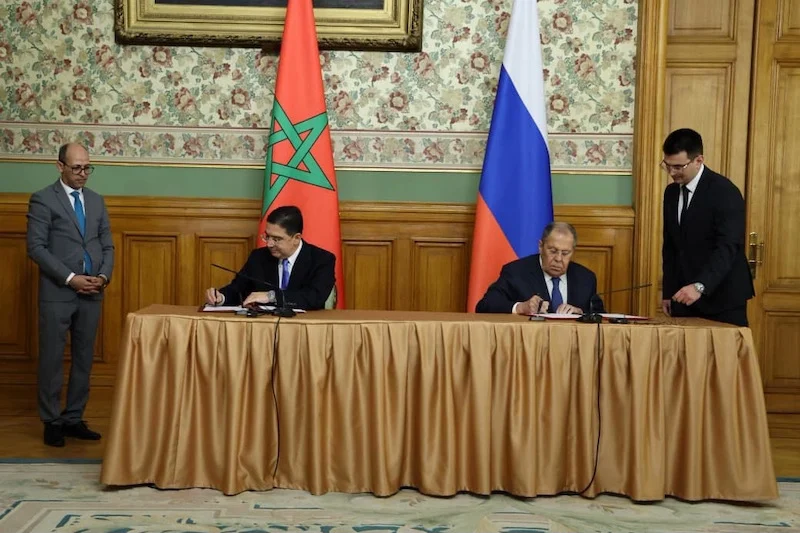
Spain and Germany, thanks to the great work done by Moroccan Foreign Minister Nasser Bourita, which indicates that this conflict is on its way to experiencing fundamental developments in the future, leading to its final closure through the integration of the remaining Sahrawis on Algerian soil with their motherland Morocco, through the establishment of autonomy under national sovereignty.
There is no doubt that Moroccan diplomacy, through the Kingdom’s Permanent Representative in the United Nations, Omar Hilale, is making great efforts, whether in trying to get the Sahara dispute out of the UN Fourth Committee, or in giving new life to the “initiative to negotiate an autonomy regime for the Sahara region,” or in dismantling the foundations of the Cold War-era discourse used by its proponents to push to stop the clock of change!
The excellent work of Moroccan diplomacy and its representative in the United Nations is in line with the region’s real developmental renaissance. All these factors influence the international equation on the issue of the Sahara dispute in favor of the Moroccan proposal.




add your comment
Terms of publication : Not to offend the writer, people, sacred things, or attack religions or the divine self, and refrain from racist incitement and insults.