
The programming study to expand the capacity of Mohammed V International Airport is nearing completion, revealed Minister of Transport and Logistics Abdessamad Kayouh on Tuesday during a meeting with the Parliamentary Committee on Infrastructure, Energy, Mining, and Sustainable Development.
This study aims to address growing passenger traffic demands by 2040, with a particular focus on supporting the needs of the national airline.
The discussion emphasized the realization of future airport expansion projects, which are projected to require an investment of MAD 42 billion by 2030.
The expansion and modernization of Morocco’s key airports aim to enhance security standards and streamline passenger flow to accommodate the anticipated growth in traveler numbers.
In a presentation titled “Upgrading Transportation Across All Modes in Anticipation of Our Country’s Challenges,” the Ministry of Transport highlighted plans to reinforce Casablanca Airport’s role as a gateway connecting Morocco to the world.
This includes the establishment of direct flights to major strategically important airports, transforming it into a central hub for both regional and international transportation.
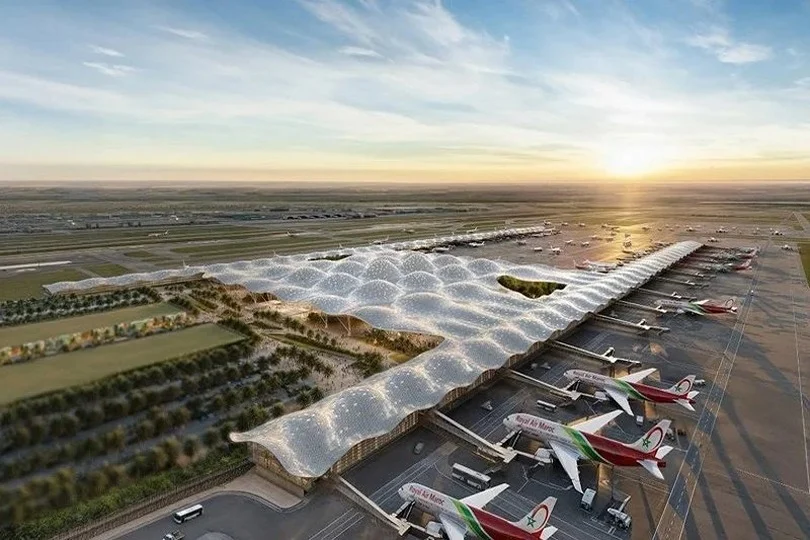
Once the development project for Casablanca International Airport is completed, its capacity will increase to 44 million passengers per year. The planned upgrades for Tangier, Marrakech, and Agadir airports will raise their respective capacities to 7 million, 16 million, and 7 million passengers annually.
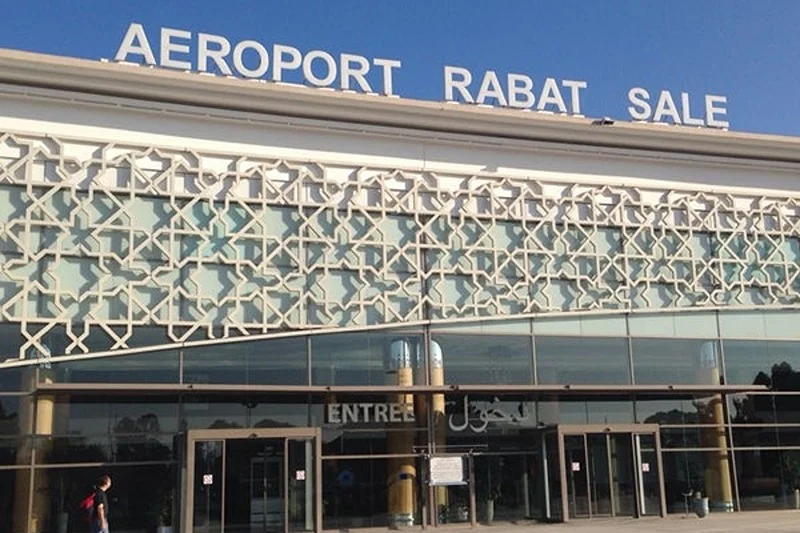
A new terminal is planned for Rabat-Salé Airport, with the capacity to handle 4 million passengers, while the expansion of Fez Airport aims to increase its capacity to 5 million passengers annually. Both cities are strong contenders to host matches for AFCON 2025 and the 2030 FIFA World Cup.
Efforts will also focus on enhancing international connectivity at Mohammed V Airport by revising air service agreements to make them more flexible and signing new agreements to open additional air routes, aligned with the growth strategy of Royal Air Maroc.
Kayouh also announced that support will continue for operating several domestic routes connecting Mohammed V Airport to other national airports, in collaboration with regional authorities and Royal Air Maroc.
Currently, Morocco’s air transport network includes 19 international airports linking the country to 152 destinations in 63 countries, as well as 5 domestic airports, with a total annual capacity of 40 million passengers.
Official data also showcased that a total of 3,951 transport permits have been issued for rural and mountainous areas in Morocco, but only 1,341 permits are actively being used, accounting for just 34%.
The vehicle fleet in operation consists of 1,341 vehicles, with an average age of 23 years, spread across most regions of the country.
Kayouh highlighted the ministry’s plan to develop and modernize the transport sector in rural and mountainous areas.
He stressed that, as part of the sectoral dialogue launched in December 2021, the ministry has worked closely with representatives from the road transport sector. Together, they’ve identified key priorities, which will be tackled as part of a joint action plan.
The priorities focus on four main areas, including “rolling out the new vehicle fleet renewal program, granting special transport permits within regional boundaries, addressing dual transport cases submitted to the transport committee, and conducting advanced regional workshops.”






add your comment
Terms of publication : Not to offend the writer, people, sacred things, or attack religions or the divine self, and refrain from racist incitement and insults.