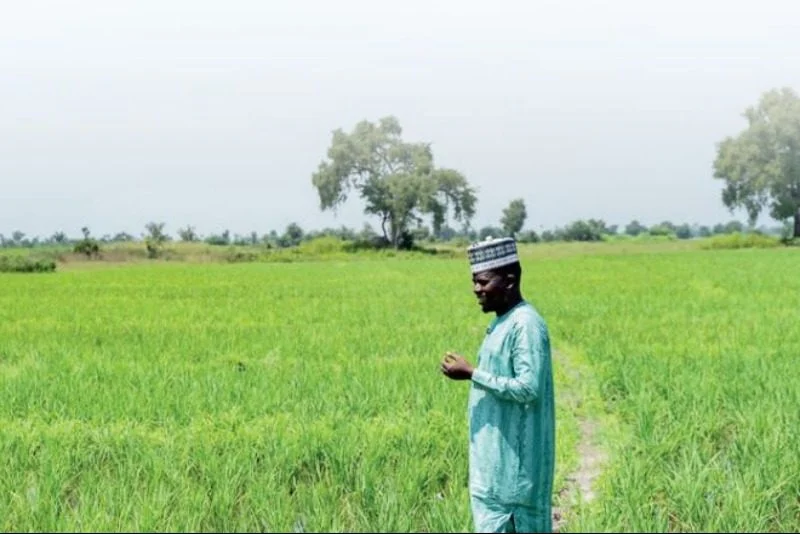
Morocco’s leadership in regenerative agriculture has helped enhance crop yields, conserve water and soil quality, as well as reduce emissions across Africa, according to a report titled Morocco as a Driving Force for Regenerative Agriculture in Africa, published by the African Studies Center at Nanyang Technological University.
Morocco’s expansion of no-till farming now covers over 30,000 hectares, and its efforts to extend regenerative practices to African countries through initiatives like providing tailored fertilizers and training reached over 400,000 farmers.
African nations are eager to adopt regenerative farming.
However, involving local farmers remains a challenge. Morocco has addressed this by launching companies offering carbon-reducing agricultural solutions, designed to meet the specific needs of African agriculture.
According to Michael Tanchum, a researcher at the University of Navarra, Morocco’s success began with its own farmers, 71% of whom manage less than 5 hectares.
The country has focused on expanding no-till farming, with Al-Muthmir playing a central role by providing agricultural extension services nationwide.
No-till farming, as practiced by Al Moutmir, preserves soil’s microbial life and protects water reserves. It also reduces carbon emissions compared to traditional plowing.
Al Moutmir’s initiatives cover 23 regions, converting 32,710 hectares, mostly of grains and legumes, to no-till farming. The result: a 30% increase in crop yields at lower costs.
The report also details Morocco’s support for sub-Saharan African farmers transitioning to regenerative agriculture. OCP Africa, a subsidiary of OCP Group, launched the Agri Booster program in 2018, offering African farmers comprehensive solutions to boost yields and incomes.
The program, which spans Nigeria, Ghana, Ivory Coast, and Senegal, has benefited over 630,000 farmers in its first five years.
The Agri Booster program led to a 48% increase in maize production in Nigeria, a 63% rise in millet in Senegal, and similar gains across other crops. Additionally, more than 420,000 farmers in nine African countries have received support from OCP’s laboratories.
Tanchum also points to OCP Africa’s development of locally tailored fertilizers. In Ethiopia, the company produced NPS and NPS+ fertilizers to address sulfur deficiencies, boosting yields by 37%.
The report suggests that now is the right time for Asian agricultural firms to collaborate with Morocco’s OCP Group.
Technologies proven successful in Africa could be adapted for Asian markets, creating opportunities for mutual growth. Tanchum concludes that Moroccan-Asian cooperation in regenerative agriculture would be a win-win.






add your comment
Terms of publication : Not to offend the writer, people, sacred things, or attack religions or the divine self, and refrain from racist incitement and insults.