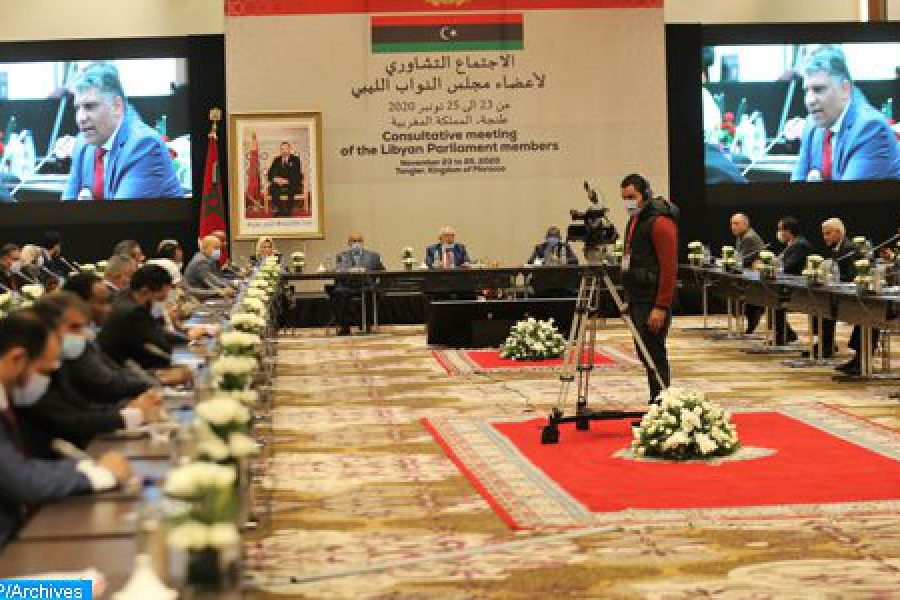
The consultative meeting of the Libyan House of Representatives continues, Wednesday in Tangier, with the participation of more than 110 MPs representing the different political backgrounds and geographical regions of Libya.
Following the official opening the day before of this consultative meeting, in the presence of the Minister of Foreign Affairs, African Cooperation and Moroccans Abroad, Nasser Bourita, the members of the Libyan House of Representatives started consultations to unify the different groups at the elected legislative institution in Libya, so as to put an end to internal divisions and to meet the challenges relating to the next political deadlines.
This consultative meeting is expected to lead to a consensus on the date and place of the holding of an official session of the House of Representatives on Libyan territory, and the determination of its agenda, the unification of positions and visions concerning the results of the Libyan political dialogue, the support of the agreements reached in Bouznika concerning the positions of sovereignty, and the rehabilitation of the House so that it fully plays its role in the period to come.
The convening of this consultative meeting in Morocco reflects the Kingdom’s firm commitment, under the leadership of His Majesty King Mohammed VI, to support efforts aimed at resolving the Libyan crisis, as well as Morocco’s conviction that the deepening of consultations and Libyan dialogue is the most effective way to achieve stability and development, and the best way to face the security challenges and negative aspects that have accompanied the treatment of the Libyan crisis.
The strong presence of Libyan MPs from different geographical and political backgrounds at this meeting also reflects the level of confidence and recognition that Morocco enjoys among the various Libyan political stakeholders.
This consultative meeting of the Libyan House of Representatives takes place following the inter-Libyan meetings organized in Morocco, aimed at achieving a political solution to the Libyan crisis, starting with the political dialogue which led to the conclusion of the Agreement of Skhirat, then the Libyan Dialogue sessions held in Bouznika.


add your comment
Terms of publication : Not to offend the writer, people, sacred things, or attack religions or the divine self, and refrain from racist incitement and insults.