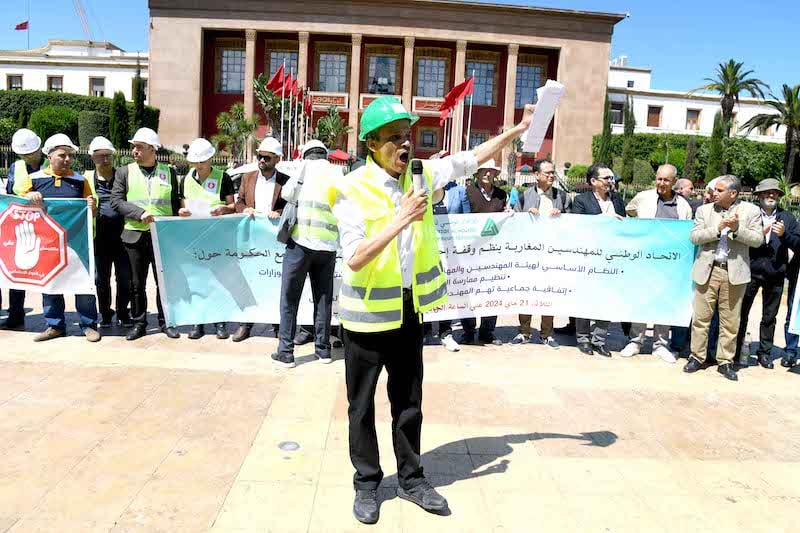
Moroccan engineers, expressing dissatisfaction with the government’s perceived disregard for their demands, have announced a two-day general strike set for January 8-9. Organized by the National Union of Moroccan Engineers, the strike will include a protest as engineers push for reforms to improve their working conditions and professional organization.
The engineers’ demands include the introduction of a new regulatory framework for the inter-ministerial engineering body, the establishment of a national engineers’ council, and collective agreements to regulate salaries for private-sector engineers.
Abderrahim Hindouf, president of the National Union of Moroccan Engineers, voiced frustration over the government’s lack of engagement. “The government has resolved issues for other professional groups while ignoring the legitimate concerns of engineers, as though it only listens to sectors with strong leverage,” Hindouf told Hespress.
Hindouf emphasized the need for a unified governing body to regulate the engineering profession, similar to those in place for doctors and lawyers. He noted the current state of “chaos and unfair competition” in the sector, where unqualified individuals can establish engineering offices or firms without proper credentials.
“Establishing a national council would help monitor the profession, control the number of engineers, and identify areas where more training is needed to address shortages,” Hindouf said.
The union president also highlighted the necessity of updating the 2011 framework governing engineers in the public sector, calling it “outdated.” He pointed out that public-sector engineering salaries are among the lowest despite the rigorous academic qualifications required, making the profession less attractive to top students.
Private-sector engineers face challenges, too, with many earning low wages due to the absence of collective bargaining agreements to standardize pay scales. “This reality is driving many Moroccan engineers to seek opportunities abroad, depriving the country of skilled professionals,” Hindouf warned.
Hindouf expressed concerns about a looming shortage of engineers, noting that some government ministries already face difficulties in recruiting qualified candidates. He stressed that Morocco’s aspirations for technological advancement and large-scale development projects require a robust and well-supported engineering sector.
“From digital transformation and energy transition to water security and artificial intelligence, Morocco needs a strong national engineering base to meet these challenges,” Hindouf said. He added that skilled engineers are also crucial for overseeing large infrastructure and energy projects, ensuring transparency and safeguarding against malpractice by foreign contractors.
The upcoming strike reflects growing frustration within the engineering community as they seek urgent reforms to secure the future of their profession and its role in Morocco’s development.





add your comment
Terms of publication : Not to offend the writer, people, sacred things, or attack religions or the divine self, and refrain from racist incitement and insults.