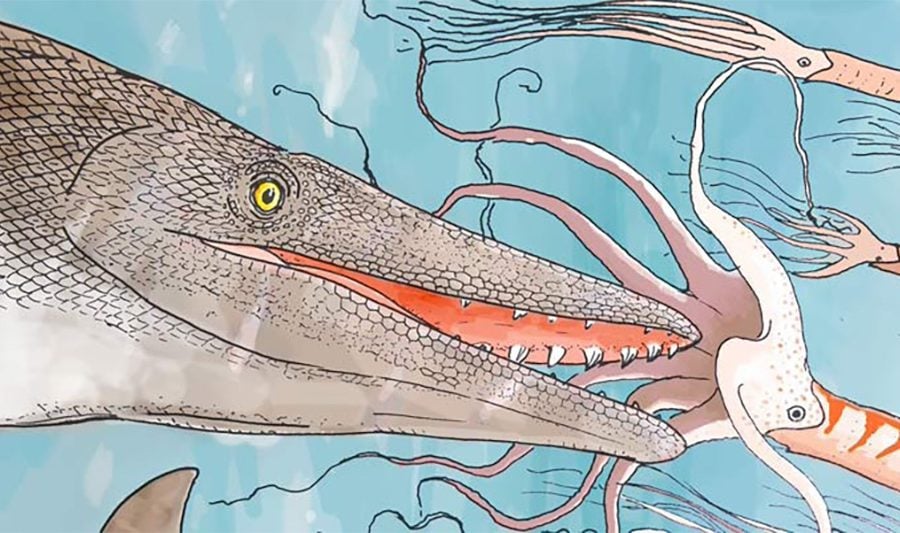
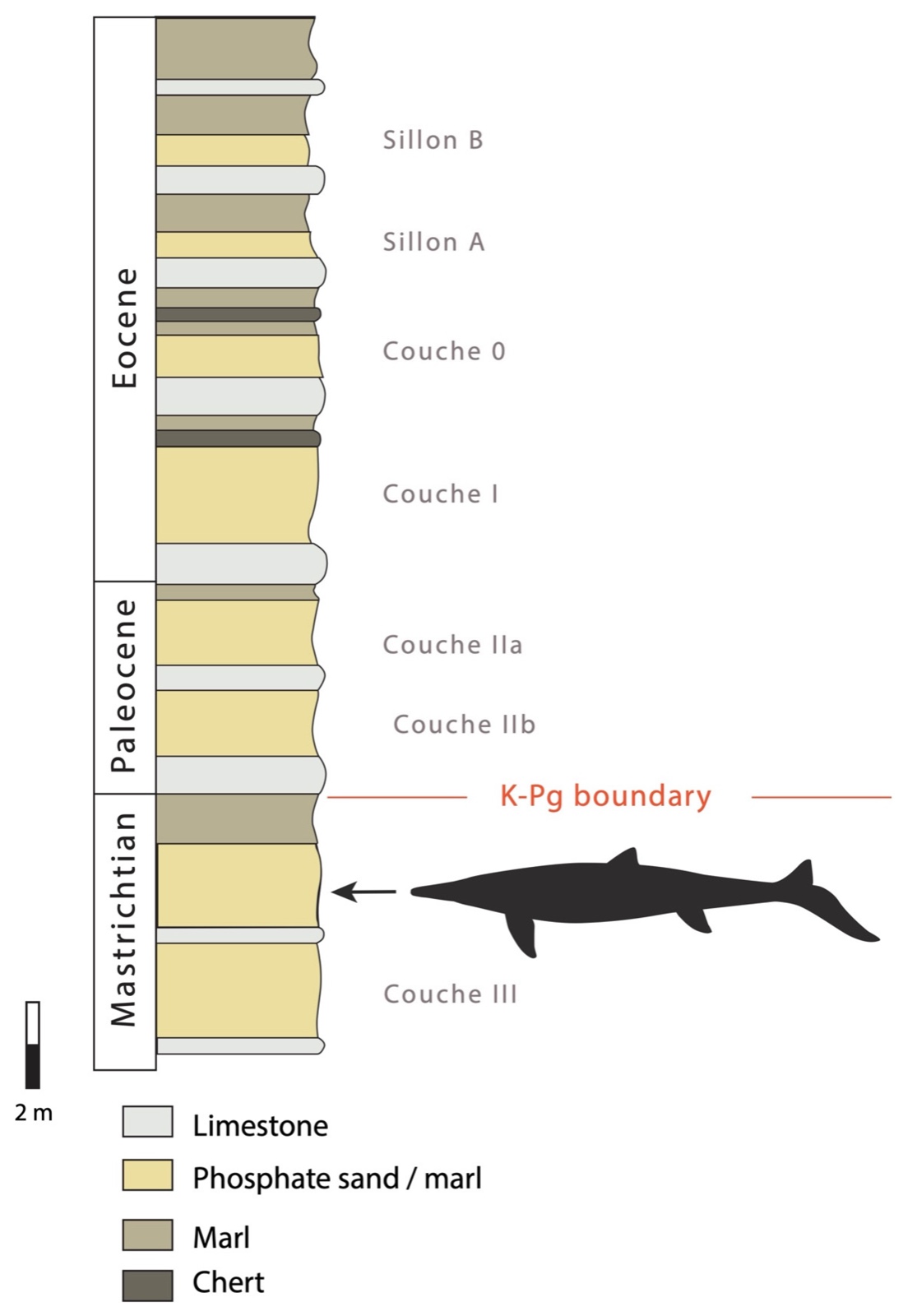
Fossilized remains of a previously unknown species of mosasaur, an extinct marine reptile, have been uncovered in the phosphate mines of Sidi Chennane, located in the Béni Mellal-Khénifra region. The species, named Carinodens, lived approximately 67 million years ago during the late Cretaceous period.
The creature, measuring between 2 and 3 meters long, was distinguished by its unique rectangular, low-set teeth, which paleontologists believe were adapted for crushing hard-shelled prey. According to a study published in the journal Diversity, this new discovery highlights the significant evolutionary diversity among mosasaur species in late Cretaceous Morocco.

Lead researcher Nicholas Longrich of the University of Bath described Carinodens as a durophagous mosasaur, meaning it specialized in consuming hard-shelled organisms. “The diversity of mosasaur dental structures at the time is remarkable,” Longrich noted, pointing out that other species had teeth adapted for tearing, stabbing, and cutting prey.
The study also identified Morocco as a hotspot for mosasaur diversity, with at least 16 species coexisting in the region during the late Maastrichtian era. This finding underscores the ecological richness of the area shortly before the mass extinction event that wiped out these marine reptiles.

Researchers previously identified another mosasaur species, Xenodens calminechari, in the same region in 2021. Known for its saw-like teeth, this species exemplifies the adaptive evolution of mosasaurs during the Cretaceous period.
The study’s authors believe that the rich fossil record in Morocco’s phosphate deposits offers critical insights into the diversity and adaptation of marine reptiles in prehistoric ecosystems.



add your comment
Terms of publication : Not to offend the writer, people, sacred things, or attack religions or the divine self, and refrain from racist incitement and insults.