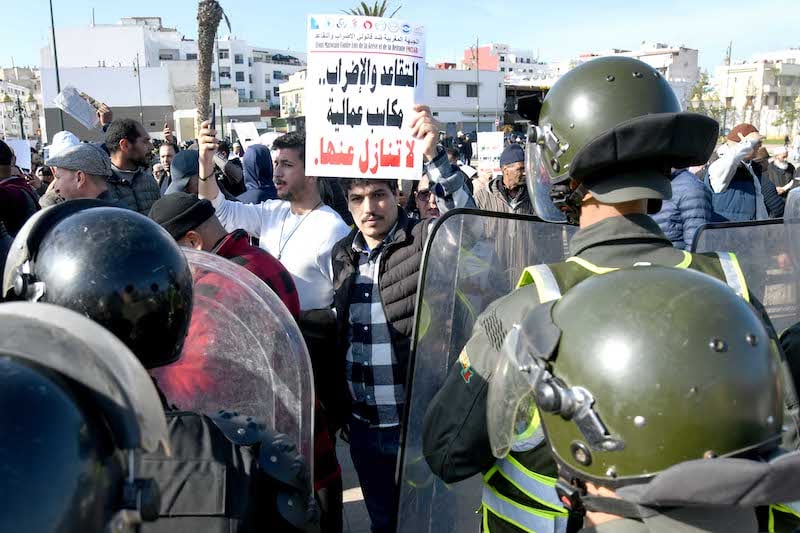
A draft organic law regulating the right to strike in Morocco is heading to the House of Councillors for review, after being approved by the House of Representatives last week. The law, which outlines conditions and procedures for exercising the constitutional right to strike, has sparked significant debate among trade unions, employers, and lawmakers.
The upcoming discussions in the House of Councillors are expected to be contentious. The second chamber includes representatives of labor unions, business leaders, and employers’ associations, potentially setting the stage for revisions to provisions in the draft law that have drawn criticism.
Proponents of workers’ rights argue the bill restricts the right to strike, guaranteed under Article 29 of Morocco’s Constitution. Union representatives have vowed to push for amendments, including changes to notification procedures and penalties outlined in the draft.
Lahcen Nazihi, coordinator for the Democratic Confederation of Labor in the House of Councillors, criticized the government’s handling of the legislation. “The government failed to adhere to the April 2022 agreement to present this draft within the framework of social dialogue,” Nazihi told local outlet Hespress.
He called for revisions to clauses that require workers to provide lengthy notification before striking. “The proposed notification period undermines the essence of the strike and restricts employees’ ability to exercise their constitutional right,” he said.
Nazihi also criticized the fines outlined in the draft, which range from 5,000 to 10,000 dirhams for individual workers. “It’s excessive to expect a worker, merely asking for a modest pay raise, to bear such financial penalties,” he said, adding that penalties imposed on businesses were far more lenient and unlikely to deter violations.
Calls for a Balanced Approach
Youssef Aidi, head of the Socialist Group in the House of Councillors, echoed concerns over the bill, emphasizing the need to protect workers’ rights while introducing much-needed regulations to address what he described as “chaos” in the sector.
“We will advocate for the right to strike to be practiced without restrictive formalities,” Aidi said, noting that public sector employees are among the few who feel secure enough to strike. Private sector workers, he argued, often face pressure and retaliation when trying to establish union offices.
Aidi also criticized the draft law’s procedural requirements, including notification periods, as overly complicated and restrictive, particularly for private sector workers.
The government, meanwhile, has defended the bill as necessary to regulate the sector and ensure balance between workers’ rights and employers’ interests.
The draft law is set to be reviewed by the House of Councillors in the coming days, with union representatives, opposition members, and business leaders expected to weigh in on potential amendments. The discussions are likely to shape the final version of the law, which aims to regulate one of Morocco’s most debated constitutional rights.







add your comment
Terms of publication : Not to offend the writer, people, sacred things, or attack religions or the divine self, and refrain from racist incitement and insults.