
A new report from the Washington-based think tank Atlantic Council underscores the importance of strengthening U.S.-Morocco relations to counter Iran’s influence in the Sahel and unlock investment opportunities in the region.
Titled “Iran has ambitions in Western Sahara, Trump can contain them by bolstering ties with Morocco,” the report warns that the current U.S. administration’s distancing from Morocco risks prolonging the decades-old Western Sahara dispute, potentially allowing Iran to expand its influence at Morocco’s expense.
The report suggests the incoming administration should reinvigorate U.S.-Morocco security and economic ties to improve stability in the Sahara.
“The Western Sahara conflict may not be a top priority for the new Trump administration, but there are strong reasons to reinforce the U.S.-Morocco partnership and help resolve this long-standing issue before it becomes a greater challenge for Washington and its allies,” said Sarah Zaaimi, the report’s author.
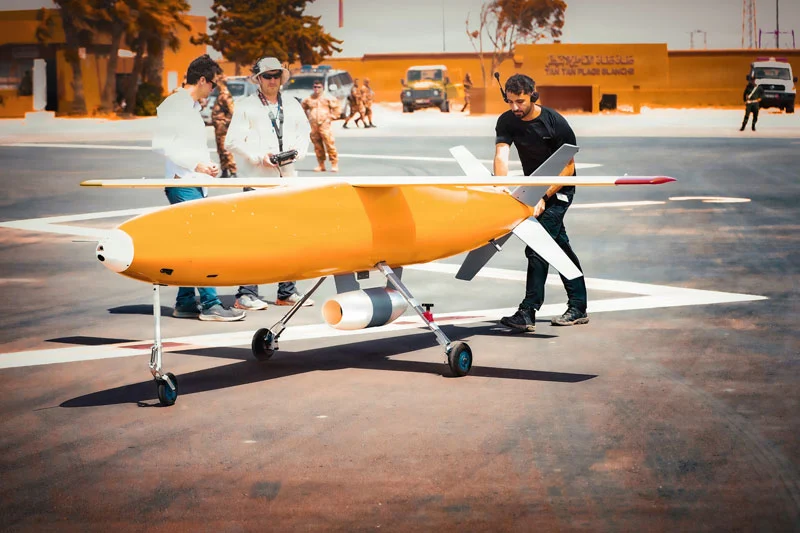
The document highlights concerns over Iran’s support for the Polisario Front, which, coupled with Algeria’s role in supplying Iranian drones to the group, poses a growing security threat to the Sahara and Sahel regions.
This instability could potentially trigger massive migration flows into Southern Europe.
“Iran has found the Polisario Front to be a valuable ally to advance its geostrategic goals, aiming to secure a foothold on the Atlantic and get closer to Western Europe and the Mediterranean,” the report states.
The report further emphasizes the importance of a coordinated effort among key U.S. allies, including Spain, Israel, and France, to prevent the emergence of a new front in North Africa and the Sahel, where Russian- and Iranian-backed militias could destabilize the region.
The rising concerns come as Algeria strengthens its ties with Iran and increasingly draws controversial parallels between the Palestinian and Western Saharan causes, despite significant historical and cultural differences.
“The incoming Trump administration has a historic opportunity to resolve the Western Sahara conflict and curb the ambitions of aggressor states in North Africa,” the report asserts.
It also notes that the incoming president’s skepticism toward supranational institutions could present an opportunity to push for a better approach to the conflict within the UN, particularly after a controversial proposal from the UN envoy to partition the territory—a plan reminiscent of colonial-era borders.
The report also highlights the U.S. interest in supporting Morocco’s Atlantic Initiative, a project aimed at providing landlocked Sahel countries with access to the Atlantic through the $1.2 billion Dakhla harbor project.
This initiative, which promotes regional economic integration, also offers significant opportunities for U.S. companies, especially in industries such as automotive, aerospace, and critical minerals for lithium batteries.
Additionally, the report suggests the incoming administration revisit Senator Dan Sullivan’s proposal to relocate U.S. Africa Command from Germany to Morocco, capitalizing on the country’s strategic location and military history with the U.S. to deter destabilization in the region.






add your comment
Terms of publication : Not to offend the writer, people, sacred things, or attack religions or the divine self, and refrain from racist incitement and insults.