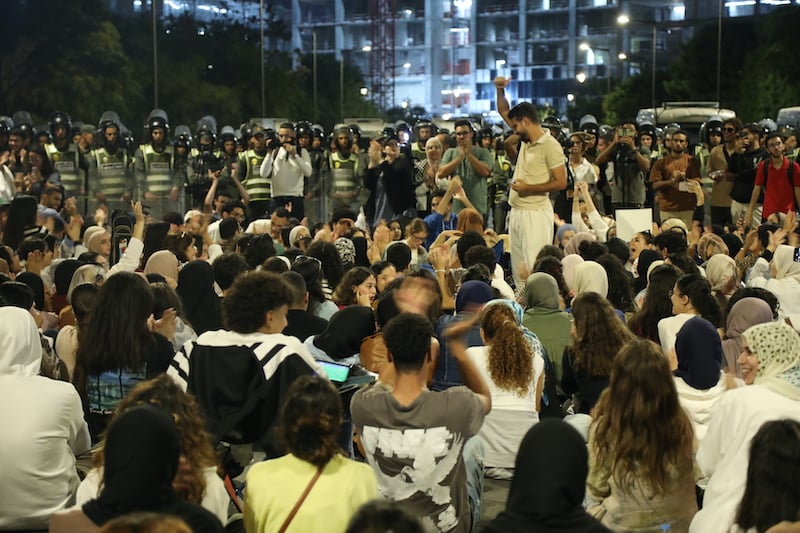
Morocco’s Minister of Higher Education, Abdel Latif Miraoui, said use of force against medical students in a protests Wednesday night was outside of his jursdiction and attributed it to actions “outside university walls,” while human rights organizations hold him accountable for the ongoing crisis lasting nearly a year.
The minister declined to give further comment to Hespress, stating that “the statement from the Ombudsman is still pending.”
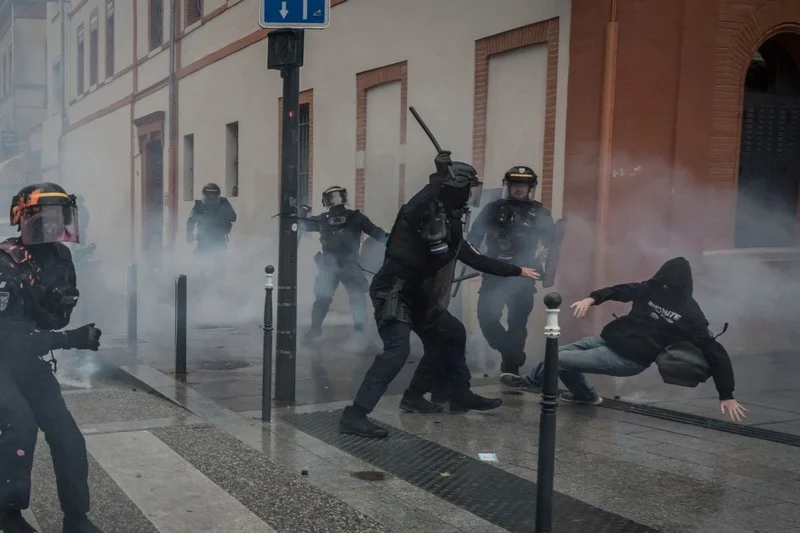
Several rights organizations condemned the use of public forces against protests by students from the faculties of medicine, pharmacy, and dentistry in Rabat, Casablanca, and Tangier.
They argued that “this situation reveals the failure of the governmental entity responsible for the sector to resolve the crisis, which has lasted for about a year, putting medical training in jeopardy and risking a ‘white year’ for the country,” leading students to the streets and “violating their dignity.”
Various human rights statements and comments expressed condemnation of “any practice of this nature that tarnishes the country’s image or presents documented scenes of human rights violations, which the human rights context in Morocco, both officially and civilly, seeks to relegate to the past and not allow a return to, particularly regarding the enhancement of public space to be more accommodating for discussion, protest, and dialogue.”
“The security approach and the use of public force are entirely unacceptable, especially against a group that protests peacefully and demands its rights, possessing a level of education that does not lead it to violence,” Driss Sedraoui, President of the Moroccan League for Citizenship and Human Right
Speaking to Hespress AR , he asserted that “the protests and demands of the students are legitimate,” adding that “the use of force contradicts the statements of officials in the human rights sector, who consistently affirm that Morocco enjoys the freedom to protest, which is guaranteed and protected by a framework that shields it from any violations.”
He placed primary and direct responsibility on the government, stating that the sectors overseeing this issue within the executive authority remain obstinate, allowing academic and scientific time to be wasted. He also included medical student representatives in this responsibility, attributing it to “the need to believe in a gradual application of demands and not to be excessively rigid, as demands should not be taken absolutely.”
The public prosecutor on Friday pressed charges against 34 individuals, including 24 medical students and 10 resident and intern doctors, after their detention during a protest at Ibn Sina University Hospital in Rabat. All were released following the protest, which was organized by the National Committee of Residents and Interns.
The charges include unauthorized assembly, disobedience, and failure to comply with authority orders. The individuals appeared before the public prosecutor at Rabat’s Court of First Instance on Friday, with hearings scheduled for Wednesday, October 23. A team of 25 volunteer lawyers, including Aziz Rouyah, head of the Rabat Bar Association, is providing legal support.






add your comment
Terms of publication : Not to offend the writer, people, sacred things, or attack religions or the divine self, and refrain from racist incitement and insults.