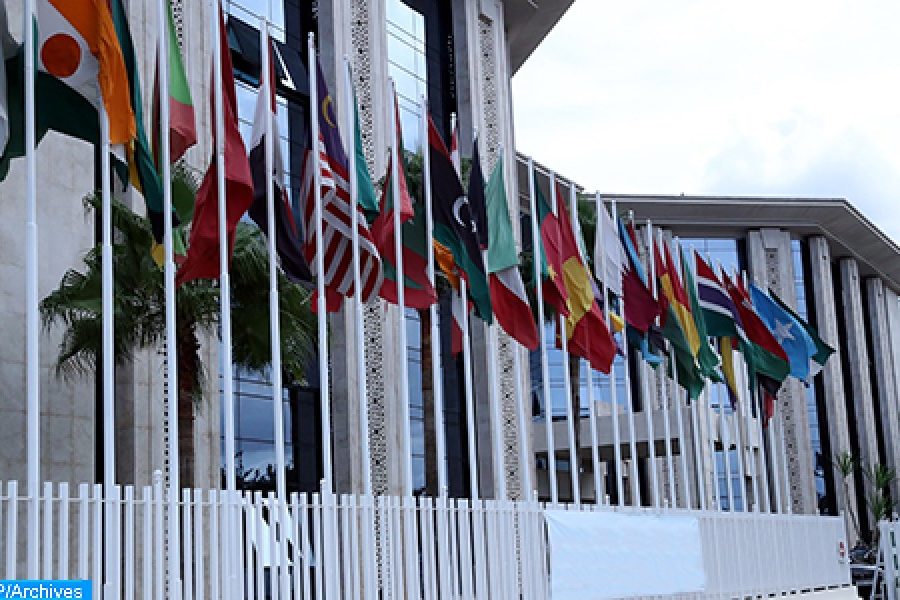
The Islamic World Educational, Scientific and Cultural Organization (ICESCO) convened a regional workshop on the Charter of the Islamic World for Artificial Intelligence (AI) in Africa and Latin America on August 29 and 30. The event took place at Mohammed VI Polytechnic University (UM6P-Rabat) and brought together officials, experts, and representatives from ICESCO’s member states.
The workshop was part of the ongoing development of the AI Charter, which aims to establish a comprehensive framework for the ethical and strategic governance of AI in the Islamic world. During the opening session, Kais Hammami, Director of ICESCO’s Center for Foresight and AI, emphasized the transformative impact AI could have on humanity’s future. He highlighted the Charter’s significance as a cornerstone of ICESCO’s commitment to a forward-looking and ethical approach in this rapidly evolving field.
Mohamed Al-Hadi Al-Suhaili, Director of ICESCO’s Department of Legal Affairs and International Standards, provided insights into the indicators used to assess countries’ readiness for AI across the Arab region, Asia, and Latin America. These indicators include key factors such as “governance and ethics.”
Anouar Sabri, Chairman of the House of Representatives’ temporary thematic working group on AI, and Abdulrahman Habib, Executive President of the Saudi Data and Artificial Intelligence Authority (SDAIA), both underscored the Charter’s role in fostering a future where AI serves as a “positive force.”
The workshop featured sessions aimed at formulating practical recommendations for strategic governance and addressing the ethical dimensions of AI’s future use in the Muslim world. Participants also engaged in brainstorming sessions to develop ethical principles and governance mechanisms crucial for refining the Charter.








add your comment
Terms of publication : Not to offend the writer, people, sacred things, or attack religions or the divine self, and refrain from racist incitement and insults.