
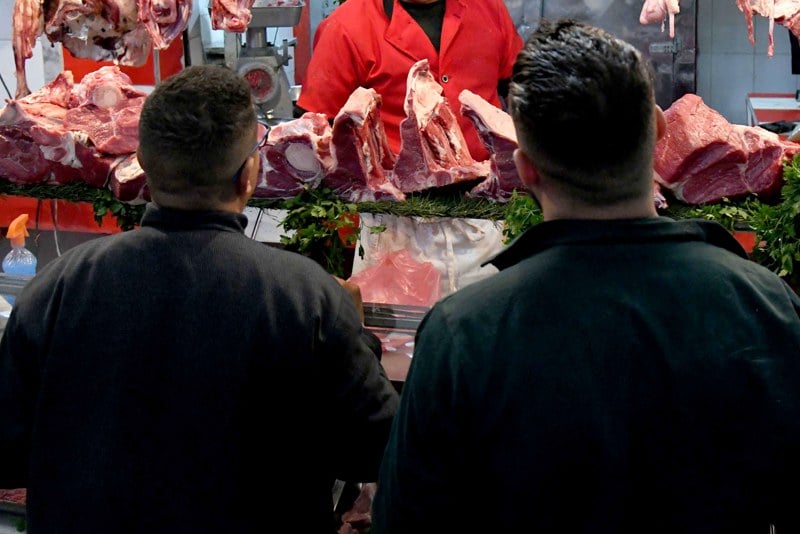
Moroccans are grappling with a meat crisis as beef and lamb/goat prices have surged to over 100 MAD, leaving many struggling to afford these staples.
This sharp increase, which has persisted for nearly two years, has ignited public anger and significantly strained household budgets.
“The primary reasons for the increase are the consecutive years of drought and the resulting decline in the national livestock population,” said Hicham al Jawabri, the regional secretary for wholesale meat traders and urban slaughterhouses in Casablanca.
In a statement to Hespress English, the regional secretary argued that “years of drought have driven up feed costs, and Moroccan farmers and breeders struggle to keep up with these prices, forcing them to reduce their herds and increase slaughter rates.”
Youssef Guerraoui Filali, an economist, confirmed in a statement to Hespress EN that the current price hikes began intensifying after Eid al-Adha 2023 when the cost of sacrificial animals started rising.
“The lack of rain-fed grazing land and the high cost of feed have hurt livestock farming, causing prices to rise and a shortage of sacrificial animals in the market, with prices up around 30% from the previous year,” argued Filali.
He went on to say despite government support for livestock imports, this measure was not coupled with effective steps to ensure market supply, leading to ongoing shortages and higher prices, which rose by 40% to 50% in 2024.
The government’s new regulations in November 2023 requiring imported cattle to be fattened before slaughter have further exacerbated the issue by adding costs and delays.
The new rules require imported cattle to remain in their country of origin for 30 to 40 days before being shipped to Morocco, adding extra costs and delaying their readiness for slaughter by several months.
This change, coupled with Morocco’s lack of self-sufficiency in cattle for slaughter, has caused a shortage in the meat supply, driving prices up, according to media reports.
Exporting countries, particularly in Europe, have been reluctant to comply with the new fattening regulations due to the extra costs involved, such as health monitoring during the extended stay of cattle in the country of origin. These countries have responded by raising their prices.
Also, European health measures, like limiting the time cattle can remain on trucks to eight hours, have further strained the ability of Moroccan importers to bring in livestock, exacerbating the supply shortage and pushing prices higher.
To tackle the rising meat prices, Minister of Agriculture Mohamed Sadiki held a meeting with red meat industry professionals on Tuesday in Rabat, resulting in three key decisions.
These include drafting a comprehensive livestock breeding law to address concerns about the declining Moroccan livestock population.
The attendees also agreed to continue supporting livestock feed and explore the importation of animal feed to strengthen food security amid ongoing drought.
Additionally, the Minister committed to developing drought-resistant fodder crops like white corn, regulating artificial insemination, and preserving female livestock. Media reports indicated that further meetings are planned to implement these agreements.







add your comment
Terms of publication : Not to offend the writer, people, sacred things, or attack religions or the divine self, and refrain from racist incitement and insults.