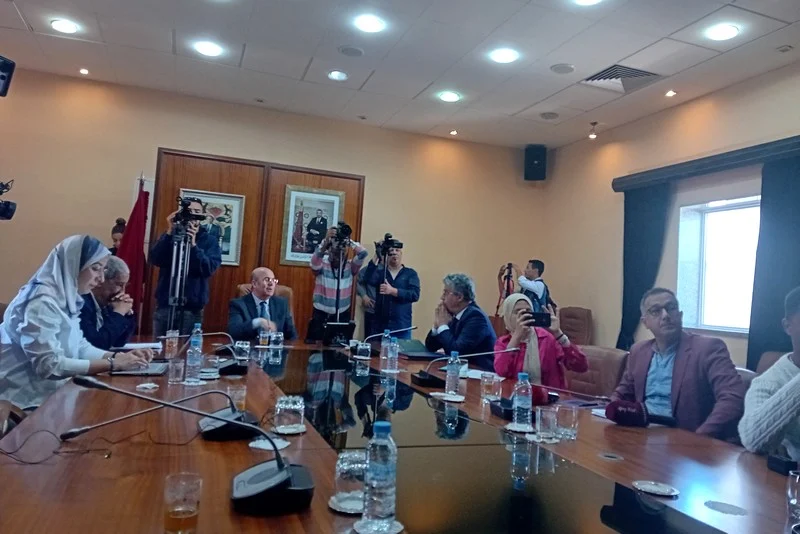
Morocco is ramping up its defenses against forest fires this summer (2024) as they anticipate an increased risk, said the Prevention and Control of Forest Fires committee Thursday at the headquarters of the National Water and Forest Agency in Rabat,
The number of firefighting Kanadir aircraft has grown to seven, with another planned for arrival in 2025.
While their fleet of specialized Kanadir firefighting aircraft has grown to seven, with another on the way in 2025, the country is also strategically allocating a significant budget of 153 million dirhams.
This financial injection will allow for crucial fire prevention efforts, such as strengthening surveillance patrols, maintaining firebreaks and access paths, preparing water points for rapid response, and acquiring new vehicles specifically designed for initial intervention on fire scenes.
The National Water and Forest Agency reported a positive trend in 2023, with a dramatic 70% reduction in fires compared to 2022. Despite this success, and with the ever-present threat of drought and heat waves, Morocco remains vigilant.Technology plays a central role in their comprehensive fire management strategy.
While they currently have one operational drone dedicated to monitoring, plans are in motion to acquire seven more, ensuring comprehensive coverage of potential fire zones. F
A partnership with the Royal Center for Remote Sensing grants Morocco access to valuable satellite imagery for fire tracking. To further enhance their monitoring capabilities, they’re exploring a cutting-edge solution – the use of American satellites that provide real-time, around-the-clock updates on potential fire threats.
Artificial intelligence is another weapon in Morocco’s fire-fighting arsenal. An American information system utilizing cutting-edge AI technology has been implemented to predict fire spread with an impressive 80% accuracy. This sophisticated system is complemented by a Moroccan-developed information system that boasts a 75% effectiveness rate.
This solution is continuously being improved to provide even greater assistance to field teams on the ground,ensuring a more coordinated and efficient response to wildfires.
The initial intervention teams will be significantly strengthened this season, reaching a total of 350 equipped units. These highly-trained teams will be the first line of defense, tasked with handling critical situations until ground and air support arrives.



add your comment
Terms of publication : Not to offend the writer, people, sacred things, or attack religions or the divine self, and refrain from racist incitement and insults.