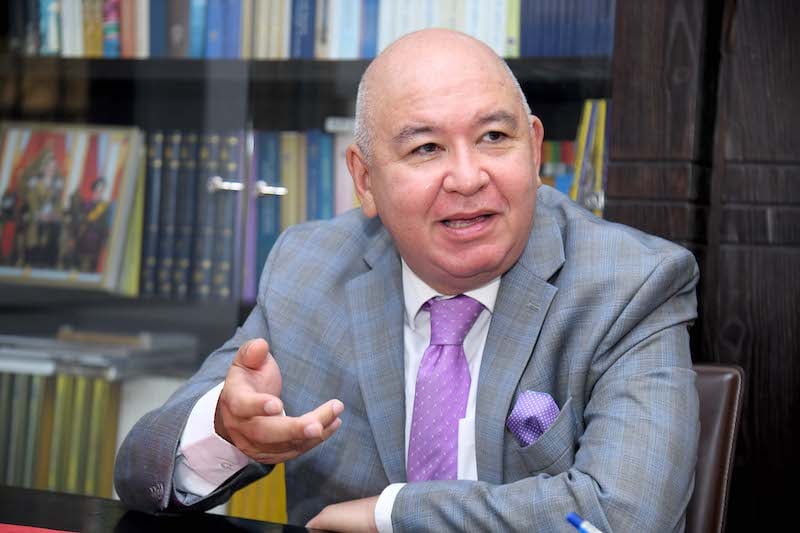
“Moroccan and Thai authorities are currently coordinating through an open channel of communication to discuss ways to release Moroccan detainees at the border with Myanmar, as the case is currently being investigated by law enforcement authorities,” said Fabio Chinda, Thai ambassador to Rabat.
In an interview with Hespress, Chinda added that the possibility of Thai authorities intervening on the ground to free the detainees is very difficult, given the deteriorating security situation in neighboring Myanmar.
“There is no information or confirmation about the location of the detainees, and the same goes for the possibility of them being detained,” the Thai ambassador stressed, revealing that “Interpol is aware of this case.”
“Thai authorities are taking the matter seriously and will do everything in their power to free the detainees,” Chinda said, noting that “the Embassy of the Kingdom of Morocco in Bangkok is currently doing a great deal of work under tremendous pressure to resolve the issue.”

Here is the full text of the interview:
First of all, please tell us the full details and the truth about what happened to these Moroccans?
We don’t have much information at the moment because these incidents most likely took place outside the Thai borders. These people were victimized because they were looking for job opportunities or high-paying jobs, which were actually scams.
They may have been offered flights to Thailand, where they thought they would work and earn a high income.
They may have been picked up at the airport and then taken to nice hotels at first, before being smuggled or transported across the border to Myanmar in this case.
The information we received about these Moroccans was from the Moroccan Embassy in Bangkok, through the Ministry of Foreign Affairs of Thailand; these Moroccans tried to contact their families in Morocco, who in turn contacted the Moroccan authorities for help.
The Moroccan authorities then asked the Thai authorities for help.
From what we know now, they have informed their families that they are being held in bad places and have been forced to work in cyber scams.
As you can see in the news everywhere, I say here, these cybercrime operations have recently emerged as an international issue in Southeast Asia in particular.
What is the status of the case so far?
We have received information about the identities of these Moroccan nationals who were reported to the Thai side for the purpose of mobilizing international assistance; however, we have not received any further updates on this matter.
We currently understand that law enforcement authorities in the countries concerned are investigating and verifying the information received.

Is there communication between the Moroccan and Thai authorities? In other words, have you started to coordinate together to release the detainees?
First, there is a need to understand that we don’t have enough information about where they are being held or by whom.
We are talking about highly sophisticated international criminal networks with recruits from many countries.
Thailand, through the Thai Embassy in Rabat and the Ministry of Foreign Affairs in Bangkok, is working with our Moroccan counterparts through an always open communication channel to coordinate between our two countries in this regard.
I note that the consular section received a phone call from a person who claimed to be a family member of one of the victims; however, we cannot verify this information and have no information on the case.
The main mission of the embassy in Rabat is to assist Thai nationals in Morocco, to represent the country here, and to be the point of contact between Morocco and Thailand.
In the same way that the Moroccan Embassy in Bangkok is in Thailand to assist Moroccan nationals there and neighboring countries where they have a presence, and also to be the point of contact there in Thailand.
Both Thai and Moroccan authorities are working together and coordinating jointly on the case, which involves not only Moroccans, but many other African nationals who have been duped by these international criminal networks.
The Thai side is always ready to cooperate with the Moroccan side, and all countries are involved in finding solutions to these unconventional crimes. Locating and returning the detainees will require international cooperation and resources, and UN agencies and Interpol are aware of this issue.
Have the Thai authorities opened an investigation on the ground and is it true that the detainees are in Mae Sot?
As mentioned, we do not currently have any verified information about the exact location of these people, or how exactly they ended up in such a situation.
There have been news reports that they were detained near Mae Sot, which is a border province next to Myanmar, possibly along or across the border. Again, we’re talking about influential groups, like criminal gangs. So, it’s a very sensitive operation that requires the cooperation of all parties.
Given the volatile situation in some areas of Myanmar at the moment, it is extremely difficult to obtain information that local authorities on the ground may need to conduct search and rescue or similar operations.
Field investigations in border areas or inside Myanmar are very difficult due to the poor security conditions there.

In this regard, can you tell us more about where the investigation by national and international law enforcement authorities is, and how it is proceeding?
We do not have any direct or preliminary information from any international law enforcement agencies; however, it is generally known that the area where some African nationals are forced to work has a volatile security situation, which makes it difficult for any law enforcement personnel to access.
We don’t know which group is holding these people, how many, or where they are. These are international criminal groups with members of many nationalities operating in many countries.
Do you have official figures on how many Moroccans have been identified as victims of these operations in recent years?
Last year, Thailand, Interpol and countries in Southeast Asia conducted joint operations that resulted in thousands of police searches and hundreds of investigations that led to the rescue of many victims of many nationalities; but the investigations are still ongoing.
This is the first time we hear that Moroccan citizens have also fallen victim to these international fraud networks, and many national and international law enforcement agencies are working on the case.
It is important to note that this type of crime is not only happening in Southeast Asia; it is everywhere, even in Europe.
The recruits and victims are also multinational; however, these international gangs have recently targeted African nationals because they speak good English or other languages, which are useful for cyber fraud. This is a global challenge.
International security and intelligence operations are needed to pool resources to tackle this global issue. INTERPOL has played an important role in intervening in cross-border movements by issuing notices or alerts.
Therefore, it is important to prevent people from falling victim to human trafficking or human smuggling.
Have you found out the identities of the Moroccan detainees, and has it been confirmed that some of them have been assaulted?
As the Thai Embassy, we are not in a position to discuss or disclose the identities of the Moroccan nationals.
This matter needs to be handled by the relevant authorities.
We do not have any information available to us regarding any evidence; but from our records, these people did not receive a visa to enter Thailand from the Thai Embassy in Rabat.

(interrupted)… Some of the families have reported abuse?
There is no such information available to us. We have only received information, for coordination purposes, from the Moroccan side through our Ministry of Foreign Affairs.
I would just like to emphasize that any information on this matter must be verified first, and those who can confirm it are the relevant security and judicial authorities.
Is it true that Thai and Myanmar authorities are finding it difficult on the ground to release detainees?
As you know, Myanmar is facing a volatile security situation inside the country at the moment. So, it is not easy for any security authorities; but they are doing their best to help anyone who is victimized.
(Interrupting again)… It’s difficult for the Thai authorities and Interpol. So, who can do it?
We are talking about the international mafia and serious criminal organizations that exist in any region or country.
The victims are from many countries: European, African, Asian and so on. Even the Russian, American, and British can be victims… This is a real and global challenge.
Thailand takes human rights issues very seriously and therefore cooperates with everyone in this regard.
Will the embassy take new measures to prevent the recruitment of young Moroccans?
First of all, the people who fell victim to these operations did not obtain visas from our embassy, and we do not know where they got the visa; they may have traveled through a country close to Thailand where they did not need a visa: Moroccans can travel visa-free to some countries in the Middle East or Southeast Asia such as Malaysia.
We haven’t encountered this kind of issue before; most Moroccans traveling to Thailand go there for tourism.
But with this issue, Thai embassies, especially in Africa, have been instructed to be more careful in issuing visas, in order to prevent these Africans from falling for these scams.
Some of them have come to the embassies with false information, saying that they are going to Thailand for tourism when in fact they are looking for these job opportunities. Or they hide some information from us, so we couldn’t help them check if these companies existed or were legitimate.

Well, finally, what would you like to say to the families of the detained victims? Any reassuring words for them?
First, they should check all the news that is circulating, and all young Moroccans who receive job offers abroad should make sure that they are real jobs and not scams; when they apply for a visa from us, they should give us their real purpose for traveling to our country for their safety.
If they provide real documents or information, we may be able to help verify certain information.
Secondly, we assure all the families that the Thai authorities are doing their best and have taken the matter very seriously, especially since it is a human rights issue. I would say that the security authorities (army and police…) in our country are working on this issue.
In the meantime, the Moroccan authorities, such as the Moroccan Embassy in Bangkok, are doing a lot of work and under a lot of pressure to help these Moroccan citizens.
The Thai side will continue to coordinate with the Moroccan authorities to resolve the issue.
All of this is based on the good relations between our two countries, and I just want to reiterate that both sides are doing everything they can to help these victims.



add your comment
Terms of publication : Not to offend the writer, people, sacred things, or attack religions or the divine self, and refrain from racist incitement and insults.