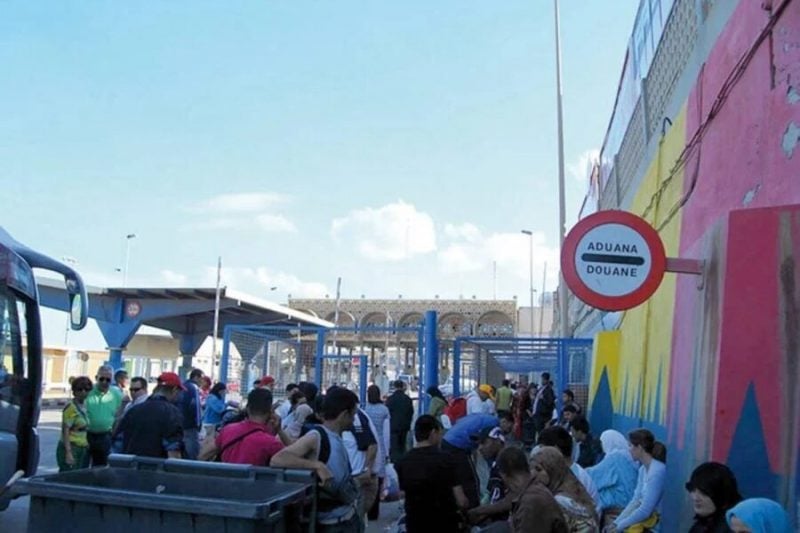
The Melilla Confederation of Entrepreneurs (CEME-CEOE) voiced their disappointment over the lack of progress in normalizing the transit of goods through Spain’s land borders with Morocco in Ceuta and Melilla.
The confederation said on Thursday in a statement that the situation remains unchanged in the borders’ customs following President Pedro Sánchez’s official visit to Morocco on Wednesday.
CEME-CEOE president Enrique Alcoba criticized the Spanish government for not being “more demanding” with Morocco and adequately defending the interests of these two autonomous cities.
Alcoba expressed dissatisfaction with Sánchez’s statements, which he deemed repetitive and lacking concrete action.
“More of the same is what we’ve been hearing since August 2018,” said Alcoba, referring to Morocco’s unilateral closure of the commercial customs office at the Melilla border.
The president said that there is minimal progress made since the “new stage” in relations began between Spain and Morocco in April 2022, despite the roadmap signed outlining the re-establishment of transit with “appropriate customs and people control mechanisms.”
The CEME-CEOE expressed particular concern about the continued closure of the Melilla commercial customs office and the “funnel law” they believe unfairly restricts the flow of goods from Melilla to Morocco.
This, coupled with the reopening of the border but only allowing purchases in from Morocco, has crippled Melilla’s commerce, effectively leading to a “commercial closure” according to the employers’ association.
Their frustration stems from the economic impact on Melilla, particularly its businesses. The lack of progress on border normalization creates uncertainty and hinders economic activity.
The CEME-CEOE urged the Spanish government to adopt a more assertive stance in negotiations with Morocco and prioritize the interests of Ceuta and Melilla.
The impact of the commercial customs office’s closure on Melilla was immediate and severe. Its economy, heavily reliant on trade with Morocco, ground to a halt.
Businesses lost access to the Moroccan market, investment dwindled, and the flow of goods slowed to a trickle. The once bustling border became a symbol of economic hardship and frustration.
In 2022, hope flickered with the signing of a roadmap between Spain and Morocco, marking a “new stage” in relations.
The document promised the reopening of the Melilla customs office and a “normalization” of border crossings. However, initial optimism has faded as progress remains slow.










add your comment
Terms of publication : Not to offend the writer, people, sacred things, or attack religions or the divine self, and refrain from racist incitement and insults.