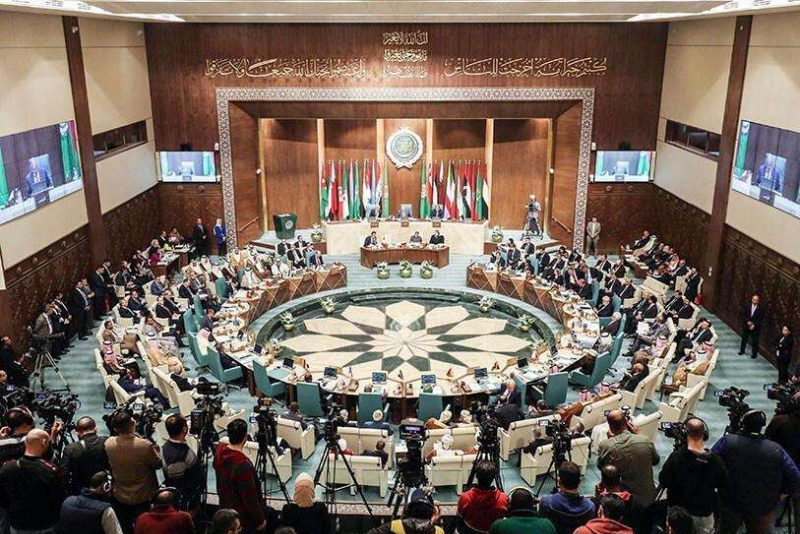
After long negotiations and diplomatic efforts, Saudi Arabia has succeeded in bringing Syria back to the League of Arab States. This move puts the spotlight on Morocco, which had previously opposed Syria’s return but eventually accepted it.
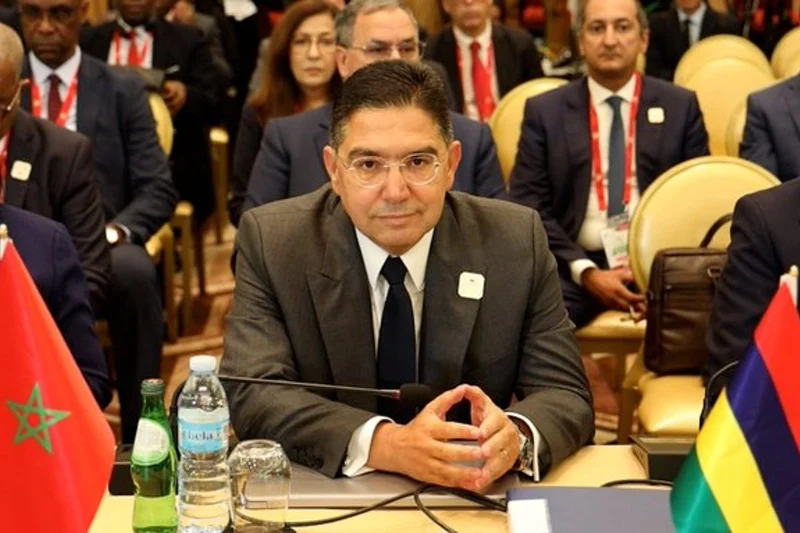
Minister of Foreign Affairs, African Cooperation, and Moroccan Expatriates Nasser Bourita believes that the Arab League’s decision concerning Syria’s readmission should be “a catalyst that propels them onto a political path leading to a comprehensive and lasting solution to the country’s crisis,” highlighting King Mohammed VI’s vision of crisis containment and management.
“The efforts made by the Saudi Arabian kingdom in this regard, in their belief that good things came with unity and solidarity, and not with division and fragmentation, will make the next Jeddah summit a priceless opportunity to unite the Arab family.” he said in a speech during the emergency meeting of Arab foreign ministers on Syria this Sunday 7 May, in Cairo.
Bourita recalled the historical ties with Syria, engrained in Moroccan memory since the October 1973 war, when Syrian and Arab soldiers fought side by side in defense of the sanctity of this Arab nation, affirming that King Mohammed VI has always paid attention to the Syrian crisis in all its fallouts; focusing on the human dimension.
After expressing his regret over the blight, violence and turmoil that affected the country over the past twelve years and cast a shadow over all the countries in the regions, the Minister explained that this persisting crisis had negatively affected Syrian people’s tranquility, living conditions, and individual aspirations for new horizons that could only be broadened by freedom, openness, and effective participation in public affairs.
Those familiar with Moroccan diplomacy are well aware that the kingdom does not concede its position unless conditions and guarantees that serve its interests and meet its aspirations are set. There is talk of Rabat receiving guarantees from Riyadh, ensuring that Syria does not interfere in the territorial unity of the Kingdom.
No obligations imposed on Morocco:
Said Saddiki, a Professor of International Relations at Sidi Mohammed Ben Abdellah University in Fes, said that “this concerns the start of Syria’s re-admission into the Arab League, and thus, doesn’t include any bilateral diplomatic arrangements between Morocco and Syria.”
The same scholar and political analyst confirmed, in a statement to Hespress, that this return “does not impose any obligation on Morocco regarding its diplomatic relations with Syria,” stressing that diplomatic relations would depend on “bilateral arrangements between Morocco and Syria, the latter’s position on the Sahara issue, and the repercussions of the crisis between Morocco and Iran over these relations.”
Saddiki adds that restoring diplomatic relations between Morocco and Syria requires “bilateral arrangements between the two countries in which their positions are clearly stated, especially concerning Syria’s position on the Sahara issue,”. He also noted that Morocco’s accusation of Hezbollah supplying the “Polisario,” with weapons would affect the subject; Because “these files are interrelated, and the Moroccan-Iranian crisis relations might also cast a shadow over the development of bilateral relations between Rabat and Damascus.”
Potential Losses:
I don’t think Morocco has anything to lose following the readmission. In fact, the Moroccan orientations and foreign policies led by His Majesty the King Mohammed VI during his reign call for the establishment of a strong Arab organization that shares unified interests the way existing unions, such as the European and American ones, do,” “Professor of international Relations at the same university, Khalid Yaimout told Hespress.
Yaimout added that “King Mohammed VI gave a famous speech at the Kuwait summit, and it is so far the basis of Moroccan dealings in Arab relations,” explaining that the aforementioned royal speech “laid down the rules for dealing with Arab countries based on the statute of the League of Arab States, which envisions a strong and harmonious Arab alliance, through unification of political positions, as well as strengthening economic and cultural integration to establish a unified system through which all structures of the Arab system are renewed. All so that it would stand as a powerful organization that plays a major role in south-south relations, as well as with European countries.
He then pointed out that this is consistent with the Moroccan foreign political vision of the Arab system, highlighting that Morocco was avoiding “the system of axes within the Arab League, especially on major issues such as the Syrian issue.”
Channels for dialogue :
Yaimout stressed that the Syrian regime “must review the foreign policy positions it adopted before 2010, and the conclusion is that this major shift is not in the Syrian regime’s vision of Arab-Arab relations; But the Syrian regime is now still under Iranian-Russian protection, and Arab-Arab relations must pass through the Iranian and Russian channels.”
He continued, explaining that “Morocco has good relations with Russia; Therefore, I do not think that Morocco has suffered any losses, but is successfully heading towards its vision, existing ever since His Majesty the King Mohammed VI rose to the throne, to create a harmonious, cooperative, and strong Arab system.”
The professor confirmed that the diplomatic consultations led by Saudi Arabia included a term sheet for the readmission of the Syrian regime to the Arab League, which required “respecting the statute of the Arab League, which stipulates non-interference in the internal affairs of states, and prohibits the support of armed groups and hosting or supporting any separatist or armed movement.”
He further explained that the main problem was related to the “Polisario,” and concerned Hezbollah, Syria and Iran, highlighting that the Syrian file is “negotiable and Iran will not rely mainly on Algeria to harm Morocco, and it is in its sole interest, not Morocco’s or Saudi Arabia’s, to have friendly relations with all neighboring, especially Arab, countries.”
Yaimout also expected Iran to impose “an additional system of rules on the Syrian regime following the direction of the current decree, which is that the Syrian lands should not support any armed organization or interfere in the internal affairs of countries.”
This Article was translated from Hespress AR by Hiba Aariche






add your comment
Terms of publication : Not to offend the writer, people, sacred things, or attack religions or the divine self, and refrain from racist incitement and insults.