
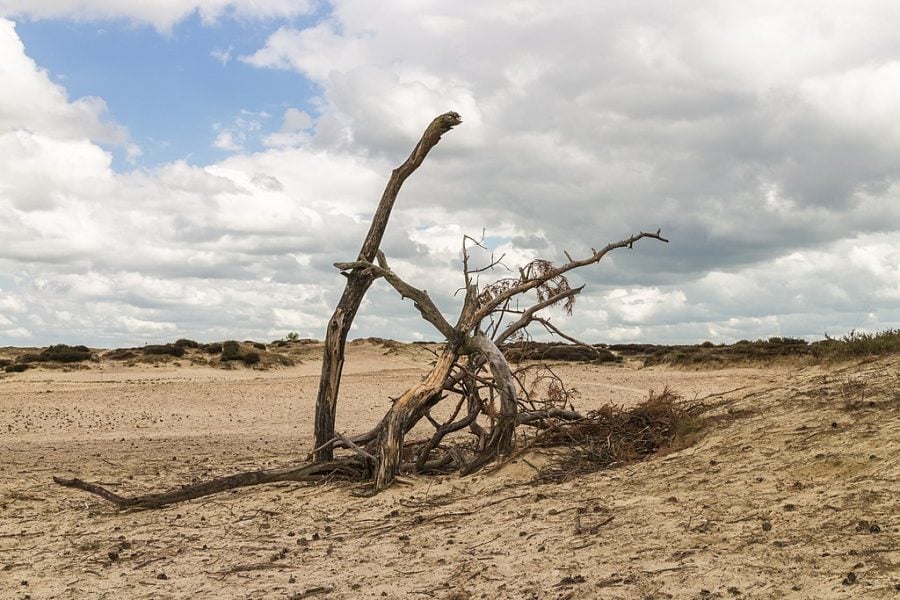
The impact of the drought is spreading to agricultural yields as the globe celebrates today as International Argan Day. Cultivators are complaining about low productivity and difficulty maintaining the supply chain.
Lack of water is to blame for the decline of Argan trees output, having a significant impact on the line of production for the Argan oil goods, according to the Argan Marjana cooperative.
“The shortage of water in the Argan trees is preventing them from producing as many fruits as they once did. This affects the amount of Argan oil produced, which has an impact on the cost and supply of this product on the market,” the Marjana cooperative told Hespress EN.
The cooperative has been growing Argan on a farm near Essaouira since 2005. The women-led collective make Argan oil products for both cosmetic and nutritious purposes.
The argan tree is used in daily life in some Moroccan regions, most notably Souss. Its dried branches were used as fuel for cooking and heating, while its woodlands serve as pastures for animals.
Beyond eating and cooking, the oil of the Argan tree has many advantages, including the extraction of numerous substances of high consumer and beauty value.
Taitmatn Idautnan Cooperative in Agadir also told HespressEN that the production of items containing argan oil had decreased recently.
The Taitmatn Idautnan cooperative was founded in 2020 in the Souss region. The agricultural feminine cooperative is currently producing argan oil at low rates.
The demand for products containing Argan oil varies by location. Compared to other cooperatives centered in the south or in tiny areas, the Argan Marjana cooperative has a longer chain of production.
Essaouira experiences high visitor and tourist rates, which increases demand for the oil-related commodities made there. The cooperative’s placement aids in increasing its visibility among locals.
The absence of tourists and lack of cooperative visibility prevents cooperatives in the south from experiencing as high a demand.
However, both cooperatives note demand for the argan-based products from local and foreign customers.
Today, the Ministry of Agriculture, Fisheries, Rural Development, Water, and Forests celebrates the Argan tree as a native to the Kingdom, a part of the human race’s cultural legacy, and a forerunner of sustainable development.
To celebrate the Argan tree, the UN is receiving ambassadors and representatives of the United Nations system to taste the argan tree’s products and learn about what local Moroccan cooperatives have to offer.
The United Nations will also organize a two-week art and photography exhibition on the argan tree at the UN headquarters.
The National Initiative for Human Development contributed 500,000 Moroccan dirhams in 2019 to Argan oil cooperatives as part of a larger program to improve the economic and social condition of Moroccan cooperatives.
This project enhanced the circumstances for the production and sale of argan oil. The Ministry of Agriculture and Fisheries reports that 5,640 tons of argan oil were produced in 2019.
Exports climbed by 55% from 871 tons in 2012 to 1,348 tons in 2019, and their value rose from 131 million dirhams to 273 million dirhams.





add your comment
Terms of publication : Not to offend the writer, people, sacred things, or attack religions or the divine self, and refrain from racist incitement and insults.