Moroccan OCP group confirmed its implication in the rationalization of water use in production, initiating a system to protect water resources, a goal at the heart of the group’s circular economy program.
OCP is working on a number of projects in Khouribga, Fakih Bensalah, and Kasbah Tadla, related to wastewater treatment plants, through the use of innovative technologies aimed at avoiding the use of fresh water by 2026, and favoring the use of unconventional water to wash extracted phosphate.
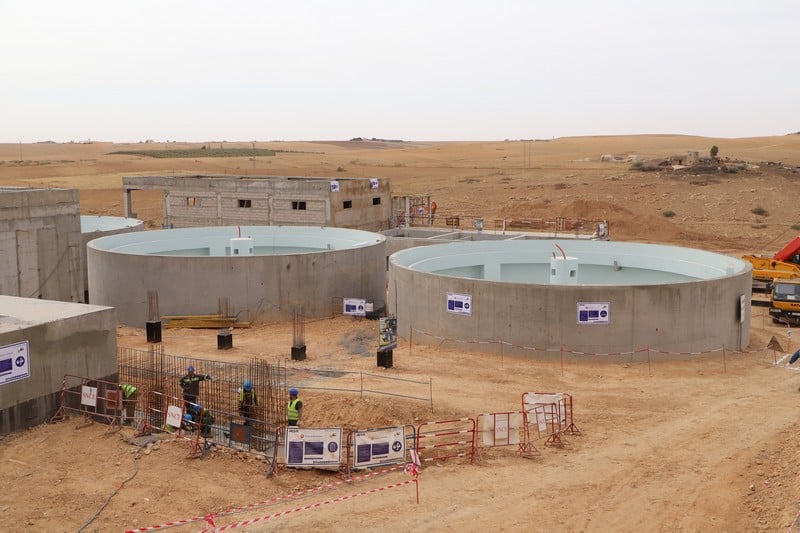
On Wednesday, OCP officials visited wastewater treatment plants, which are being built at Kasbah Tadla and Fakih Bensalah.
Office officials expect that the Kasbah Tadla plant will be able to produce 2.2 million cubic meters of water annually, after its launch in March 2023.
The office is betting on transferring the wastewater that is currently being discharged in Oum Rabii to the aforementioned station, to be treated and supplied to the industrial facilities for washing phosphates in Khouribga through existing industrial water pipes.
As for the Feqih Bensalah station, which is expected to be operational starting June 2023, it is expected to have a production capacity of 5 million cubic meters. This will contribute to support efforts to protect the Oum Rabii valley from pollution, according to the office.
According to office officials, the wastewater treatment plants operate according to biological treatment processes based on the removal of carbon pollution.
This enables the Office to use unconventional water, preserving financial resources, in addition to avoiding the discharge of polluted wastewater in nature.
Abdesamad Chatabi, the official in charge of wastewater treatment plants projects, confirmed that the water program teams at the OCP site in Khouribga have worked to launch a project to transfer the treated water from the Beni Mellal plant to the industrial units.
Chatabi explained in a statement to the Hespress that a partnership was concluded with the Beni Mellal region, in order to transfer the water of the city’s treatment plant, which has a capacity of 7 million cubic meters, to the industrial units.
According to the same source, OCP officials are betting on the use of treated water in the stations that are being built, for the process of washing phosphates extracted from the Khouribga mines.
Work is also underway to supply the Khouribga site with desalinated water coming from Jorf Lasfar, through pipes laid for more than 200 kilometers.
This initiative comes at a time when Morocco is experiencing a worrying water scarcity, after a historic drought plagued the country this year.






add your comment
Terms of publication : Not to offend the writer, people, sacred things, or attack religions or the divine self, and refrain from racist incitement and insults.