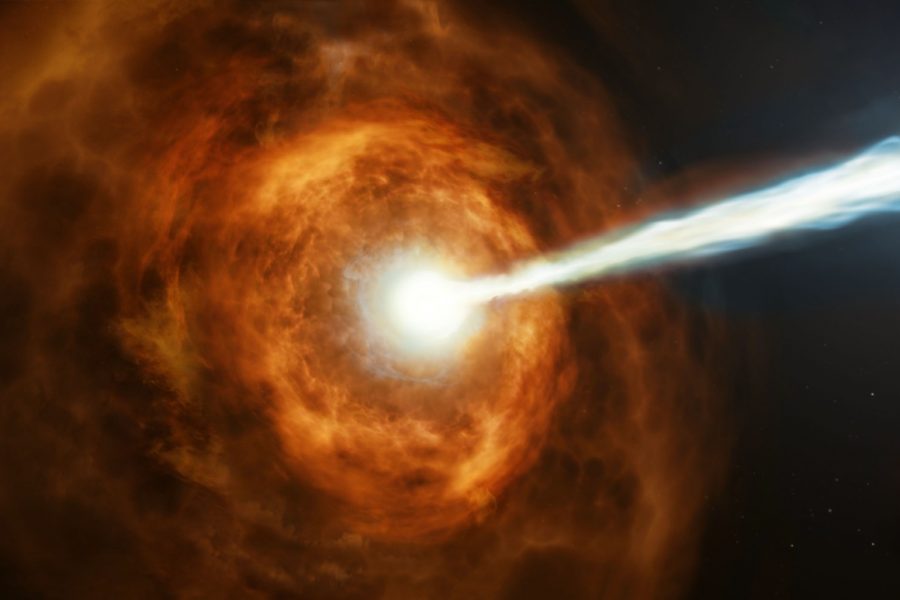
Morocco’s Oukaimeden Astronomical Observatory joined on October 9 a global observation of what scientists are calling the most intense sort of electromagnetic explosion known to exist in the cosmos.
Gamma-ray bursts release as much energy in a matter of seconds as the sun will produce in its entire 10-billion-year existence.
Oukaimeden Observatory, under the Cadi Ayyad University announced on Sunday it had participated in the observation after it received an alert by NASA’s SWIFT telescope.
“The observation gives a greater reputation to the observatory and to Moroccan researchers in astronomy,” said Zuhair Benkhaldoun, Director of the Oukaimeden Astronomical Observatory in an interview with Hespress AR.
The Moroccan astronomer explained that, in addition to “the enormous energy these rays emit fades quickly, which requires the observatories to have a high ability to interact quickly, a feature available at the Oukaimeden Observatory through remote-controlled telescopes.” .
He pointed out that the observatory is involved in several networks to receive alerts for observations.
Together with the Oukaimeden Astronomical Observatory, Observatories around the world detected the explosion that’s believed to have come from a 2.4 billion light-year-distance source.
The gamma-ray burst is still the nearest object ever seen, despite not being particularly close.
Although this gamma-ray explosion was safely away from Earth, if it had occurred substantially closer to our globe it might be catastrophic.
Within tens of thousands of light-years of Earth, such an explosive flash would deplete the planet’s ozone layer and probably result in a mass extinction.
According to NASA, experts believe that such a blast may have caused one of the largest mass extinction events in Earth’s history, the Ordovician extinction, which happened 450 million years ago .



add your comment
Terms of publication : Not to offend the writer, people, sacred things, or attack religions or the divine self, and refrain from racist incitement and insults.