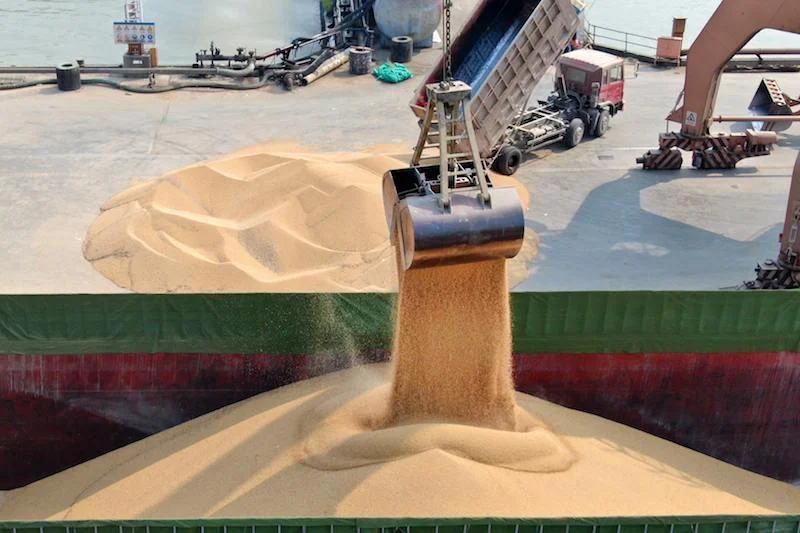
The United Nations’ Food and Agriculture Organization (FAO) found that global wheat production is expected to decline in 2022 to record levels, noting that “Morocco is among the countries that will be strongly affected by this scarcity.”
In a recent report issued this Thursday, the FAO stated that “despite Morocco’s initially encouraging wheat production levels were hampered by the continuing and severe rainfall shortage and drought,” noting that “precipitation was clearly below average in Morocco, where the majority of cultivated areas wasted.”
The report expects that “Morocco will increase demand for wheat imports, especially from Canada and India, as data show the country’s need for 5.4 million tons, an increase of 5% (2.6 million tons) over the estimated level for 2021-2022.”
FAO stressed that “Morocco will increase its imports, as its current needs amount to 1.5 million tons, while it will need 6.2 million tons, in order to compensate for the expected significant decline in the level of domestic production.”
It is expected that the value of the increase in the import bill during 2022 will amount to about USD 51 billion, due to the general international increase in prices, compared to USD 49 billion in 2021.
The report stated that “the global food import bill is about to set a new record of USD 1.8 trillion this year, but the bulk of this expected increase is attributable to higher prices and transportation costs more than the volume of imports themselves.”
It is expected that global wheat production in 2022 will decrease 0.8% from the record level recorded in 2021, to reach 771 million tons, which represents the first decline in four years.
The international report warned that wheat production is declining annually in Australia, India and Morocco, noting that “the global food import bill is about to set a new record this year.”
According to data from the report, the least developed countries are expected to witness a 5% contraction in their food import bill this year, with sub-Saharan Africa and the group of net food-importing developing countries recording an increase in their total costs despite the decrease in imported quantities.
The same report notes that “these indicators are alarming from a food security perspective, as they indicate that importers will find it difficult to finance higher international costs, which may reduce their ability to withstand higher prices.”
The FAO report also stated that “given the sharp rise in input prices, weather concerns, and increasing uncertainties in emerging markets regarding the conflict in Ukraine, the organization’s forecasts indicate that food markets may decline, and global food import bills will reach a new record level.”
The UN proposed the establishment of a global facility for financing food imports with the aim of supporting the payments balance for low-income countries that depend more than others on food imports as a strategy to protect their food security.









add your comment
Terms of publication : Not to offend the writer, people, sacred things, or attack religions or the divine self, and refrain from racist incitement and insults.