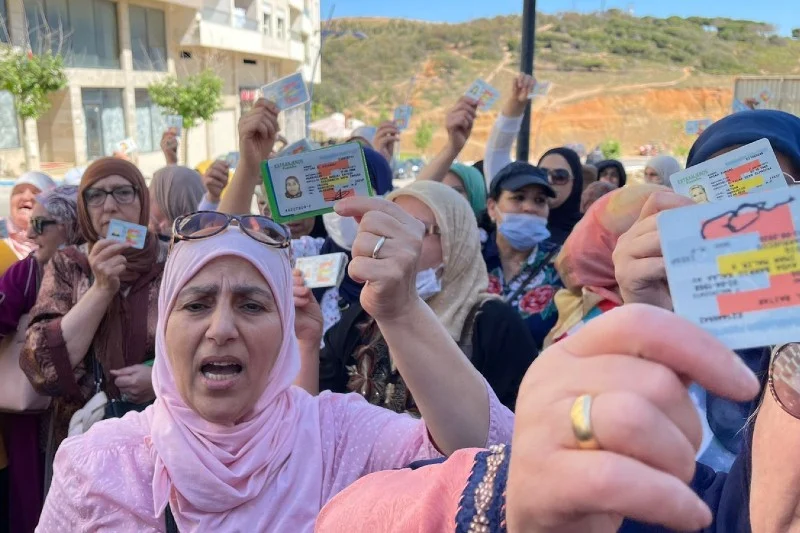
Over 220 Moroccan cross-border workers are strained in the enclaves of Ceuta and Melilla, following the newly set conditions.
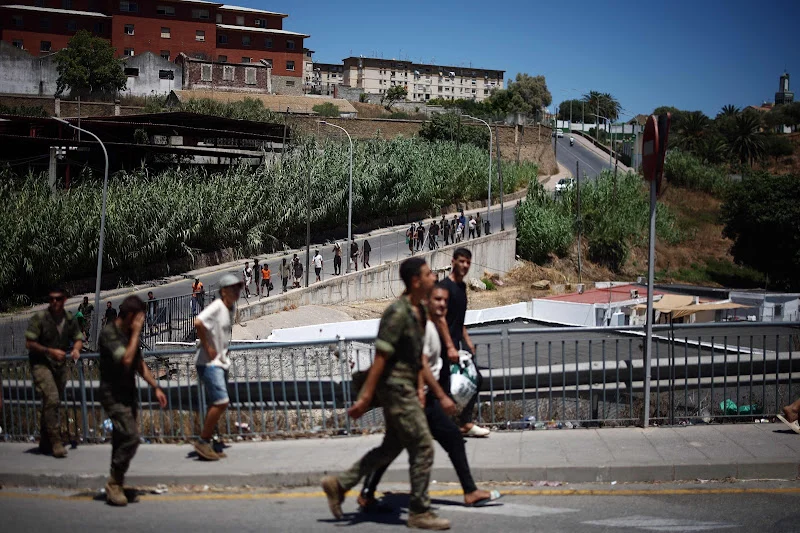
Morocco and Spain agreed on allowing Moroccan workers to access via the border crossings of Ceuta and Melilla. Since yesterday, a total of 150 people crossed into Ceuta, according to Spanish media El Mundo.
The workers protest near Ceuta’s delegation each Monday against the recent restrictions, which require them to work by day in Ceuta and Melilla and leave at night.
The group of workers demands basic needs, such as payment during unemployment, and permission that will allow them to spend some time with their families, before returning to work.

A Moroccan cross-border worker, Rachida Jraifi told Hespress EN that she used to live and work in Ceuta for 15 years, and now she can’t move between Morocco and her work due to the expiration of her documents.
“I am even registered for this entire period in the Spanish security system, and still cannot find a solution for my case,” she added.
“Whenever I ask Spanish authorities to help me renew my documents, they say it’s only the Moroccan government that can fix your situation,” she explained.
Jraifi works as an assistant for a Spanish woman. She is concerned that the time it will take her to renew her documents in Morocco will cause her employer to find replacement.
“Normally, given the years I spent in the country, I would be entitled to citizenship,” she added.
Moroccan cross-border workers said they face the most inequitable working conditions: they work more, pay more taxes get less pay, and privilege compared to their Spanish counterparts, according to a statement seen by Hespress EN.
“If the validity of the work contract expires or that the employer passes away, then the Moroccan cross-border worker is excluded and would not have a chance to look for another job opportunity,” they explained.
“Moroccan cross-border workers with sums of money in banking services in Ceuta and Melilla, and retirees who were previously registered in the Spanish security system – all of these are ignored,” they added.

Only Moroccan cross-border workers who already have a Foreigner Identification Card (TIE) or a special visa are able to transit to Ceuta. The special visa allows them to stay in Ceuta for just one day, and is designed for those workers to issue their card at the Immigration Office.
Following the two-year closure of borders due to pandemic-related circumstances, those criteria do not apply to the vast majority of those workers.







add your comment
Terms of publication : Not to offend the writer, people, sacred things, or attack religions or the divine self, and refrain from racist incitement and insults.