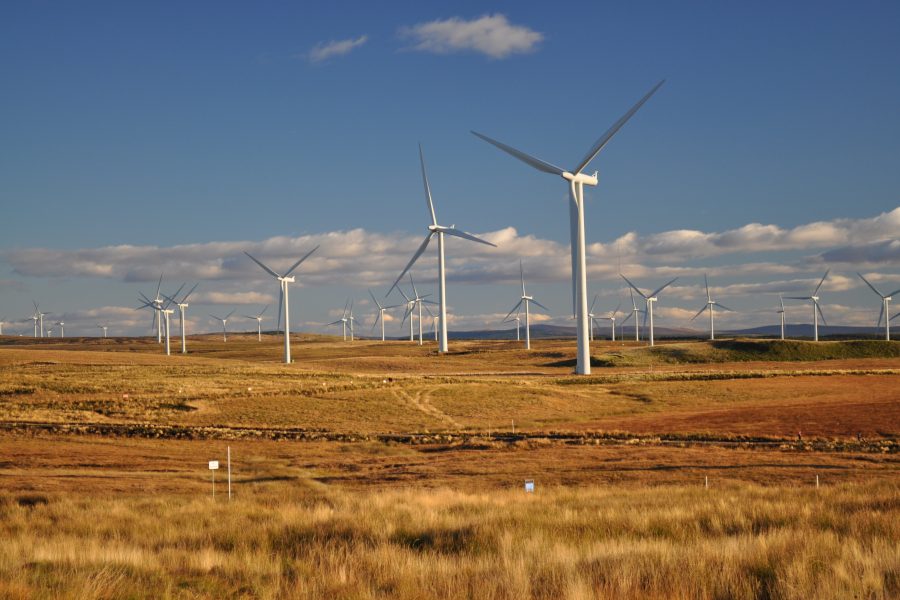
Limiting global warming will require major transitions in the energy sector in order to halve emissions by 2030, said the Intergovernmental Panel on climate change (IPCC) in its latest report, released this April.
The transition will have to involve a substantial reduction in fossil fuel use, widespread electrification, improved energy efficiency, and the use of alternative fuels, such as hydrogen.
“Having the right policies, infrastructure, and technology in place to enable changes to our lifestyles and behavior can result in a 40-70% reduction in greenhouse gas emissions by 2050, which offers significant untapped potential,” said IPCC Working Group III Co-Chair Priyadarshi Shukla in the report, adding that “the evidence also shows that these lifestyle changes can improve our health and wellbeing.”
Additionally, cities and urban areas also offer significant opportunities for emissions reduction by creating compact, walkable cities, electrification of transport in combination with low-emission energy sources, and enhanced carbon uptake and storage using nature in order to establish rapidly growing, and new cities, said the report.
As for the industry sector, reducing emissions will involve using materials more efficiently, reusing and recycling products, and minimizing waste. For basic materials, including steel, building materials, and chemicals, low- to zero-greenhouse gas production processes are at their pilot to the near-commercial stage.
This sector accounts for about a quarter of global emissions. Achieving net-zero will be challenging and will require new production processes, low and zero-emissions of electricity, hydrogen, and, where necessary, carbon capture and storage.
Agriculture, forestry, and other land use can provide large-scale emissions reduction and also remove and store carbon dioxide at scale.
However, land cannot compensate for delayed emissions reduction in other sectors. Response options can benefit biodiversity, help us adapt to climate change, and secure livelihoods, food and water, and wood supplies.
The next few years are critical and action should be taken from now to halve emissions and avoid climate change effects, said the report.
“It’s now or never if we want to limit global warming to 1.5°C (2.7°F),” said IPCC Working Group III Co-Chair Jim Skea in the report, adding, “Without immediate and deep emissions reduction across all sectors, it will be impossible.”
The global temperature will stabilize when carbon dioxide emissions reach net zero. For 1.5°C (2.7°F), this means achieving net-zero carbon dioxide emissions globally in the early 2050s; for 2°C (3.6°F), it is in the early 2070s.
This assessment shows that limiting warming to around 2°C (3.6°F) still requires global greenhouse gas emissions to peak before 2025 at the latest, and be reduced by a quarter by 2030, specified the report.
IPCC’s report aims to achieve sustainable development goals by 2030 as well as save the planet from climate change’s negative effects.





add your comment
Terms of publication : Not to offend the writer, people, sacred things, or attack religions or the divine self, and refrain from racist incitement and insults.