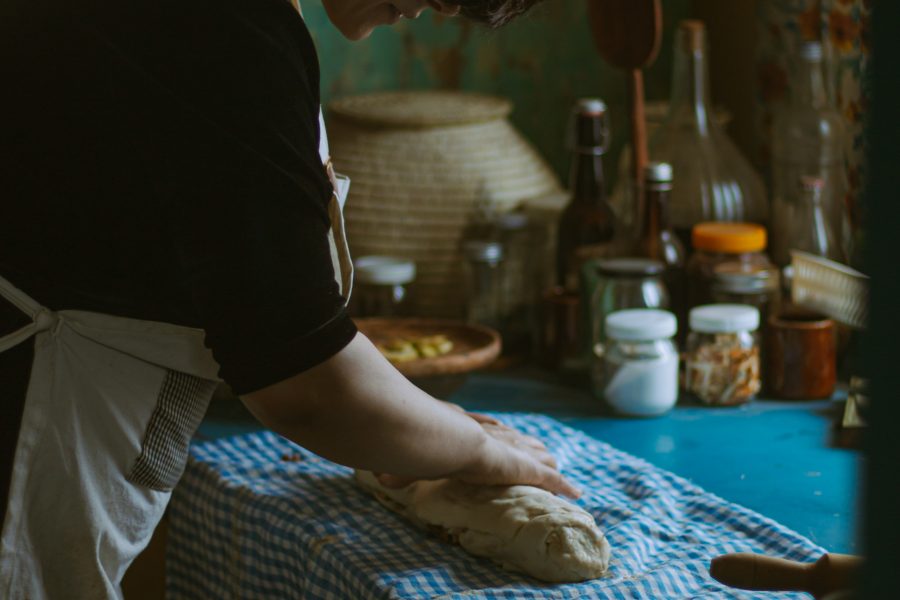
The holy month of Ramadan has long been a chance for spiritual rejuvenation and religious festivity for Muslims around the world. Lately, Ramadans have been changing yearly, each existing in the middle of different timely issues and an ever-changing societal landscape, from a complete lockdown to soaring prices.
Throughout the years, many papers have been published and debates organized about the role of women during Ramadan and, even further than that, a certain alleged “male centralism” that puts more pressure on women during the holy month. This is only natural, as the discourse around gender roles in the household or the workplace will keep growing until it pierces the traditional shells of our generally-traditional societies.
“Even progressive women turn back to a traditional role of constantly cooking and cleaning during Ramadan,” explains Maryam B., a 26-year-old working woman from Casablanca. “It stems more from a social need to satisfy your family, rather than a religious one,” she further points out.
For Maryam, women are definitely under extreme pressure during Ramadan. This has to do with the traditional gender roles in a Moroccan household, where house chores (cleaning, cooking, etc.) are exclusive to women while men get the “most noble role” of providing.
“There is a certain male centrism in Ramadan. Women are not only expected to cook and serve the males in their households but also “manage” their Ramadan-induced moods,” she says.
Anas Dalil, a 23-year-old student from Rabat, says he noticed a pattern during the past few years. “In normal times, my mum constantly urges my little sister to try new things, especially things that aren’t considered girly. When it comes to house chores, I always had to help around; it was never exclusively my sister’s or my mum’s job.”
Ramadan has become a yearly appointment to “throw away these habits and dive back into a traditional form of family,” according to Anas.
These patterns, or rather people’s perception of them – whether they are fair or not, whether they should shift or not – entirely change once we leave urban Morocco and delve into the specificities of its rural counterpart.
“There is more pressure on women during Ramadan,” says Kenza. “But rural women are always under pressure because of the amount of physical labor needed in rural areas.”
Kenza is a working woman with 25 years of experience in associative work and solution building for rural communities in the region of Fez. In addition to being an independent working-class woman in rural Morocco (and what that entails in terms of labor: wood for heat, cattle to tend, etc), she is also the head of the Tithrite Association and an Artisan Leader at the Anou cooperative.
“In rural areas, women still endorse a stereotypical role, but that is not a bad thing in itself,” she explains.
There is a clear distribution of roles between men and women in the rural world. “That doesn’t mean that men do nothing while women cook,” Kenza points out. “Rather, men and women each have distinct responsibilities that exist in a context of cooperation and collaboration.”
While it is true that gender roles in rural Morocco still fit a traditional narrative, according to Kenza, it creates “balance and order” rather than resentment. It stems from people’s “actual timely needs” in rural areas, which cannot be ignored and should be done by someone anyway.
Ramadan has an immense spiritual charge for all Muslims around the world. Still, it also comes with a set of traditions and habits that are constantly challenged by the needs of the 21st century but aren’t necessarily easy to shed away.
While some people, especially in rural Morocco, believe the contribution of women during Ramadan is a necessity rather than a burden, others consider it is time we adapted our ancestral habits to our current reality.




add your comment
Terms of publication : Not to offend the writer, people, sacred things, or attack religions or the divine self, and refrain from racist incitement and insults.