
Global inflation is affecting countries in a staggeringly different way, with Morocco’s inflation expected to accelerate to only 3.1% this year and fall back to 2.1% in 2023, according to a new study published by the Credit Agricole France group.
Countries are preparing to be very differently affected by the shock of the Russian-Ukrainian war, depending on their location, dependence for basic goods and energy sources, in addition to their economies’ post-pandemic robustness.
But no country “will escape the acceleration of inflation, under the influence of the very sharp rise in raw material prices and new disruptions in supply chains and the risk of shortages,” specifies the report.
The Russian-Ukrainian is contributing massively to international inflation across markets, the study points out, forecasting an average international inflation rate of 6.7% and 9% in Africa and the Middle East in 2022.
In Morocco, inflation is expected to accelerate this year, after recording 1.4% in 2021, but at a much lower level of 3.1%.
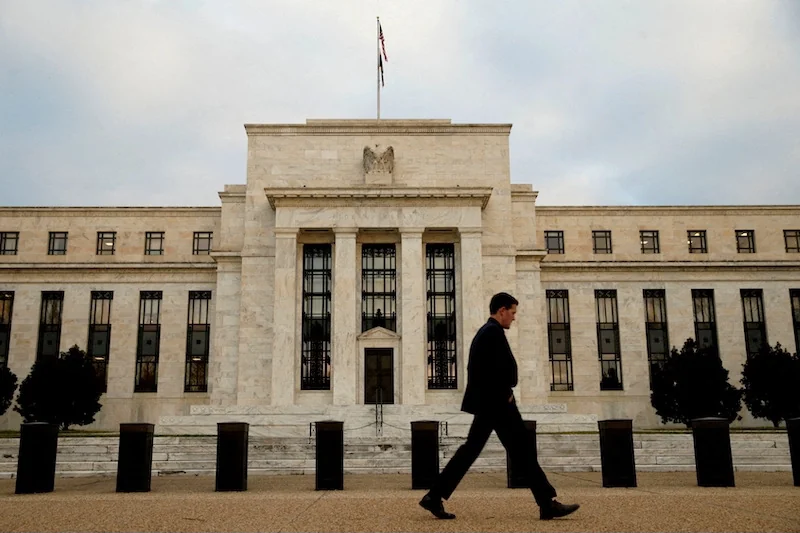
In 2023, it is expected to fall back to 2.1%, a scenario that led the Board of Bank Al-Maghrib to maintain the key rate unchanged last March.
The wali of Morocco’s Central Bank expected the return of inflation to moderate levels in 2023 to 1.9% from 4.7% in 2022, was one of the major data that favored maintaining the key rate at 1.50%.
According to the Credit Agricole France study, Morocco will be among the least inflationary countries in 2022 and 2023, compared to an average of 6.2% and 3.4% for industrialized countries and 7.2% and 4.4% for emerging economies, during the same period.
At the regional level, inflation in Morocco should be the lowest in North Africa this year and next, compared to Egypt (10.1% in 2022 and 8.2% in 2023), Algeria (9.1% and 7.3%) and Tunisia (8.1% and 5.8%).
For the French banking group, the standard impact of a one-point increase in inflation is estimated at a loss of half a point of GDP growth. The main transmission channel is the decline in household purchasing power.
For Morocco, the group forecasts a 3.9% increase in GDP, more optimistic than the domestic officials’ scenario, established last March by BAM.
The central bank expects a growth of 0.7%, suffering from the particularly unfavorable weather conditions, the repercussions of the conflict in Ukraine on the world economy and the increase in the prices of energy and food products.








add your comment
Terms of publication : Not to offend the writer, people, sacred things, or attack religions or the divine self, and refrain from racist incitement and insults.