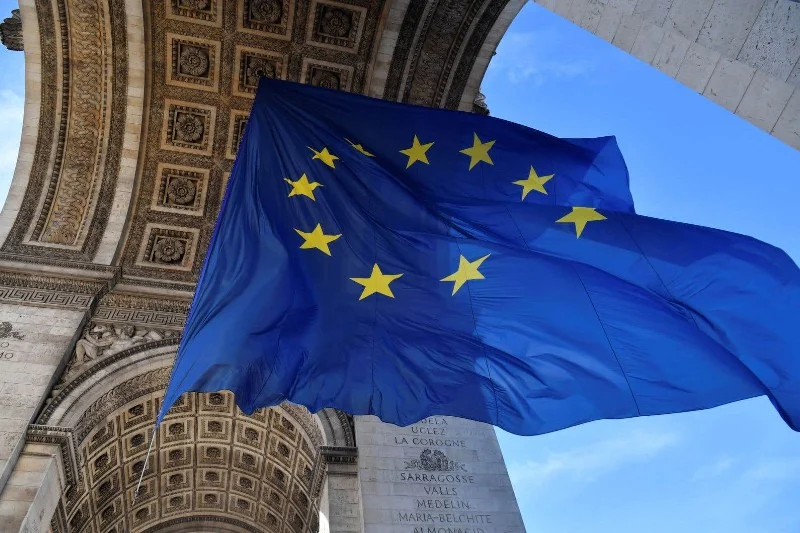
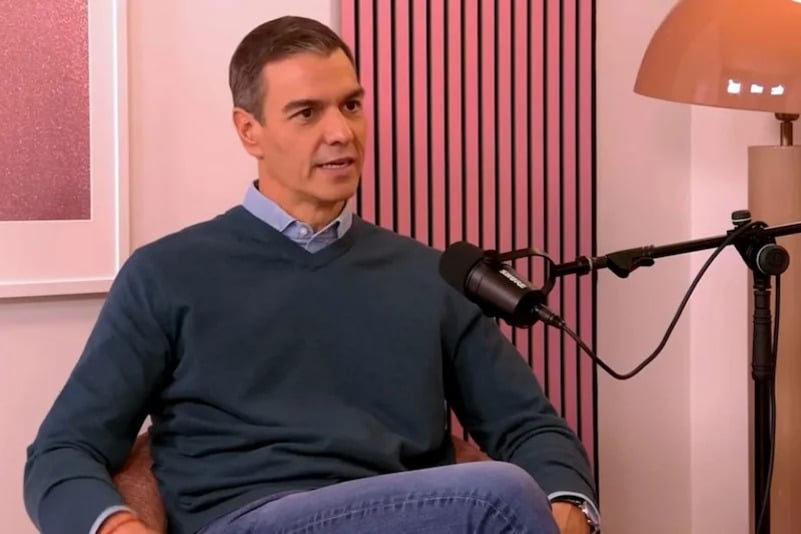
The President of the Spanish Government, Pedro Sanchez, has assured today that he “followed the position of many European countries” when shifting his government’s stance on Western Sahara.
France and Germany had previously supported Morocco’s autonomy plan proposal, and Spain’s recent shift came after nearly a year of diplomatic tensions between both Kingdoms.
During a speech he made on his official visit to the Spanish enclave of Ceuta, Sanchez said that “for more than ten months we have been working with Morocco, a country that for Spain is a strategic and vital partner.”
The president acknowledged that “unfortunately during the last ten months we have had little to no communication, although we have done silent diplomatic work and I think the result of all these negotiations is a good result for both Spain and Morocco.”
Sanchez assured that “not only did we end a crisis that effectively had its hardest and most forceful manifestation on May 17 and 18 in Ceuta, but the most important thing is that we laid the foundations of a much more solid and stronger relationship with the Kingdom of Morocco.”
“In this sense, I consider that there are aspects that are consolidated in this new relationship linked to security, migratory control, in addition to the solid economic and commercial ties we have with Morocco,” said the head of the Spanish executive, stressing that “this agreement is based on a solid and sincere relationship, based on mutual respect and the territorial integrity of both countries, and I consider this to be great news for both Kingdoms.”
The president declined to comment on whether Algeria had been previously informed of Madrid’s decision on Western Sahara.
Sanchez also did not clarify if his government obtained “guarantees from Morocco on Ceuta and Melilla,” reports EuropaPress, a question highly preoccupying Spanish media since the support for Morocco’s autonomy plan was announced.
Simultaneously, the president of Ceuta, Juan Vivas, has assured this Wednesday that he has “no foresight” to reopen the border despite the agreement reached with Morocco.
Vivas pointed out that this is what he told the Minister of Foreign Affairs José Manuel Albares in a call last Friday, who told him that “Ceuta would benefit” from a reopening, after 2 years of closure.
“I communicated to Minister Albares that I think the border should be reopened when it is in a position to be reopened,” says Vivas, quoted in Europa Press, adding that “to open the border crossings, I maintain that infrastructure work needs to be completed.”





add your comment
Terms of publication : Not to offend the writer, people, sacred things, or attack religions or the divine self, and refrain from racist incitement and insults.