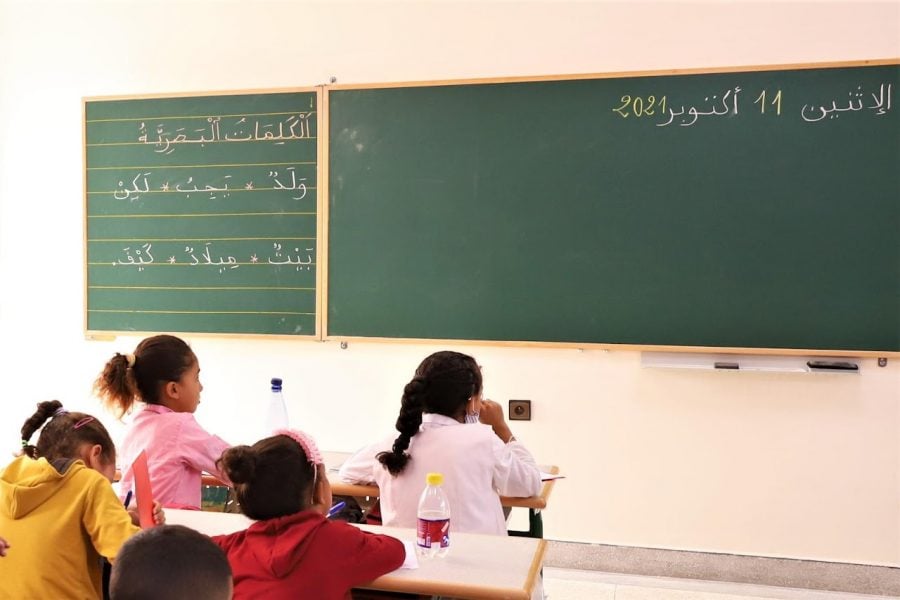
40.7 percent of Moroccans consider overcrowded classrooms one of the main issues deepening the Moroccan school’s crisis. This problem ranks fourth after students’ poor performance (64.9%), school dropouts (45.1%), and unsuitable curriculum (43.3%), finds the National Body for the Evaluation of the Education, Training, and Scientific Research System.
“The number of students in the classroom remains one of the most important compulsions to me. I have 36 students now. But before, I worked with 42 students, when the number exceeds 30, it becomes difficult,” says a teacher in an elementary school.
In collaboration with the Higher Council for Education, Training and Scientific Research, The National Body for the Evaluation of the Education, Training, and Scientific Research System issued a report on the profession of schooling in Morocco, sitting the struggles of teachers amid an odd sociopolitical context.
Following interviewing 98 teachers around the kingdom, “The profession of teacher in Morocco In the light of the international comparison’s” report underlined the teachers’ struggles in Moroccan public schools.
A few years ago, the number of students in one classroom was used to range mostly between 50 and 55 students, an atmosphere that harden up the task of learning for students and the mission of schooling for teachers.
“It is clear from the estimates of the professors who were included in the research that the percentage of students who are unable to follow the lessons is a cause for great concern,” added the report.
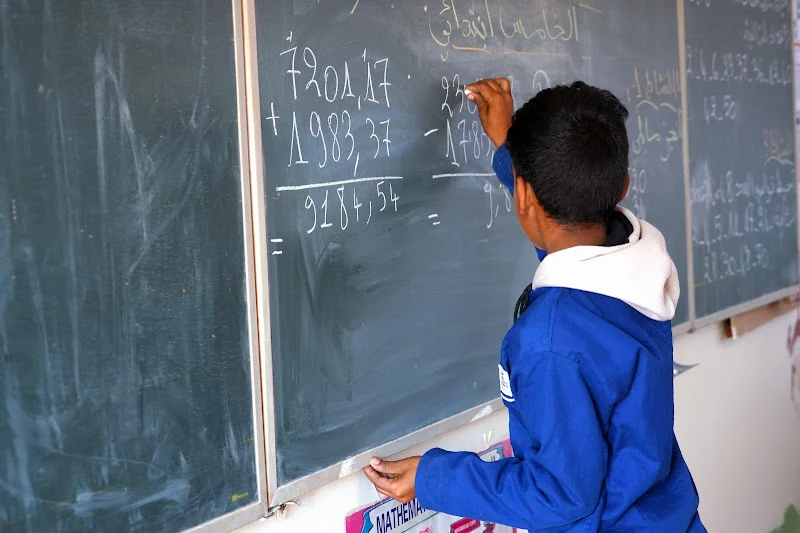
In primary education, 10 to 15 students, in a class of 40 students, cannot follow up, concentrate or understand their lessons.
“And the more we advance in educational levels, the more that number increases. This weakness accumulates and becomes difficult to treat,” said the report.
The lack of technological tools, libraries, and leisure spaces in Moroccan public schools aggravates the situation.
The socio-economical context also affects the life of daily teachers, and the students’ motivations and outcomes, said the report.
“We have students who live within different social precariousness as parental unemployment and poverty, they cannot follow up the lessons. Some of them get violent towards their classmates,” said a primary school teacher.
The report added that many teachers don’t feel safe in their classrooms as they fear the rising violence among students in Moroccan schools.
Moreover, the daily life of teachers in rural areas is harsh and difficult, as they face daily the lack of transportation in addition to the difficulty of finding suitable housing.
Often teachers in rural areas travel long distances to get to their workplace, which can be quite expensive in terms of effort, time, and money, added the report.
“I live far from school. There is a lack of transportation. In the best case, it takes me an hour and twenty minutes to get to school… I’m still exposed to all kinds of threats,” said a secondary school teacher.





add your comment
Terms of publication : Not to offend the writer, people, sacred things, or attack religions or the divine self, and refrain from racist incitement and insults.