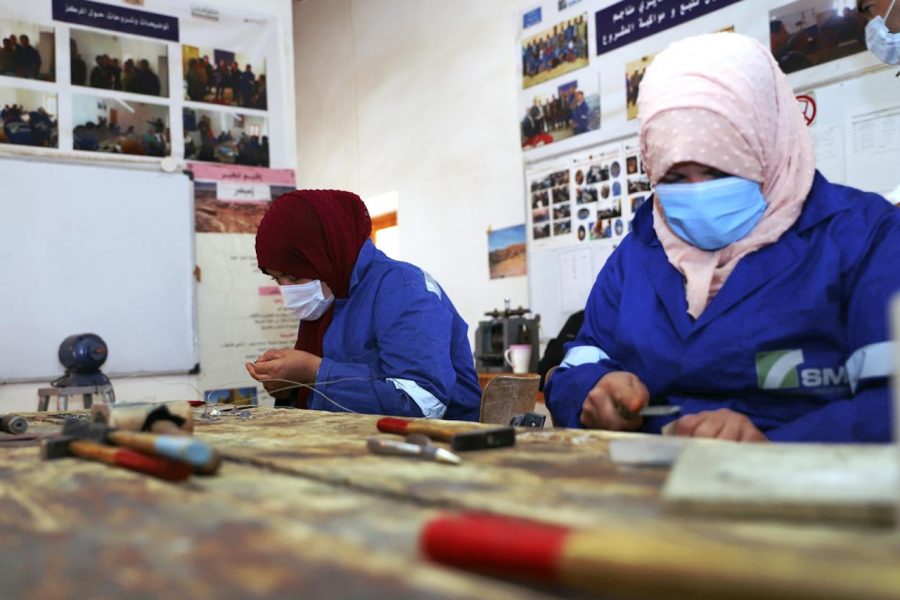
The world celebrates today, October 17, the International Day for the Eradication of Poverty as it grapples for more than two years now with the Covid-19 pandemic that affected the global economy and deepened the fortune gap between the social classes, genders and races.
Women were hit disproportionately by these conditions. Their experiences at home, their health, their work and economic wellbeing have all been negatively affected. The pandemic has impeded women in the present, but also has negatively affected their futures.
In several countries, evidence shows that women, have seen their livelihoods put at great risk and that they have been most severely affected by the economic effects of Covid-19. The pandemic has disproportionately pushed them out of employment, reversing decades of progress on their participation in the labour force, according to Oxfam.
Oxfam’s research estimated that 47 million women and girls have been pushed into extreme poverty since the declaration of the pandemic.
Women are also much more likely to be in precarious and vulnerable employment. In low-income countries, 92% of women work in jobs that are informal, dangerous, or insecure and have faced the lack of access to social protection or safety nets, says the same study.
Lockdowns, illness, and school closures have increased the amount of unpaid care work, which was mostly shouldered by single mothers, women living in poverty, and racially and ethnically discriminated groups, says Oxfam.
Covid-19 has disrupted health systems and is rewinding efforts to meet needs in sexual and reproductive health. Globally, women and girls have reported having reduced access to services, which increases the risk of unwanted pregnancies, sexually transmitted diseases, and complications during pregnancies, delivery and abortion.
Due to a covid-19 related reduction of perinatal care, maternal deaths have increased by between 8% and 39% per month in low- and middle-income countries.
The pandemic will also reverse the gains of the last 20 years of global progress made on girls’ education, resulting in turn in increased poverty and inequality. 13 million more child marriages are projected to take place by 2030 due to increased poverty resulting from the pandemic.
Coordination of the World March of Women in Morocco issued today, October, 17, a declaration, in which the organization condemned the worsening situation of women globally and nationally, as it consider it a direct result of the “inferior position assigned to them by the patriarchal system.”
The coordination renewed its support for all Moroccan women, especially those in a position of an economical or political struggle, as it called for liberating the economy from dependency and establishing an alternative sustainable agricultural system directed to meet the national needs to achieve food sovereignty. This goal won’ be achieved without “ending corruption,” and “forcing the multinational companies to pay their fair shares of taxes, added the report.








add your comment
Terms of publication : Not to offend the writer, people, sacred things, or attack religions or the divine self, and refrain from racist incitement and insults.