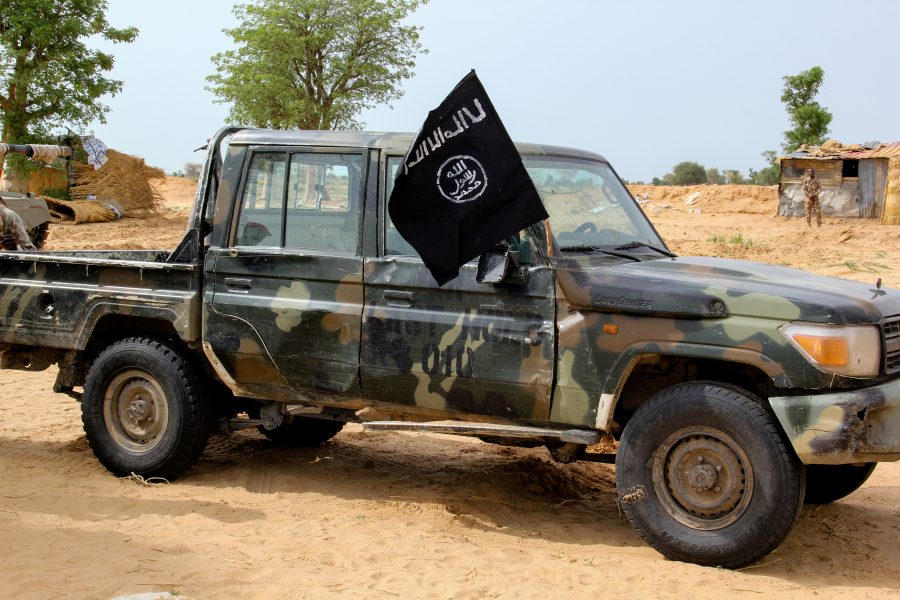
The leader of the Islamic State West Africa Province (ISWAP) jihadist group, Abu Musab al-Barnawi, is dead, Nigeria’s top military commander said on Thursday.
ISWAP has not given any confirmation of al-Barnawi’s death and Nigeria’s military has claimed before to have killed jihadist commanders, only for them to reappear.
“I can authoritatively confirm to you that al-Barnawi is dead. As simple as that. He is dead and remains dead,” Chief of Defence Staff General Lucky Irabor told reporters, without giving details on how or when the death had occurred.
Abu Musab al-Barnawi, the son of the founder of Boko Haram, Mohammed Yusuf, who was also killed by security forces in 2009 when he launched a war against the Nigerian state, served as the leader of the Islamic State’s branch in West Africa (ISWAP) between August 2016 and March 2019, and again around May 2021.
ISWAP was previously part of Boko Haram before its split five years ago, in 2016, pledging allegiance to the Islamic State. The split was due to religious ideological disagreements over the killing of civilians by Boko Haram, to which ISWAP objected.
Al Barnawi also served in various other capacities within ISWAP such as head of its shura. Before pledging allegiance to ISIL, al-Barnawi was the spokesperson for Boko Haram.
Al-Barnawi sustained multiple attacks especially on military facilities and troops in the Lake Chad region.
He controlled large swathes of territory in Northern Borno, imposed taxes on the local population and earned serious income from fishing asides from the financial and material support he got from ISIS.
Al-Barnawi’s fighters had also destroyed many military super camps in Dikwa, Monguno, Abadam and Marte in Borno; and other military facilities around Geidam in Yobe State.
He equally established many cells on the Lake Chad islands and surrounding villages from where his fighters launched attacks on Nigeria, Niger and Chad.
Islamic State West Africa Province or ISWAP has emerged as the dominant faction in Nigeria’s conflict, especially after the death of rival Boko Haram commander Abubakar Shekau in May during infighting between the groups.
His death, after that of Shekau, Boko Haram’s leader, in May 2021, may introduce a turning point in the war against terror even as security experts had called for a sustained offensive towards decimating the two rival groups to have a lasting peace after twelve years of uncertainty and carnage.








add your comment
Terms of publication : Not to offend the writer, people, sacred things, or attack religions or the divine self, and refrain from racist incitement and insults.