In the few days since his father died, Youssef Alami still returns to their last moment together, when the father gasped his last words: “son, it is not your fault,” and the son breaking apart, trapped in guilt, shrieking “It is my fault, I killed you. Forgive me.”
On a Thursday morning, just a few days after Youssef’s father contracted the virus from Youssef, the hard-working 56-year-old father, husband and merchant passed away from severe Covid-19 symptoms.
Youssef, 22, now spends most of his time in his Casablanca home, staring through his blurry eyes into the uncertain expanse of what lay ahead, the bed where his father laid, and the guilt of surviving Covid-19, when his dad could not.
‘I wish my father would recover as I did, but unfortunately he passed away. I wish I were the one who died,’ Youssef told Hespress Eng in a phone conversation, his voice breaking apart and barely able to construct sentences.
The tragedy of a healthy man gone too soon, a grieving and ashamed son left to wonder what happened, has left Youssef with more questions than answers, and the unshakable feeling that he exposed his father to the virus.
“I still do not know how to deal with this situation, I still look at people and imagine them telling me that you are the reason behind the death of your father, the feeling of guilt is killing me.”
He’s not alone in those thoughts. Relatives of 12,540 people who died from Covid-19 in Morocco are wondering the same thing as Youssef – Did they touch an infected bottle of water? Did they get too close to their now-deceased loved one? What if they had not met that friend over coffee? Would things have worked out differently?
The devastating Covid-19 third wave that swept across Morocco in the past months, the worst experienced by the North African nation, may have finally begun to slow down, but the trauma and death it left in its wake are taking an emotional toll on the thousands who have been orphaned and those young adults who now find it difficult to reimagine the future without parental support.
Death alone is a difficult event to cope with, death because of a global pandemic makes it harder for the survivors to register and admit, Mohsine Benzakour, Professor of social psychology told Hespress Eng.
‘The feeling of guilt is the result of a lack of information. Some people believe they are the cause of the illness or death of their parents. We are all carriers of this virus because it lives among us. This causes confusion. ”
‘The feeling that the person is the direct killer of their parents, though is not true, it is hard to shake off. People find justifications for death, including accusing themselves of being the cause of it.”
Covid-19 related deaths, he says, “have an effect on the survivors by increasing phobia or morbid fear, especially if the person is in a state of psychological vulnerability.”
“I still can’t believe that my father died. I am always under the impact of shock,” 23-year-old Lamia Ait EL ghazi told Hespress Eng, as she walked across her father’s room, looking at his pictures, smelling his clothes, and dreaming up his deep, soothing voice reading the Quran to her.
On August 16, her father awoke with a high fever and fatigue. His condition quickly deteriorated after doctors told his family that 10% of his lungs were damaged. Their home nearly became a hospital room, with medics visiting regularly, oxygen machines installed on every corner, and the visible signs of approaching death, as the father increasingly struggled to breathe.
“We were by his side through it all. We were getting tired too because we saw him suffer and we couldn’t do anything,” she said.
“My relationship with my father cannot be described in words. He was like no other, a good and affectionate man. I have not seen any father like him. He was very close to me,” she added.
More than two million children around the world have lost a father, mother or grandparent who used to live in their homes and take care of them, according to the World Health Organization.
The loss is particularly sharp when it is not expected.
Imane El Ouardi’s grandmother began gasping her last breath on the way to the hospital. Up until then, she had not experienced any Covid symptoms. She died on the way.
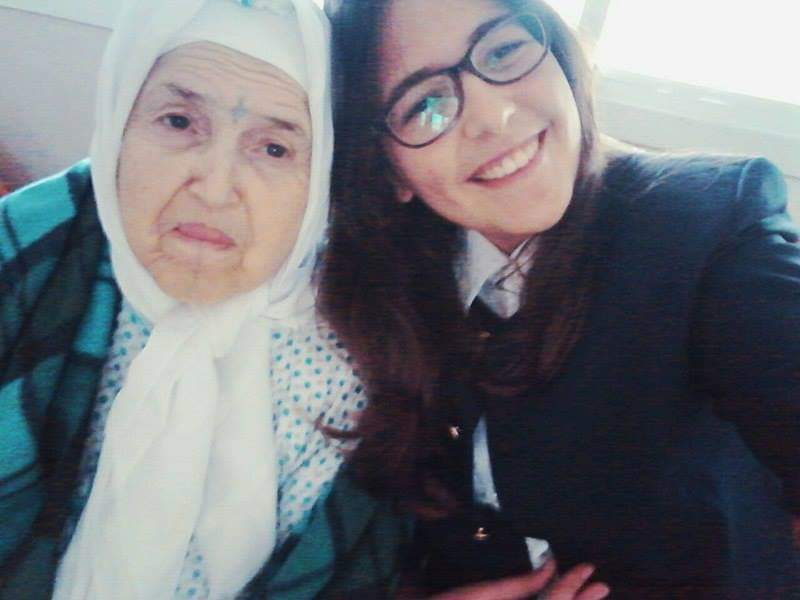
Spontaneously, she began to describe her grandmother’s love towards her over the phone with Hespress Eng ‘She had a good sense of humor and she used to joke with me all the time, telling me no one could replace her.”
‘My grandmother was my best friend, she was my everything,” she said.


add your comment
Terms of publication : Not to offend the writer, people, sacred things, or attack religions or the divine self, and refrain from racist incitement and insults.