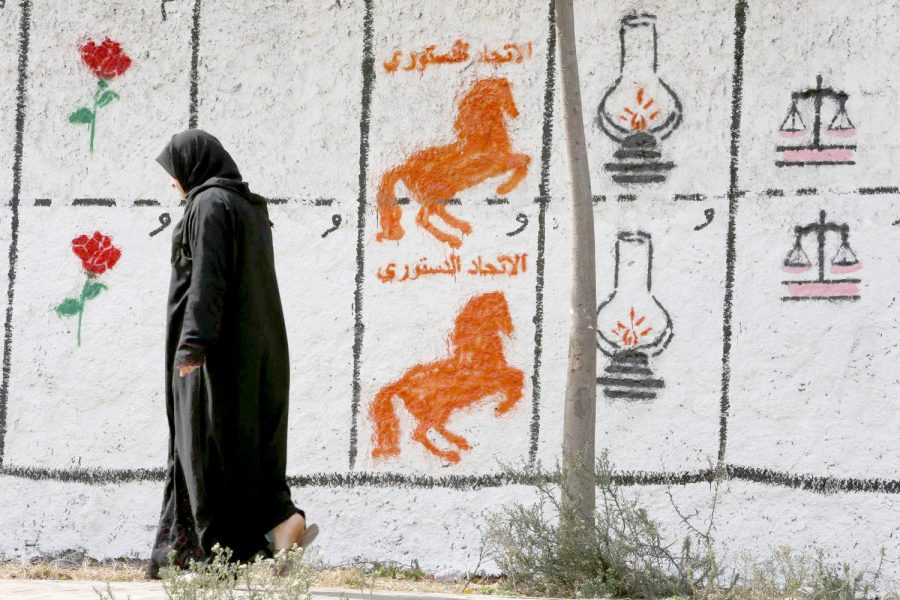
More than 30 political parties began rallying today, as the electoral campaign in Morocco began in the race to present and defend their economic, social and cultural projects in order to convince Moroccan voters to believe in their promises and check their party’s symbol on Election Day.
This year’s electoral campaign is unlike any previous one. Due to Covid-19 restrictions, political parties go into this race without rallies, banquets and pamphlets.
Following a meeting with the ministry of the interior, political parties agreed to give up rallies, banquets and distribution of pamphlets to avoid further spreading the Coronavirus.
The parties will digitize their communication strategies in order to limit conventional meetings to a minimum since the ministry sets a limit of 25 people in public gatherings, during the campaign, in both closed and open spaces.
The pandemic measures are not the only different thing about the national electoral race this year.
Several laws have been amended a few months before the elections, the most important ones being the removal of the list stipulations guaranteeing 30 seats in parliament for the youth, in addition, the national electoral district for women will be replaced by regional electoral districts, to increase representation of women in parliament.
But the one law that caused much controversy in the past months was the change of the electoral quotient.
In the previous electoral system, the number of parliamentary seats was distributed based on the votes obtained by each party divided by the total number of valid votes. The denominator, The Justice and Development party (PJD), obtained 125 seats in 2016, by mobilizing almost 1.6 million voters out of a total of 5.8 million Moroccans who voted that year.
However, the new electoral system stipulates that the number of seats allocated will be based on “the total number of registered voters” and not the number of valid ballots.
It will be theoretically impossible for any party to gain more than one seat per constituency since a party that obtains 40,000 votes in one electoral district could gain just as many seats as a party that obtains 100 votes. According to this method and the electoral results of 2016, the PJD would lose about a third of its seats
The PJD, the majority party in parliament, voted against the new amendment and claimed that the new method is unconstitutional, as it affects key citizens’ right to have a parliament that represents their true choice. The Moroccan Constitutional Court refused the majority party claims.
Prime Minister Saad Eddine El Othmani stated, earlier this year, that the new amendment targets the chances of his party, PJD, in the upcoming elections.
In Morocco, the confirmed voters on the day of the elections were less than 40% of the total registered voters in the past election.
In an interview with Hespress English, Hassan Adili, member of the parliament for the PJD called the new electoral system “a heresy that doesn’t exist in any other country.”
This new method of votes’ calculation is indeed unique in its kind., as no other country in the world allocates seats based on the number of registered voters.
The flashlight, The Justice and Development party’s symbol, has swept the polls since 2011. The year when the MENA region was shaken by Arab spring’s manifestations, the moderate Islamist party won the 2011 parliamentary elections with 107 seats from 395 seats in the first election after the constitutional revisions that limited the palace’s authority.
The two achievements- the constitutional revisions and PJD’s win- were the fresh breeze that Arab spring blew on the national political scene as Moroccans holding out “great expectation” for the flashlight’s party
Today, 10 years after its 2011 triumph, the party enters the election race bruised by years of broken promises, uncompleted projects, unrealized plans, and human rights scandals.
The party lost to the Authenticity and Modernity Party (PAM) in municipal elections in 2015, struggled to form a government in 2016, and secured just 49 seats in the professional rooms’ election this year.
However, the Justice and Development Party is holding high hopes, this race, on its ambitious electoral program of 5 components divided into 12 chapters and 276 measures and an “honorable government’s balance sheet”, according to the party’s press statement, to repeat history for the third time in a raw.



add your comment
Terms of publication : Not to offend the writer, people, sacred things, or attack religions or the divine self, and refrain from racist incitement and insults.