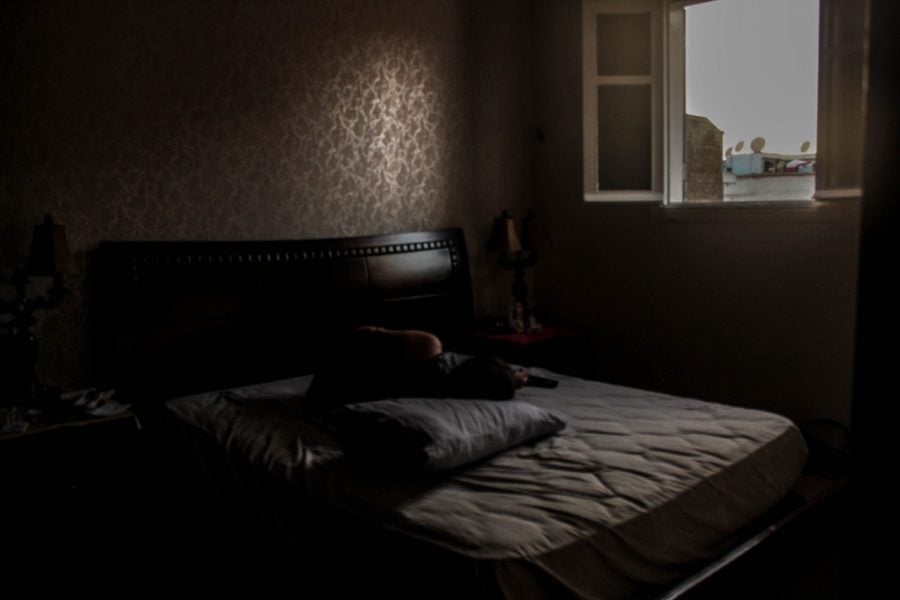
“Photography is measuring light to transfer a feeling.” This is how Mohssin Harisse, Moroccan photographer and content creator, interprets the art of photography.
Sitting in a café, surrounded by the dynamic life of Casablanca’s streets, Harisse explained: “technically, the camera captures light, not pictures. It is simple, the camera is a box with a hole through it to allow light’s entry, so it’s not about framing techniques, necessary, instead, it’s about learning the art of measuring light to decode the different feelings that we experience when we see certain faces or certain things.”
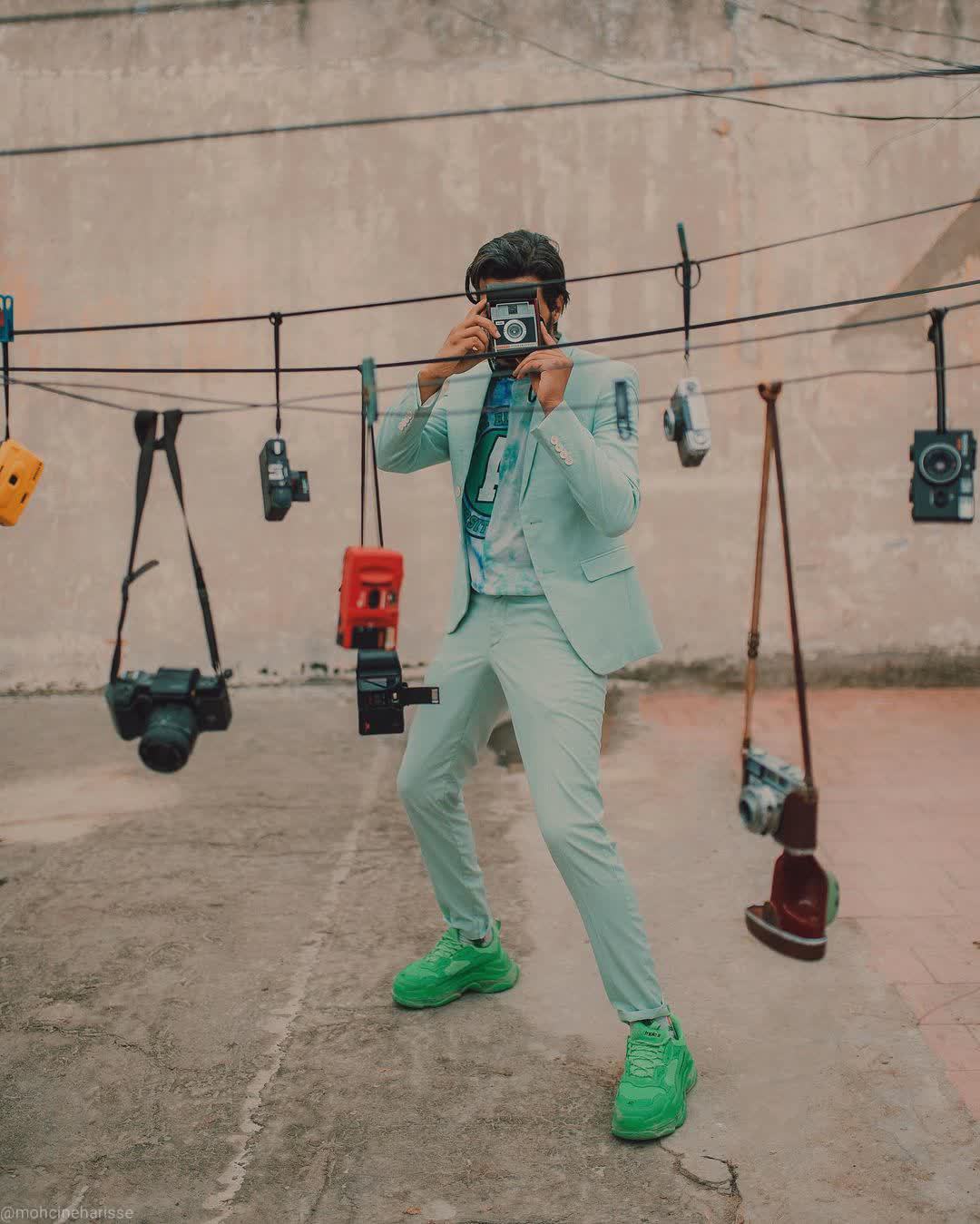
Before devoting his life to capturing a vintage style sported by an old man in a popular café, a genuine smile lightening a young boy’s face while enjoying the ocean’s breeze or the tattoos art engraved on a young body to tell mysterious stories, Harisse first noticed football match details, dreaming of being a professional football player one day.
Two hand injuries, on the ground, ended his childhood dream.
“When the second injury happened, I decided to stop playing football. But I didn’t know what I wanted to do next”. He said laughing.
With his cousin’s old camera, and his friend’s phone that captures 2 or 3 pictures before showing the annoying notification: insufficient memory, Harrise started scanning Casablanca, souks, suburbs and streets, with his friends, switching positions swiftly between capturing Hassan 2 mosque and posing in a stylish outfit in front of the camera roll.
“I was lost between blogging, photography and modeling. I was just having fun and I didn’t feel the pressure to choose one.” He added.

Today, Mouhcin Harisse is exhibiting his work, which perfectly captures the simplicity, madness and funky lifestyle that distinguish the city of Casablanca, on the Instagram feeds of his 74.7 thousand followers, as a content creature, combining his ambition with fashion, photography and his city.
Harrise, who didn’t fail to mention his pride in belonging to Derb Sultan during the interview, explains: “Derb Sultan is where everything started, and from its corners, I got my first inspirations. Today, I am collaborating with interesting brands as a model and working with different companies on photography projects. What I want to say is that if you are ready to work hard for your photography career you can make a living from it”
The proudly Derb Sultan photographer aims through his work to break stereotypes about Moroccan youth created by society and inspire them to believe in their dreams no matter where they are living: “dressing in a certain way doesn’t make you a good or bad person. Sporting a certain style that society relates to “bad guys” doesn’t define your values and doesn’t make you a bad guy that’s what I want to share through my pictures”. He said passionately.

From Derb Sultan, in Casablanca, to Douar Chanti, in Sidi Yahya El Gherb, we discover another young Moroccan photographer who finds inspiration in the simplicity of his neighborhood.
Mourad Fedouache, a 21-year-old law student, used to sell pumpkins in the local souk. He found himself fascinated by the funny scenes, faces and figures, and the different habits of his customers. Missing that feeling outside the souk, while at home or university, Mourad decided to find a way to save it, to capture it; it was then when he started photography. A phone with a broken camera didn’t stop him because he snapped his favorite scenes in the souk using the undamaged front camera.
“I remember my first picture in 2017, I guess. It was for an old man carrying a watermelon, walking through the crowd, the framing was wrong, of course, because I was using the front camera, and the man in the picture tried to break my phone because I photographed him. It was a mess but I went back home holding my first picture as a precious treasure.” Fedouache said laughing.
Mourad updated his gear later with a small camera he thrifted for MAD 50 , and started sharing his work on the social media platform Facebook, after he discovered that there are many people in the world who share with him the ambition of capturing feelings, they call themselves photographers.
“Thanks to Facebook I found out that what I am doing is called the art of photography, so I started sharing my work with my friends to introduce them to the charm of Douar Chanti. 10 likes that my posts used to get meant the world to me back then” Fedouache explained to Hespress English.
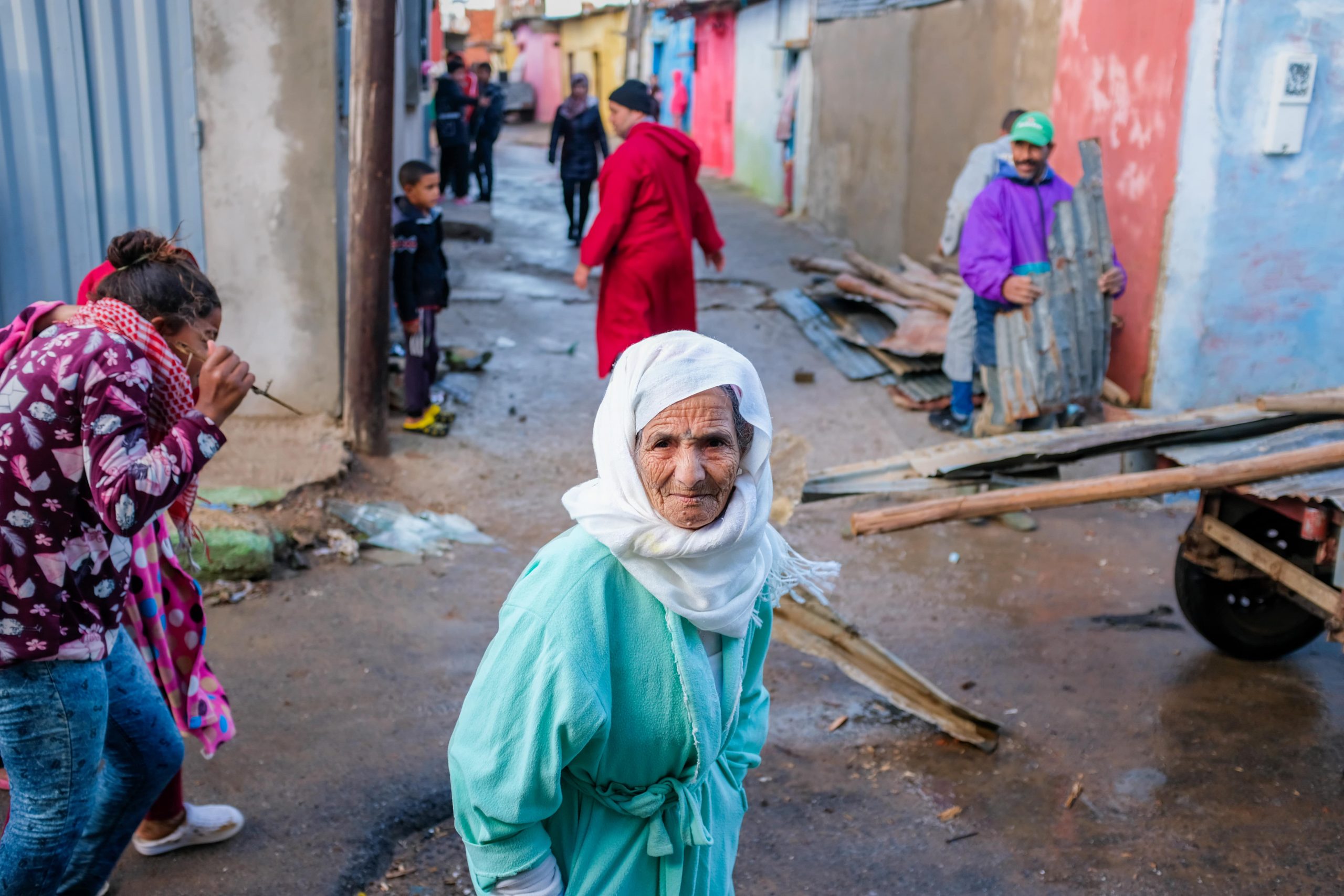
Today, the 21 years old photographer’s pictures decorate the walls of the great tower in Rabat, along with tens of talented Moroccan photographers’ works. “I am honored to be chosen by the Moroccan photographer’s Yoriyas to exhibit my work there. People came to me in the exhibition and asked me where is Douar Chanti located? After few days they came to visit my neighborhood. That’s what I always wanted: introducing my neighborhood to the world and make them fall in love with its simplicity.”
Fedouache is planning to share his neighborhood’s beauty outside the borders through his future project “from Douar Chanti to New York”. “My city was a location of American military bases; we still have remains of its existence, since my city didn’t witness any development since then. I feel that there’s an invisible string between the two cities and I want to prove it by introducing Douar Chanti to New York, and the American city to my neighborhood residents, especially that many of them have never left the Douar”
While celebrating male photographers’ success, we question the pale presence of women in the industry.
In the recent State of News Photography study—researchers found that women photographers were less likely to be employed by large media companies (7%) compared to men (22%). Among those few who did work for such organizations, the women were assigned work less often than their male counterparts and they were more likely to work part-time and not have another job.
Heavy gear, discrimination and harassments are the main reason behind this gender gap, according to the same source
Salima Hamrini, photographer and art director in an e-learning start-up, expressed her opinion about the situation in Morocco: ”I can’t give you a specific reason, but I would assume that maybe some women are hesitant to start taking pictures in the streets. But honestly, we photographers, men and women face angry comments from people who don’t want to be photographed. However, I have never experienced any discrimination by my fellow men in the industry”
Salima, who plans to start a documentary project to raise awareness about mental health, added in her statement to Hespress English: “I think the main reason is the lack of knowledge about photography in Morocco. I mean I used to think that photography is just about card identity’s pictures before starting following photographers on social media”
The story behind the project’s creator, Salima, defines her style as simple and human, playing with light, space and human figures to reveal the story behind the scenes that she witnesses.
She refuses to give any advice to her fellow Moroccans who are hesitating to start this art saying: “No advice in art, it’s just about following the feeling that envelops you in certain moments and urges you to take the picture. It’s self-expression.”



Congratulations brother you are amazing and good luck ?❤?