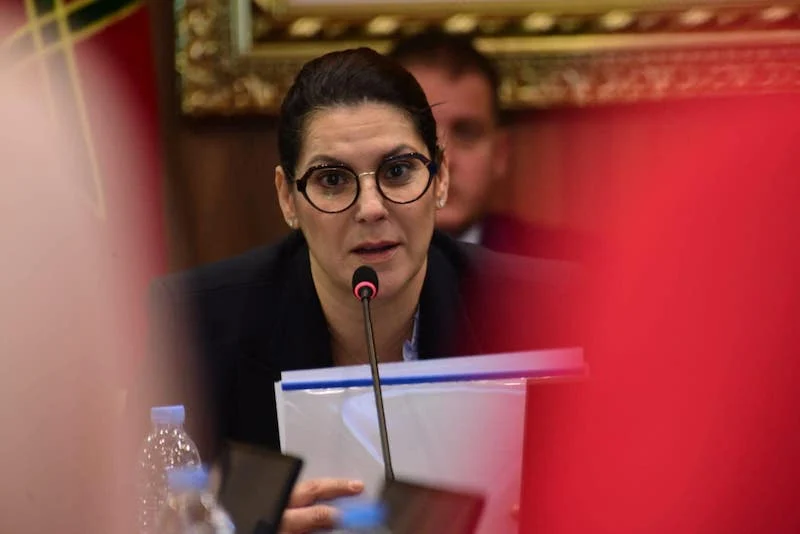
Morocco’s political contest between the Authenticity and Modernity Party, or PAM, and the Justice and Development Party, or PJD, is entering a new phase as the two parties move from the campaign trail into a new parliamentary confrontation.
PAM, which has moved from opposition into government, campaigned on economic growth, job creation and expanded social programs. PJD, which has moved into opposition, has spent the past legislature criticizing the government over prices, unemployment, public services and governance.
Their differences are likely to be most visible in four areas: purchasing power and the economy, Family Code reform, public services and social policy, and political institutions and transparency.
Purchasing power: Growth vs. household pressure
The economy is likely to be one of the first areas of confrontation.
Morocco’s economy grew 4.9% in 2025, up from 4.4% in 2024, according to the High Commission for Planning, or HCP. The economy created 193,000 jobs in 2025, although the unemployment rate remained above 13%.
Inflation has declined sharply from the price shock of 2022 and 2023, but slower price increases do not mean that prices have returned to their previous levels.
PAM made purchasing power a central issue in its 2026 campaign. Its program proposed a 150 billion Moroccan dirham ($16.3 billion) package covering prices, wages, pensions and direct social assistance, along with measures targeting intermediaries and speculation in domestic markets.
The party also pledged to create 1 million net jobs. Fouzi Lekjaa, one of PAM’s leading figures, supported raising the minimum wage to 5,000 dirhams and proposed monthly increases ranging from 1,500 to 4,000 dirhams through tax measures, as well as a minimum pension of 3,000 dirhams.
PJD has focused on the gap between economic growth and household living standards. At its 2025 national congress, the party cited an unemployment rate above 13% and more than 1.6 million unemployed people while accusing the government of failing to meet its pledge to create at least 1 million jobs.
PJD lawmakers have also repeatedly challenged fuel prices. In March 2026, Abdellah Bouanou questioned a nearly 20% increase in fuel prices and challenged distributors’ explanations linking the rise to international oil prices.
The parliamentary debate is likely to center on whether economic growth and government measures are translating into higher household incomes and improved purchasing power.
Family Code: How far should reform go?
Family Code reform represents a different point of tension. The main disagreement is less about whether the law should be revised than about the scope and direction of the changes.
The current reform process follows the 2004 overhaul of Morocco’s Family Code and comes amid changes in marriage, divorce, fertility and family structures. The HCP’s 2025 National Family Survey documented changes in these areas while describing the family as a central institution in Moroccan society.
PAM has supported the current reform process. After King Mohammed VI reviewed reform proposals in December 2024, the party described the process as a “historic milestone” and called for the recommendations to be implemented, saying the changes should reflect the 2011 Constitution and Morocco’s international commitments.
In January 2025, PJD Secretary-General Abdelilah Benkirane criticized proposals concerning inheritance, including the proposed abolition of taâsib, and questioned changes involving the division of the marital home and inheritance.
Benkirane returned to the issue in June 2026, warning that some proposals could affect family stability. He cited declining marriage and fertility rates and rising divorce rates in arguing for stronger family-focused policies.
The reform could therefore become one of the clearest ideological dividing lines between the government and opposition, with PAM involved in advancing legislation and PJD challenging specific provisions and emphasizing questions of family, religion and social values.
Public services and social policy: From spending to results
Health, education and social protection will provide another test of the government’s policies.
PAM’s 2026 program allocated 100 billion dirhams to what it called a “citizenship pact” covering hospitals, employment, schools, housing, digital services and Amazigh-language policy.
The party proposed an additional 50 billion dirhams for youth integration, including education, training, employment, housing and professional mobility.
PAM has also cited increased public spending as evidence of progress. Its lawmakers said the 2025 health budget reached about 36 billion dirhams, with 6,500 new positions created and 524 health centers upgraded during the year, in addition to 872 centers previously completed. The education budget reached about 85.6 billion dirhams.
PJD has focused instead on whether increased spending has produced better public services.
At its 2025 national congress, the party accused the government of falling short on social commitments, including its pledge to lift 1 million families out of poverty and vulnerability. It also criticized the implementation of health coverage and government wage commitments.
The debate is likely to focus on concrete indicators such as waiting times, staffing shortages, regional disparities and access to schools and hospitals.
The same question applies to social protection. The government can point to expanded coverage and direct assistance programs, while the opposition can scrutinize their size, implementation and impact on vulnerable households facing higher living costs.
Political institutions, transparency and conflicts of interest
Governance and transparency are another area where the two parties have developed sharply different lines of criticism.
PJD has spent recent years accusing the government of falling short on transparency, conflicts of interest and parliamentary oversight. Benkirane now has a parliamentary platform from which to continue those attacks.
At its 2025 national congress, PJD called for a national anti-corruption initiative, legislation criminalizing illicit enrichment and a law governing conflicts of interest. The party also pointed to what it described as potential conflicts of interest in sectors including fuel and livestock.
PJD has cited Morocco’s ranking in Transparency International’s Corruption Perceptions Index in support of its criticism, noting that Morocco ranked 86th in 2020 and 99th in 2024.
PJD lawmakers have also accused the government majority of using its parliamentary numbers to accelerate the passage of legislation. In July 2025, PJD lawmaker Abdessamad Haiker described the practice as “government and majority overreach.”
PAM has also supported parliamentary oversight mechanisms. In May 2026, its parliamentary group in the House of Councillors described the Court of Auditors as an important instrument for strengthening governance and accountability.
PAM’s youth organization also supported its parliamentary group’s backing of a fact-finding committee into livestock import subsidies, saying greater transparency was needed to strengthen confidence in institutions.
The issue now moves from opposition criticism to institutional oversight. With PAM part of the governing camp and PJD in opposition, parliamentary investigations, audit findings and questions over conflicts of interest could become recurring points of confrontation.
The emerging PAM-PJD divide is therefore likely to extend beyond traditional government-versus-opposition disputes. Economic performance, family legislation, public services and institutional accountability offer four distinct arenas in which the two parties can challenge each other’s priorities, policies and interpretation of Morocco’s political and social needs.


add your comment
Terms of publication : Not to offend the writer, people, sacred things, or attack religions or the divine self, and refrain from racist incitement and insults.