
Ceuta faced another night of sustained migrant arrivals from Morocco early Thursday, with Civil Guard officers repeatedly rescuing people attempting to swim around the Tarajal border as fog complicated surveillance and rescue operations.
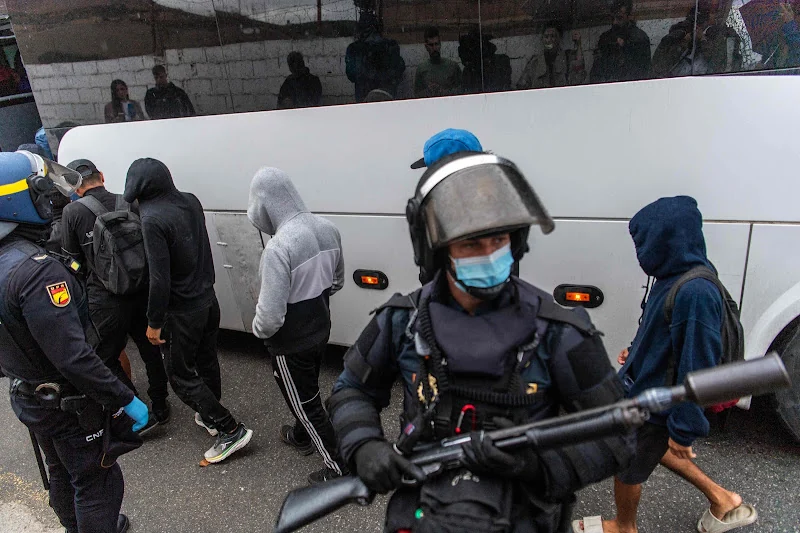
More than 100 unaccompanied minors and hundreds of adults entered Ceuta during the latest wave, according to Spanish media.
Moroccan forces intercepted hundreds of others before they completed the crossing, while Spanish Maritime Rescue and Red Cross teams assisted 99 people overnight.
Local newspaper El Faro de Ceuta reported that all available Civil Guard units were deployed at sea and along the coastline after crossings continued through the night and into the morning. Officers were holding dozens of newly arrived migrants near Tarajal, while others reached different parts of the Spanish enclave without being immediately registered.
The latest arrivals came after more than 1,500 migrants reached Ceuta over roughly a week, equivalent to almost 2% of the enclave’s population, according to regional President Juan Jesús Vivas. Most were Moroccans, although Algerians living in Morocco were also among them.
Vivas called on Spain’s central government to declare a national emergency and establish a single command structure to coordinate border security, rescue operations, accommodation and transfers to the mainland.
“We are in a situation of absolute humanitarian and social emergency,” he told Cadena SER on Thursday, warning that local security and reception services could no longer absorb arrivals averaging about 300 people a day.
Ceuta is sheltering around 700 unaccompanied minors, while its temporary migrant reception centre is holding more than 700 adults despite an official capacity of slightly above 500. Hundreds more have waited outside registration facilities as authorities opened additional accommodation.
The crossings have also carried a growing human cost. The Civil Guard recovered another body from waters off Ceuta on Thursday, bringing the number found along the enclave’s coast this year to 30, according to local and national reporting.
The cause of the surge remains disputed. Ceuta officials have cited favourable weather, limited reception capacity and a July Supreme Court ruling restricting immediate returns of migrants intercepted at sea.
Humanitarian organisations, however, say such crossings recur during summer and are driven primarily by poverty, unemployment and the lack of legal migration routes.
Spain’s interior minister has continued to praise Morocco’s overall migration cooperation while acknowledging that the latest pressure on Ceuta is exceptional.









add your comment
Terms of publication : Not to offend the writer, people, sacred things, or attack religions or the divine self, and refrain from racist incitement and insults.