While key figures such as Yassine Bounou, Achraf Hakimi, Bilal El Khannouss and Noussair Mazraoui remain central to the team, Morocco has evolved from a defensively disciplined, counterattacking side into one that is more comfortable dominating possession and dictating play under head coach Mohamed Ouahbi.
From defensive resilience to ball control
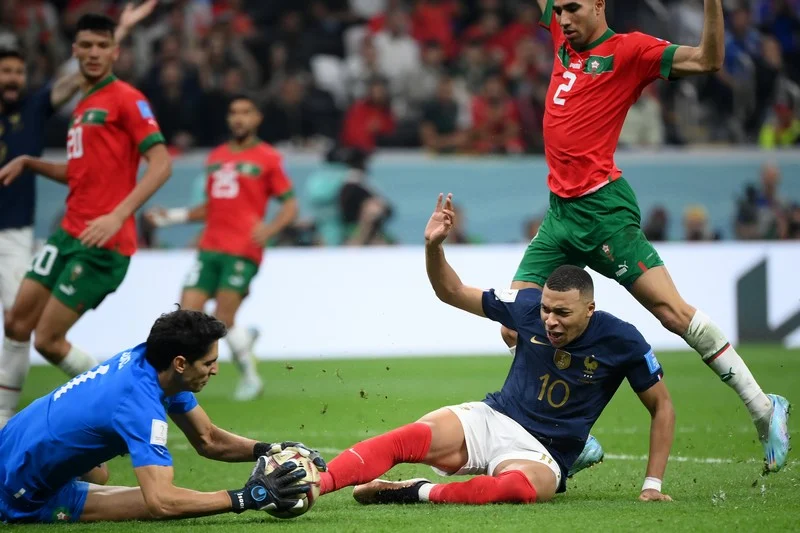
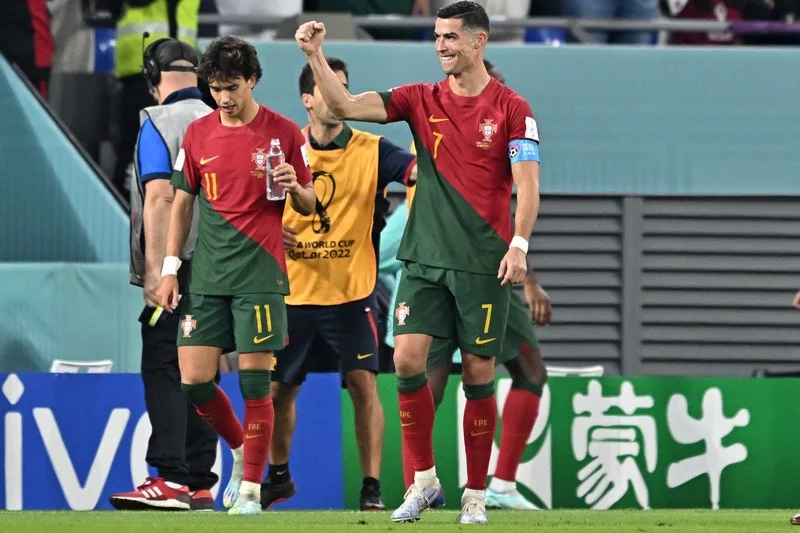
Morocco’s remarkable 2022 campaign under former coach Walid Regragui was built on defensive organization rather than possession. The Atlas Lions consistently ceded the ball, defended in a compact shape and waited for opportunities to strike on the counterattack.
They recorded just 39% possession against Croatia, 36% against Belgium, 42% against Canada, 23% against Spain and 27% against Portugal. Despite those numbers, Morocco kept four clean sheets in seven matches and scored six goals on their way to becoming the first African nation to reach a World Cup semi-final.
According to FIFA’s Training Centre analysis, Morocco’s success was built around a disciplined mid-block that forced opponents into wide areas, where the team was prepared to apply pressure and win back possession.
The Atlas Lions finished the tournament with an average possession of 37.8%, the sixth-lowest among all participating teams.
A more proactive Morocco
At the 2026 World Cup, Morocco has embraced a more possession-oriented approach.
The Atlas Lions have averaged approximately 54% possession, ranking ninth among teams at the tournament, according to FIFA statistics.
Morocco recorded 46% possession in its draw against Brazil, 60% in a 1-0 win over Scotland, 69% in a 4-2 victory over Haiti, 70% against the Netherlands before advancing on penalties, and 56% in its 3-0 Round of 16 win over Canada.
The shift has also translated into greater attacking output.
After scoring six goals in seven matches in Qatar, Morocco has netted 10 goals in five games in 2026, increasing its goals-per-game average from 0.86 to 2.0.
Passing game reflects tactical evolution
Morocco’s changing identity is perhaps most evident in its passing statistics.
Against the Netherlands in the Round of 32, the Atlas Lions completed approximately 879 passes, the highest total recorded by any team in a match at that stage of the tournament.
Overall, Morocco has completed 3,126 passes at the 2026 World Cup, the third-highest total behind Argentina (3,446) and Spain (3,382).
The contrast with Qatar is striking. During the 2022 tournament, Morocco completed just 193 passes against Portugal, 261 against Spain, 284 against Belgium and 304 against Croatia.
The figures illustrate a clear tactical transformation, with Morocco no longer relying primarily on defensive resilience but increasingly seeking to control matches through possession while maintaining the defensive discipline that underpinned its success in Qatar.





add your comment
Terms of publication : Not to offend the writer, people, sacred things, or attack religions or the divine self, and refrain from racist incitement and insults.