Europe is facing one of its most intense heatwaves in recent years as the Omega weather pattern traps hot air over large parts of the continent.
Temperatures have climbed past 40°C in several countries, putting pressure on health systems, transport networks, and daily life. Governments, cities, and employers are increasingly shifting into emergency response mode as extreme heat becomes harder to ignore.
Across the continent, authorities are deploying a mix of short-term emergency actions and longer-term adaptation strategies to reduce health risks and keep essential services running.
Heat alerts are being raised across multiple countries
European governments have activated high-level heat warnings as temperatures continue rising.
France, Spain, Italy, and parts of the UK have issued red alerts, warning of severe health risks. Authorities are urging residents to avoid outdoor activity during peak hours and monitor elderly or vulnerable family members.
In an official heatwave bulletin, Météo-France warned that very high temperatures are setting in for the long term across the country.
“day and night-time temperatures will be exceptional.” they said.
Cities are opening public cooling spaces
According to Reuters, cooling centers are becoming one of the first emergency measures deployed in Europe’s hardest-hit urban areas.
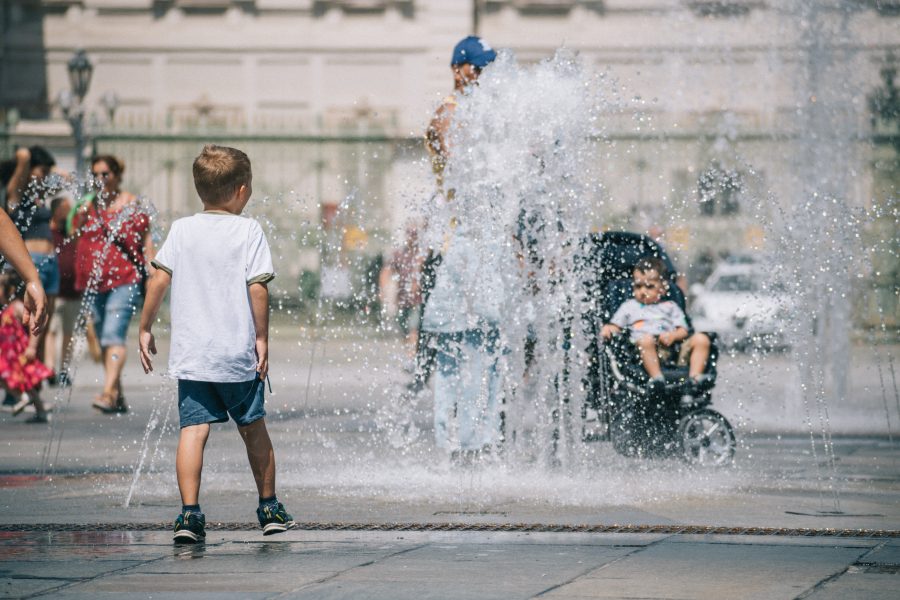
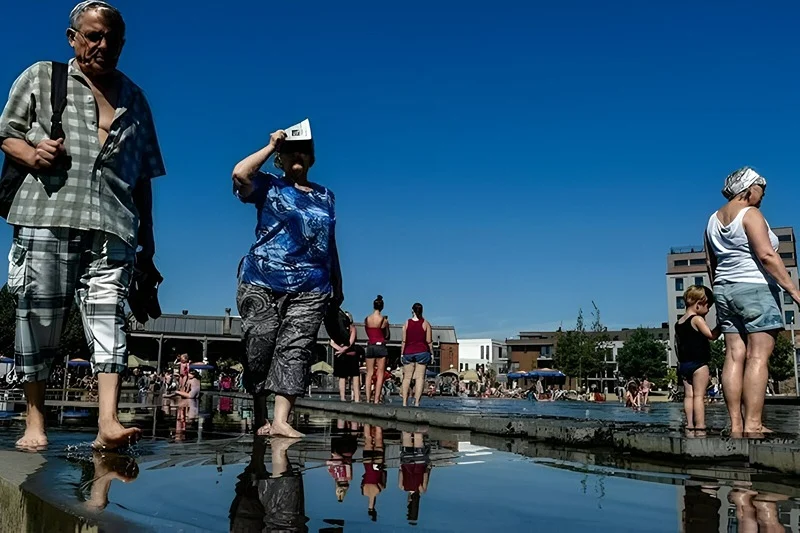
The Eiffel Tower and other Paris venues set up misting stations to cool visitors. In Rome, tourists sought relief in public fountains. Local governments opened public cooling centers in libraries, community halls, and shopping centers. Germany activated public cooling stations, fountains, and shaded urban zones, with the national weather service Deutscher Wetterdienst issuing alerts that triggered localized responses in cities. Italy’s major cities, including Rome, Florence, and Milan, also established emergency cooling shelters after intermittent blackouts caused by surging air-conditioning demand.
Work schedules are being adjusted
According to local news outlets, many employers are increasing heat-related safety measures. Extra water, cooling equipment, and shaded rest areas are being provided to workers operating outdoors or in hot environments. Some workplaces are also increasing mandatory break times.
Several Italian regions, including Lazio, Tuscany, Piedmont, Puglia, and Liguria, have signed ordinances banning outdoor work from 12:30 pm to 4:00 pm on days when the INAIL–CNR Worklimate platform classifies heat risk as high. The measures apply to construction, agriculture, deliveries, and factory work, and cover both employed and self-employed workers. In Spain, measures based on weather alerts are in place to prohibit outdoor working during periods of extreme heat. In Greece, Acropolis guards have secured schedule adjustments that allow them to avoid working afternoons during heatwaves.
School closures and schedule adjustments
Heat is disrupting classrooms in multiple countries. The extreme heat has forced 845 junior and middle schools in France to close outright, while a further 1,800 have adjusted their teaching schedules. In the UK, schools have shortened the school day, allowed children to wear PE kits instead of uniforms, and cancelled or moved outdoor activities indoors.
Local media outlets in France and the UK have even reported temporary school closures.
Hospitals are activating heat emergency plans
Hospitals and care homes are increasing monitoring for dehydration, heat exhaustion, and heatstroke. Elderly people and patients with chronic illnesses remain among the most vulnerable.
In a statement published on its official website, the World Health Organization warned that heatwaves are becoming a major public health emergency. WHO Regional Director Hans Henri P. Kluge said, “Heatwaves are no longer freak weather anomalies. They are now a recurring crisis.”
Rail speed restrictions and road speed reductions
According to Reuters, transport disruptions and rail restrictions have already been reported in France and the UK as infrastructure comes under growing pressure.
Multiple train operators warned commuters to expect delays, particularly on routes serving London and the South East. In France, the head of national railway SNCF advised vulnerable people to avoid train travel entirely, and dozens of long-distance trains were cancelled to prevent air-conditioning failures. Speed restrictions were also imposed on several lines to prevent track deformation.
In the Pyrénées-Atlantiques department, France, authorities reduced speed limits by 20 km/h on motorways and main roads after forecasters warned of a pollution episode caused by stagnant hot air. The prefecture also suspended exemptions that had allowed the burning of green waste and postponed agricultural and forestry burning operations. The measures address both air quality and fire risk during conditions when heat and dryness increase wildfire danger.
Long-term adaptation is gaining urgency
European cities are accelerating investment in green spaces, shaded infrastructure, and heat-resilient urban planning. As extreme heat becomes more frequent, adaptation is increasingly becoming a policy priority rather than a seasonal response.
In the same statement on its official website, WHO Europe warned that “nearly all” heat-related deaths recorded in recent years were preventable, underscoring the urgency of long-term heat resilience planning.
The latest heatwave is once again exposing Europe’s growing vulnerability to extreme temperatures, while also showing how governments are being forced to adapt faster to a warming climate.
Cancellation of mass public events
Spain’s Basque Country cancelled outdoor sports and cultural events as temperatures reached levels unusual even for the region. In Madrid, a World Cup fan zone set up for spectators to watch matches on big screens was closed due to the heat. Across Europe, governments cancelled or modified public events while authorities ordered organizers of remaining gatherings to limit alcohol use. The closures reflect a broader shift toward treating heatwaves as full public health emergencies.






add your comment
Terms of publication : Not to offend the writer, people, sacred things, or attack religions or the divine self, and refrain from racist incitement and insults.