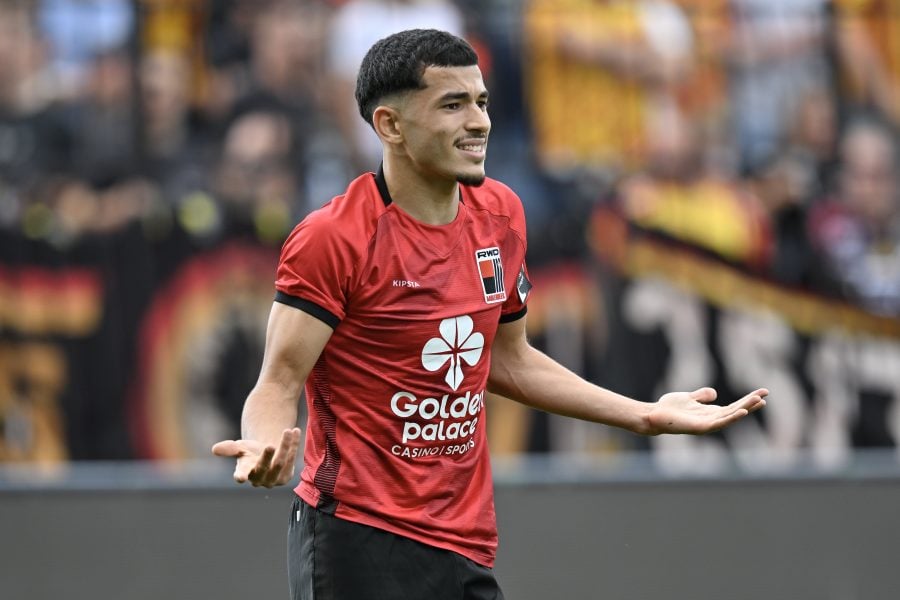
Zakaria El Ouahdi has said that he “did not hesitate for a single moment” to represent Morocco, despite also being eligible to play for Belgium and having been approached by the Belgian Football Federation.
“I certainly didn’t have to think twice about it. Morocco was simply my priority,” the Racing Genk defender said in an interview with the Dutch-speaking Belgian daily ‘Het Laatste Nieuws’ (HLN), confirming what he described as an obvious choice.
“It was a thoughtful decision, but one driven by my heart as well,” stressed the 24-year-old right-back, referring to his long-standing attachment to the Atlas Lions and a choice guided by the national team’s sporting project.
“I played for Morocco at the Paris Olympic Games and at the U-23 Africa Cup of Nations. The atmosphere and the facilities were exceptional. It really felt like they were saying: choose us,” he explained.
El Ouahdi also expressed his delight after receiving his first call-up for the 2026 FIFA World Cup. “It’s a childhood dream come true,” he said, adding that he is eagerly awaiting the tournament. “The whole world is watching us. To experience something like that is fantastic,” he noted.
Within the national team, El Ouahdi said he draws inspiration from Achraf Hakimi, whom he considers his “mentor on the pitch.”
“I watch him very closely. I want to reach his level,” he said.
One of the revelations of the season with Racing Genk, El Ouahdi established himself as one of the club’s most decisive players, recording 12 goals and five assists, remarkable statistics for a defender. On the European stage, the Moroccan international also shone in the Europa League, contributing four goals and one assist.
This year, El Ouahdi won the Ebony Shoe Award, which recognizes the best African or player of African descent competing in Belgium. He was also named Racing Genk’s Player of the Year and had previously been awarded the 2025 Belgian Lion title, given to the best player of Maghreb origin in the Belgian First Division.




add your comment
Terms of publication : Not to offend the writer, people, sacred things, or attack religions or the divine self, and refrain from racist incitement and insults.