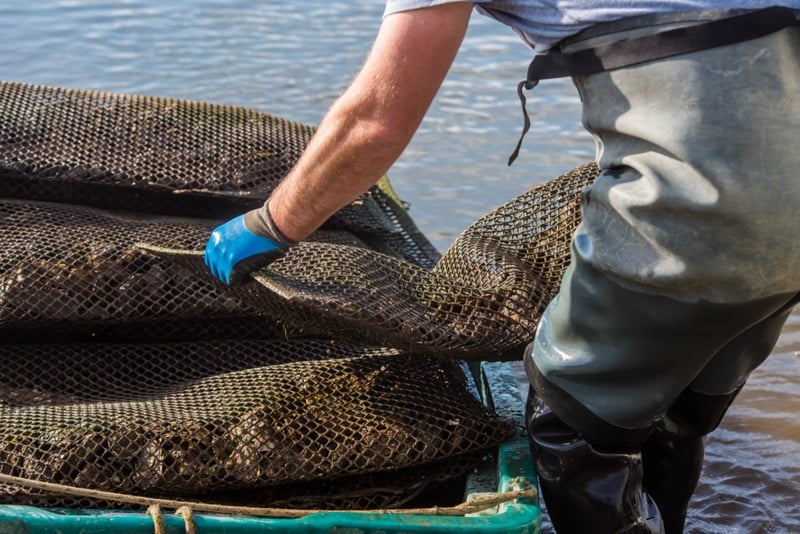
Morocco lifted restrictions on shellfish harvesting and sales in several aquaculture zones near Dakhla after months of sanitary suspension linked to marine toxin contamination, reopening part of a production area central to the country’s oyster industry.
The fisheries department said oyster, clam and mussel harvesting could resume in the Boutalha North 1, Boutalha North 2, Tankir 1 and Duna Blanca zones after tests by the National Institute for Fisheries Research showed shellfish had fully purified and marine conditions had stabilized.
Authorities had progressively suspended harvesting and marketing in the affected zones between late 2024 and 2025 after laboratory analyses detected marine biotoxins above authorized sanitary limits in shellfish collected from the Dakhla maritime zone.
Initial suspension notices warned that contaminated shellfish from the affected areas posed risks to public health if consumed and urged consumers to avoid products sold outside regulated channels.
The reopening restores activity in one of Morocco’s fastest growing aquaculture corridors. Dakhla has become the country’s main oyster production hub after years of investment in aquaculture farms, hatcheries and cold chain infrastructure tied to export demand, particularly from European markets.
According to sector data, Dakhla accounted for more than 80% of the value of Morocco’s aquaculture production in 2022, with output estimated at more than 81 million dirhams.
Authorities did not publicly report major intoxication outbreaks linked to the affected zones during the suspension period, although officials repeatedly warned that marine biotoxins can cause severe food poisoning.
Morocco has steadily expanded aquaculture production under its Halieutis fisheries strategy as Rabat seeks to diversify seafood exports beyond traditional coastal fishing.
Oyster farming has emerged as one of the sector’s higher value segments, with Dakhla overtaking Oualidia as the country’s main production center.
Authorities again urged consumers to purchase only packaged shellfish carrying official sanitary labels and sold through authorized outlets, warning that products traded informally could still pose health risks




add your comment
Terms of publication : Not to offend the writer, people, sacred things, or attack religions or the divine self, and refrain from racist incitement and insults.