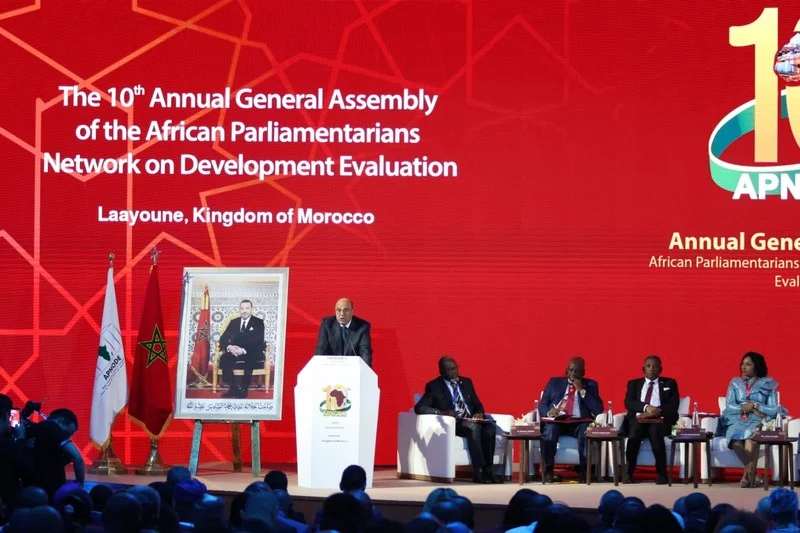
African lawmakers meeting in Laayoune this week urged the continent to strengthen systems for evaluating development programs, stressing the importance of evidence-based planning and accountability.
Opening the 10th annual meeting of the African Parliamentarians Network on Development Evaluation, Morocco’s Upper House president, Mohamed Ould Rachid, said the choice of Laayoune was deliberate, highlighting the city as an example of how monitoring and evaluation can produce tangible results.
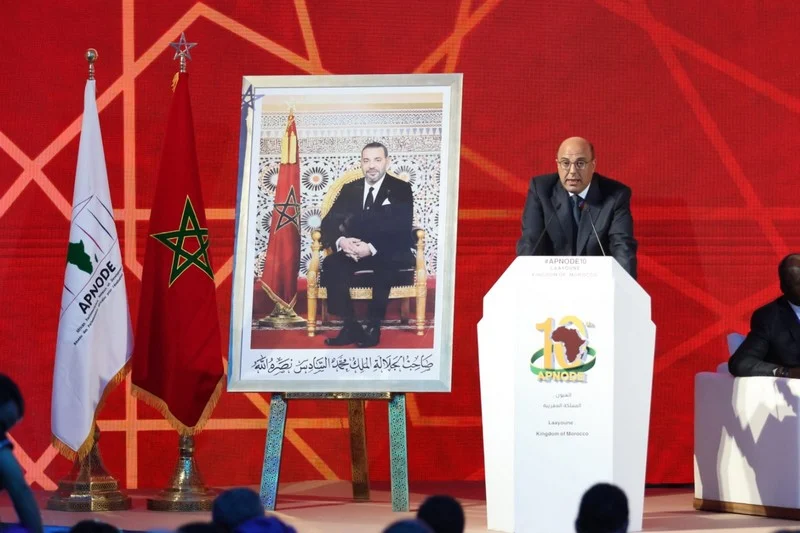
Ould Rachid pointed to major infrastructure and energy projects in Morocco’s southern regions, including the Dakhla Atlantic and Foskoura ports, the Tiznit-Dakhla expressway, renewable energy and green hydrogen initiatives, and seawater desalination programs. He said these efforts demonstrate the value of continuous tracking to ensure development meets citizens’ needs.
“Evaluation is no longer just about checking if goals were met,” he said. “It now means examining whether public policies are efficient, realistic, and aligned with national priorities.”
He warned that many African countries lack a strong “culture of evaluation,” which risks misdirecting resources and missing opportunities to fund the most effective programs.
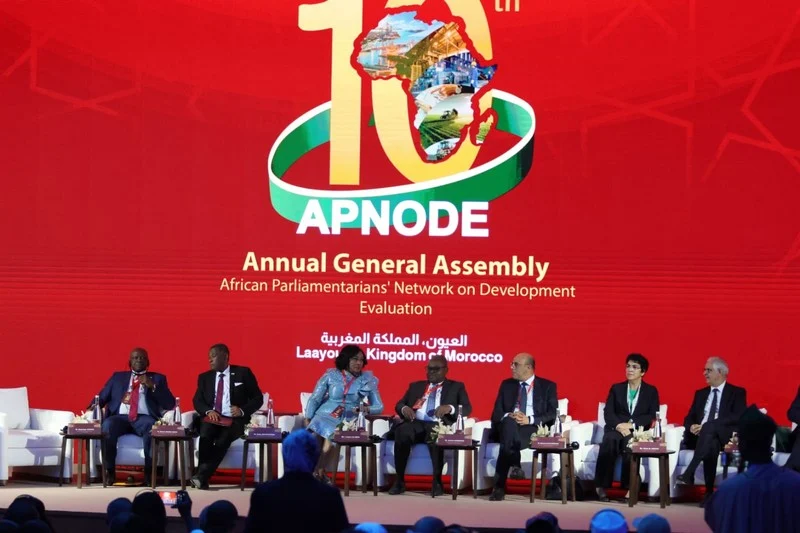
Ould Rachid, who also heads ASSECAA, an alliance of African and Arab parliaments, outlined three steps for making evaluation a permanent part of policy-making: establishing legal frameworks that mandate regular program assessments, building parliamentary units with technical expertise, and involving universities, experts, and civil society to ensure evaluations reflect citizens’ needs.
He described the 10th session as a milestone for the network, offering lawmakers a chance to exchange experiences and produce concrete recommendations aimed at improving public policies across Africa.




add your comment
Terms of publication : Not to offend the writer, people, sacred things, or attack religions or the divine self, and refrain from racist incitement and insults.