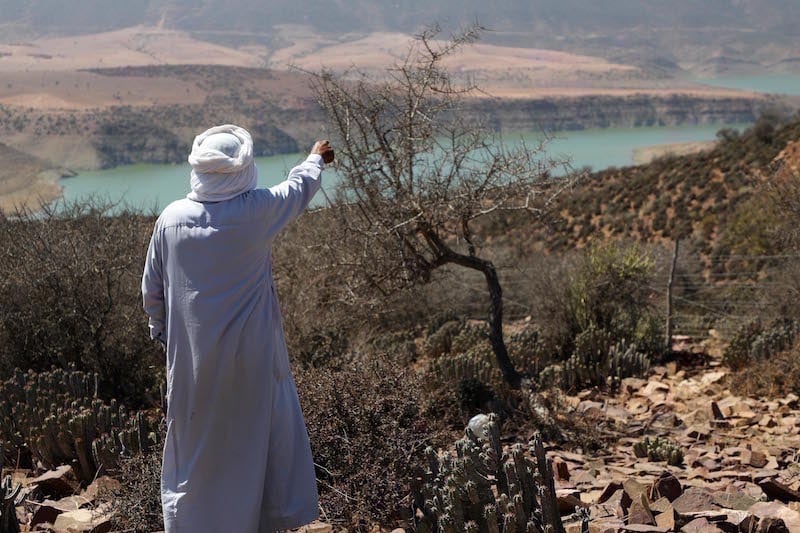
Morocco’s desert communities are struggling to survive in the face of worsening climate change and long-standing government neglect, says a report by the Carnegie Endowment for International Peace.
The study, titled “Between Marginalization and Climate Change: The Resilience of Morocco’s Ait Khabbash,” focuses on the Draa-Tafilalet region in the country’s southeast which is a vast, arid area where Amazigh pastoralist families are finding ways to adapt as droughts intensify and water becomes scarcer.
According to the Carnegie report, these communities are living through the harshest effects of climate change while receiving little support from national policies.
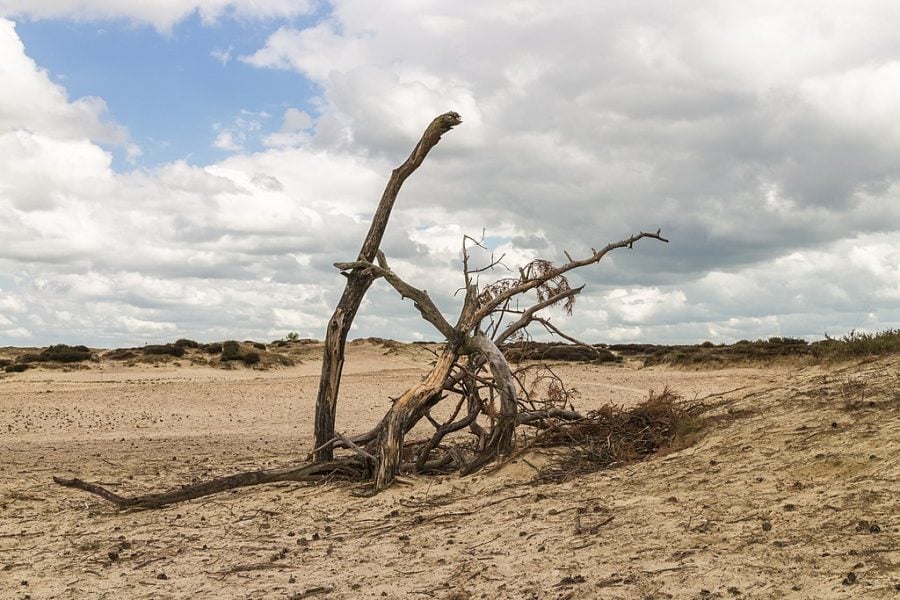
For generations, the people of this region lived as nomadic herders, moving with their livestock in search of water and grazing land. But over time, droughts have grown longer, wells have dried up, and desertification has spread.
Locals say that where water could once be found eight meters below ground, it now lies more than 100 meters deep.
With mobility limited by closed borders and disappearing pastures, many families have been forced to give up nomadism and settle permanently in towns such as Merzouga and Ouarzazate.
Out of necessity, many have turned to tourism as their new way of life. They’ve built guesthouses, organized camel treks, and created desert camps that attract travelers from Morocco and abroad.
This homegrown tourism industry has kept families together and given young people work without leaving the region.
But the Carnegie report points out that these small businesses often operate informally, meaning they are not registered with the state. As a result, they receive no financial aid in times of crisis, like during the COVID-19 pandemic, when tourism collapsed overnight.
The report also criticizes Morocco’s climate policies for focusing mainly on large national projects, such as solar plants and dams, while overlooking smaller communities that are most exposed to climate stress.
The report says that Morocco’s approach has deepened inequalities by prioritizing industrial agriculture and urban centers over local needs.
Projects like Mansour Eddahbi dams, originally meant to store water, have actually disrupted natural water flows and worsened drought conditions downstream.
People in the desert continue to adapt, drawing on local knowledge and community cooperation to survive.
Many locals rely on traditional water systems and family networks to manage scarce resources. Yet, as the Carnegie report stresses, resilience alone is not enough.
Without real state support, improved infrastructure, and policies that involve local voices, Morocco’s desert communities will keep bearing the brunt of a crisis they did not create.




add your comment
Terms of publication : Not to offend the writer, people, sacred things, or attack religions or the divine self, and refrain from racist incitement and insults.