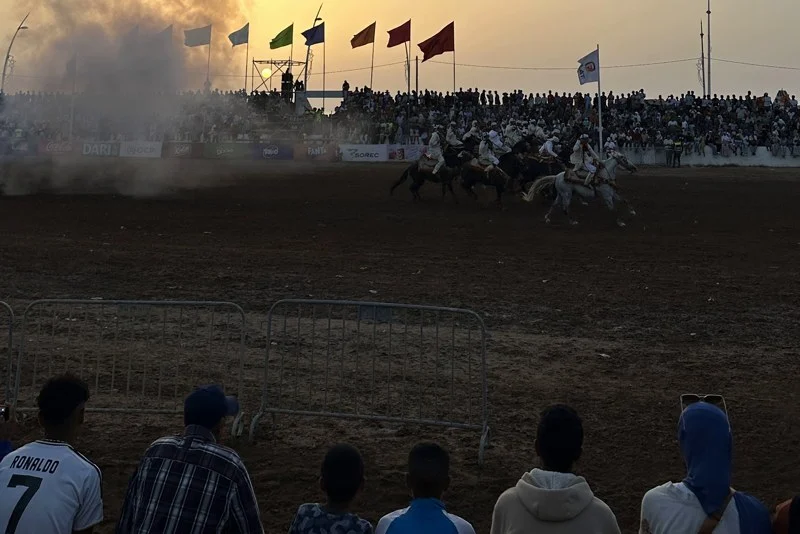
The alleged rape of a 14-year-old boy during the Moussem of Moulay Abdellah Amghar has shocked Morocco’s Doukkala region and reignited debate over safety at large public gatherings.
The Network of Doukkali Non-Governmental Associations (RADNG) issued a statement condemning the “heinous crime,” which occurred on Aug. 14, when the minor, described as being in a highly vulnerable situation, was sexually assaulted by a group of men inside two tents set up at the festival grounds.
The case drew national and international outrage, highlighting organizational and security shortcomings at an event that attracts hundreds of thousands of visitors each year and is meant to be a space of spirituality, tradition and community.
In its statement, RADNG criticized the Moussem’s management, citing recurring problems including chaotic tent organization, inadequate sanitation facilities, traffic congestion, poor lighting, strain on water resources and unchecked waste. The group also pointed to a lack of transparency in the economic and commercial exploitation of the event.
Testimonies from past festival-goers described disorderly nighttime practices, including indecent behavior. RADNG called on the Interior Ministry to ban overnight stays in tents during regional Moussems to help prevent further abuses.
The group also demanded severe punishment for those accused in the collective assault and urged the creation of a Children’s Ombudsman under the National Mediator to give young victims secure digital tools to report abuse when they cannot approach security services directly.
RADNG welcomed the intervention of the National Observatory for Children’s Rights, under the guidance of Princess Lalla Meryem, to provide psychological support to the victim, while stressing the need for long-term care. It also denounced political campaigning during the festival, calling it a violation of the event’s spirit.
The association further pressed the Moulay Abdellah municipality to release a transparent account of revenues generated by the Moussem and their real impact on local development. It insisted on structural reforms to preserve visitors’ dignity, improve safety and protect Doukkala’s intangible heritage.
The network concluded that the Moussem of Moulay Abdellah Amghar must remain a cultural and spiritual space, warning against its transformation into a source of insecurity, delinquency, theft, harassment and sexual crimes.
The case, RADNG said, is not only a tragedy but also a wake-up call for urgent reforms in managing mass gatherings, ensuring transparency and safeguarding children in public spaces.





add your comment
Terms of publication : Not to offend the writer, people, sacred things, or attack religions or the divine self, and refrain from racist incitement and insults.