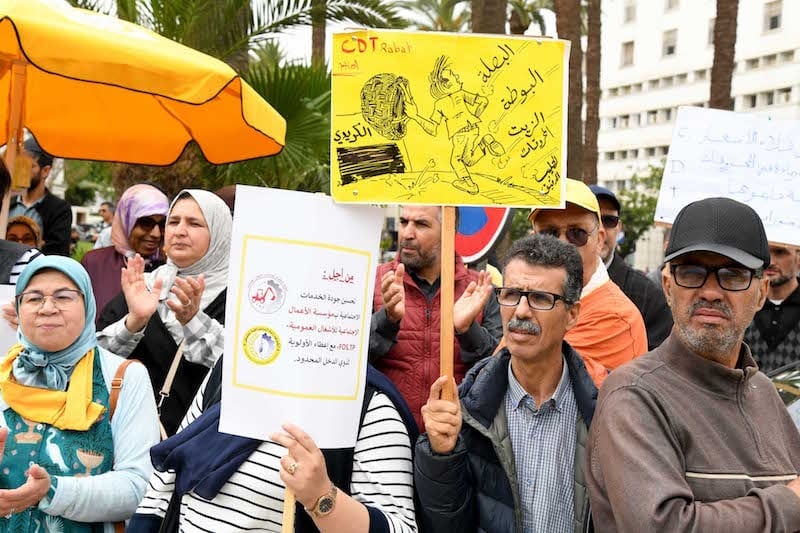
Morocco’s National Union of Higher Education and University Housing Employees, affiliated with the Democratic Confederation of Labour (CDT), has announced an escalation plan for the new academic year, beginning with a 48-hour national strike on September 2 and 3, followed by a 72-hour strike from September 9 to 11, including a protest outside the Ministry of Higher Education on September 10.
Additional 72-hour strikes are planned for September 17–19 and September 30 to October 2, with a rally outside the Ministry of Finance on October 1.
In a statement, the union said the action comes in response to the ministry’s “stalling” on adopting a long-discussed statute for higher education staff, despite consensus reached in January, and its decision to advance a draft higher education law without consulting unions.
Union leaders stressed worsening conditions, citing a drop in staff numbers to 9,000 against 1.2 million students, and warned of structural dysfunction in the sector.






add your comment
Terms of publication : Not to offend the writer, people, sacred things, or attack religions or the divine self, and refrain from racist incitement and insults.