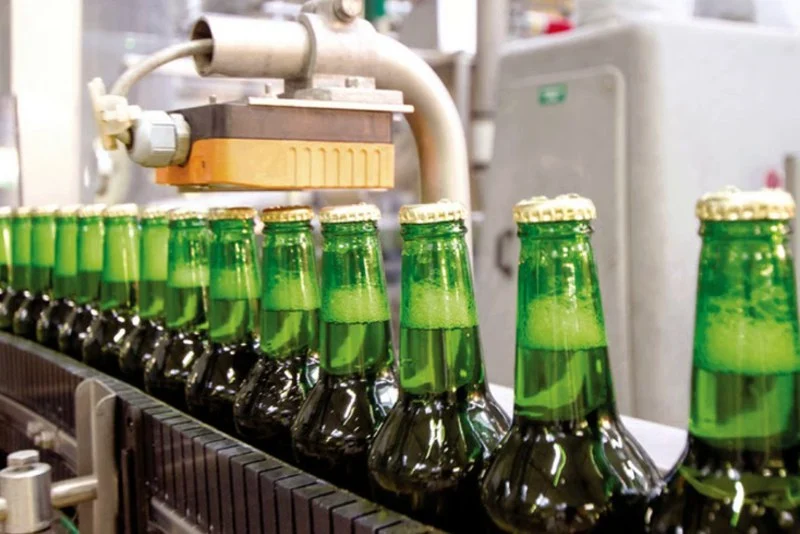
Morocco produced approximately 818,000 hectoliters of beer in 2024, placing it 108th in the global ranking of beer producers, according to a new report released by BarthHaas, a leading global supplier of hops used in beer brewing. This marks a slight drop of 17,000 hectoliters from the previous year.
Despite the decline, the broader African continent recorded the world’s highest growth in beer production. African countries collectively brewed over 160 million hectoliters of beer in 2024, a 6.7% increase from the year before. South Africa, Angola, and Ethiopia led the continent’s growth, with production increases ranging between 8% and 35%.
In the Middle East and North Africa region, Tunisia topped the list with over 1.93 million hectoliters produced, followed by Algeria with more than 1.5 million, and Egypt with 900,000 hectoliters. Lebanon and Jordan produced 384,000 and 247,000 hectoliters, respectively, while Palestine ranked last with just 4,000 hectoliters.
Globally, the beer industry showed stronger-than-expected resilience in 2024 despite a challenging economic environment. Worldwide production declined only slightly by 0.3%, to reach approximately 1.9 billion hectoliters.
China maintained its position as the world’s top beer producer, accounting for more than 340 million hectoliters, or roughly 18% of global output. The United States followed with 185 million hectoliters, while Brazil came in third with over 148 million, representing nearly 8% of global production.
In Europe, total beer production across the continent saw a modest 1.1% increase in 2024, reaching over 514 million hectoliters. However, production within the European Union declined by 1% to around 340 million hectoliters.
Beer output in the Americas fell by 1.3% year-over-year, totaling 617 million hectoliters. The decline was largely attributed to a 4.8% drop in production in the United States.
Asia was the worst-performing region, with production decreasing by 2.3% to 565.4 million hectoliters. The report attributed much of the regional downturn to a reduction in Chinese output, which represents about 60% of the continent’s beer production. Nonetheless, BarthHaas forecasted stable production levels for 2025, despite persistent risks.
Thomas Raiser, managing director at BarthHaas, warned that continued economic challenges, geopolitical tensions, and trade disputes, particularly those originating in the United States, could dampen both consumer and producer confidence, potentially complicating global beer trade in the near future.




add your comment
Terms of publication : Not to offend the writer, people, sacred things, or attack religions or the divine self, and refrain from racist incitement and insults.