
Morocco’s Minister of Economic Inclusion, Small Business, Employment and Skills, Younes Sekkouri, announced on Tuesday the net creation of 282,000 jobs in the first quarter of 2025, despite notable losses in the agricultural sector.
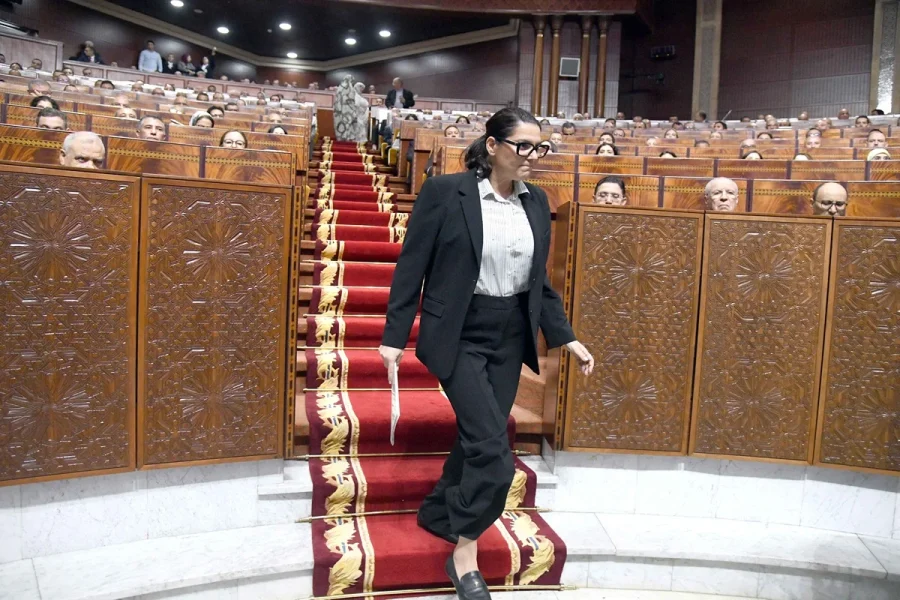
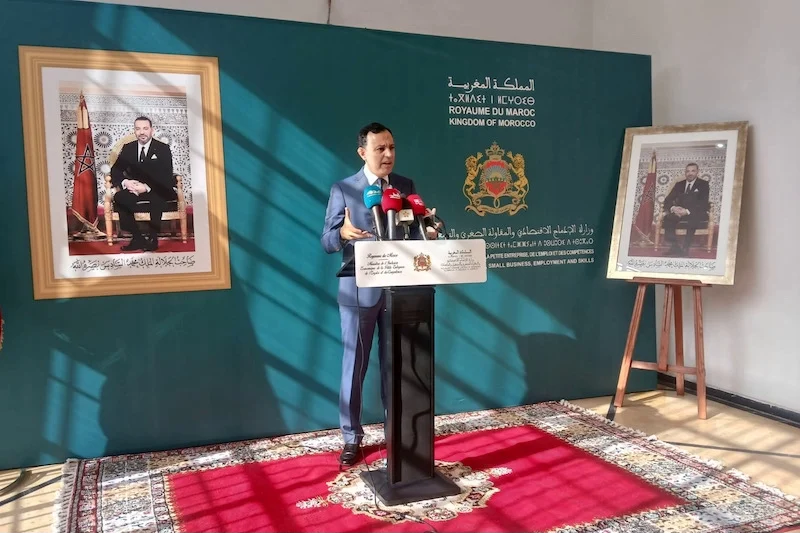
Speaking before the House of Councillors, he outlined the government’s progress on employment, business creation, and structural labor reforms.
According to Sekkouri, a total of 350,000 jobs were created during the first three months of the year, but this figure was offset by the loss of 75,000 positions in agriculture, fisheries, and forestry, resulting in a net gain of 282,000 jobs.
He contrasted this with the same period in 2024, when the country registered a net job loss of 82,000 due to the elimination of 200,000 positions, including 70,000 in rural areas. This year’s numbers, he stressed, reflect a structural improvement in the job market and not merely favorable weather or rainfall patterns.
The employment gains were distributed across several sectors, with 216,000 jobs created in services, 80,000 in industry—including traditional crafts—and 50,000 in construction and public works.
These figures mark a significant departure from previous years and, according to the minister, point to a broader economic shift. The national unemployment rate also dropped from 13.7 percent to 13.3 percent, a development Sekkouri described as encouraging and one that offers hope for further reductions despite continuing climatic challenges.
Sekkouri noted that the government is pressing forward with various investment incentives, particularly a decree targeting small and medium-sized enterprises (SMEs) whose investment volumes are below 50 million dirhams.
These companies account for 83 percent of employment in the formal private sector. He projected that this measure alone could help generate between 40,000 and 50,000 stable jobs in the coming period.
As part of its broader reform agenda, the government is preparing to launch discussions with labor unions to revise the national Labor Code. The goal is to enhance protections for all categories of workers and modernize the legal framework to reflect evolving job types, such as remote work and gig economy platforms.
The minister emphasized that these revisions are intended not only to safeguard employee rights but also to energize the job market. He also underscored the importance of integrating non-degree holders into training and employment programs, which will be supported by a revamped vocational education system.
Highlighting the government’s commitment to social dialogue, Sekkouri revealed that a total of 45 billion dirhams had been allocated to social dialogue programs. This funding supported extensive sectoral reforms, including 17 billion dirhams for education, 3.5 billion for healthcare, and 2 billion for higher education.
These efforts culminated in tangible gains for public employees, with over 1.18 million civil servants benefiting from wage increases, implemented in two phases.
In the private sector, more than two million workers are set to benefit from a gradual increase in the minimum wage. The wage floor, which stood at 2,600 dirhams at the start of the government’s term, is scheduled to rise to 3,200 dirhams by January 2026.
Sekkouri explained that this would positively impact around half of all workers registered with the National Social Security Fund (CNSS). He emphasized that successful social dialogue demonstrates Morocco’s capacity to resolve internal challenges, adding that the government is drafting a new law to regulate labor unions and will soon announce revisions to the Labor Code to account for emerging professions and employment practices.
Addressing pension reform, Sekkouri outlined changes to retirement eligibility. Previously, workers needed a minimum of 3,240 contribution days—equivalent to nine years—to qualify for a pension. That threshold has now been lowered to 1,320 days, or about four years.
Individuals unable to meet the new minimum will be eligible for a refund of their contributions. This reform, aimed at broadening access to retirement benefits, has cost the state around 10 billion dirhams.
On the entrepreneurial front, the minister reported that 95,250 new businesses were established in 2024, including around 75,000 launched by legal entities and 30,000 by individuals.
The number of active companies registered with CNSS increased from 255,000 in 2019 to 332,000 in 2023. Notably, businesses employing fewer than 50 workers make up 97 percent of registered firms and account for more than 36 percent of the salaried workforce in the formal economy.
In a bid to further ease regulatory burdens and encourage entrepreneurship, the government plans to transition from a traditional licensing regime to a system based on “cahiers de charges,” or specification frameworks. Sekkouri said this reform could resolve up to 75 percent of operational difficulties faced by small and medium-sized enterprises, streamlining procedures and fostering a more dynamic business environment.







add your comment
Terms of publication : Not to offend the writer, people, sacred things, or attack religions or the divine self, and refrain from racist incitement and insults.