
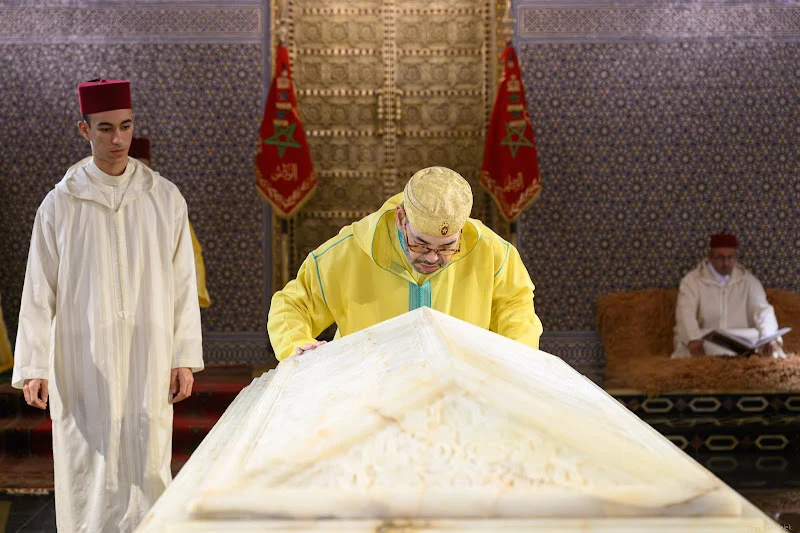
On Tuesday, Moroccans will mark the 66th anniversary of the passing of the late King Mohammed V, the revered “Father of the Nation.” This occasion serves as a solemn remembrance of his immense sacrifices, steadfast leadership, and unwavering fight for Morocco’s independence.
King Mohammed V passed away on the 10th of Ramadan, 1380 (February 26, 1961), just a few years after securing Morocco’s liberation from colonial rule. His death was a profound loss for the nation and the resistance movements that regarded him as a pillar of the country’s struggle for sovereignty and dignity.
Honoring this anniversary reflects the Moroccan people’s enduring gratitude for a monarch who preferred exile over surrendering to colonial demands. Mohammed V steadfastly rejected any compromise on national sovereignty, standing firm in the face of French and Spanish colonial powers.
Throughout his resistance, he maintained close ties with nationalist movements, working collectively to unite Moroccans against colonial rule. Aware that liberation required national solidarity, he mobilized the people in a coordinated struggle grounded in faith and patriotism.
For over four decades, colonial forces attempted to weaken Morocco’s unity and disrupt the deep bond between the King and his people. This culminated in the dramatic events of August 20, 1953, when French authorities besieged the royal palace, demanding that he abdicate. Unyielding in his resolve, he chose exile over submission, declaring his unshakable commitment to the nation’s sovereignty.
In retaliation, colonial authorities exiled King Mohammed V, Crown Prince Hassan II, and the royal family to Corsica and later to Madagascar. However, their forced departure ignited widespread outrage across Morocco, sparking mass uprisings and the launch of armed resistance against colonial forces.
The struggle eventually bore fruit, leading to King Mohammed V’s triumphant return from exile, where he declared the end of the protectorate and the dawn of Morocco’s independence. His leadership during this pivotal moment symbolized the transition from armed struggle to nation-building, marking the success of the historic “Revolution of the King and the People.”
Moroccans had demonstrated to the world their unwavering loyalty to their homeland and monarchy, willing to endure immense hardships to safeguard their sovereignty. This unbreakable bond, described by the late King Hassan II as a sacred relationship rooted in shared struggles and mutual devotion, remains a defining aspect of Moroccan identity.
Following independence, Mohammed V dedicated himself to laying the foundations of a modern Moroccan state, ensuring that the sacrifices made during the liberation struggle translated into national progress. After his passing, his son and successor, King Hassan II, continued to build upon these achievements, spearheading Morocco’s economic and social development.
Today, King Mohammed VI upholds this legacy, steering Morocco into an era of modernization and sustainable development. Inspired by the historic unity between the monarchy and the people, the nation continues to overcome challenges and pursue progress while honoring the sacrifices of its forebears.



add your comment
Terms of publication : Not to offend the writer, people, sacred things, or attack religions or the divine self, and refrain from racist incitement and insults.